
Built to Last, Designed to Vanish
 Greetings from Juergen
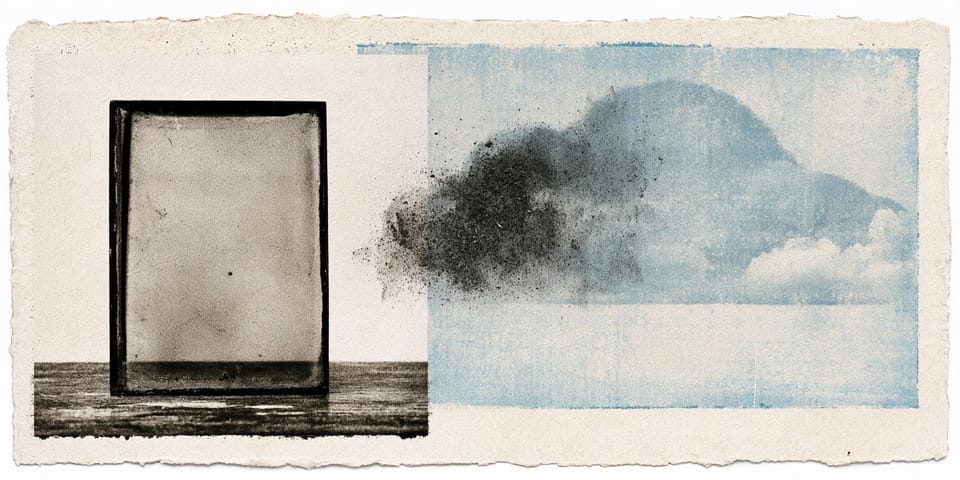
There's a hard disk sitting on my desk right now with a bunch of old work on it, but the hard disk is broken and I cannot restore it. Coming to think of it, I have a drawer full of hard drives from old Macs and Windows systems, and they have my early music experiments from the 1990s, a lot of guitar work from over the years, digital photos, and a lot more. Some of it I was able to restore, but some of that work is gone forever.
I was pretty optimistic about all things digital in the early days, and I thought of it as a much more permanent form of storage. But I was wrong, and digital is way more fragile than I expected.
I learned photography with a pinhole camera, and those images still exist and look the same as the week I took them. Photographers from the 1900s used glass plates and silver prints, and these are also still preserved to where we can still see them perfectly. Yet with digital, I have tens of thousands of images sitting somewhere on Dropbox or in a cloud account or on hard drives, and they could disappear any minute with a hard drive crash or a lapsed Dropbox payment.
I don't question whether digital work is worth saving. It is. But I do wonder whether our infrastructure is even capable of saving it permanently. When you die, who is going to renew your domain subscription, your online storage, your cloud presence?
Subscribe to 'The Intersect: Art in Tech and Tech in Art' podcast, a companion audio feature where we explore each week's topics in a conversational format.
ART NARRATIVES
The John Cage Piece That Won't Finish Until 2640
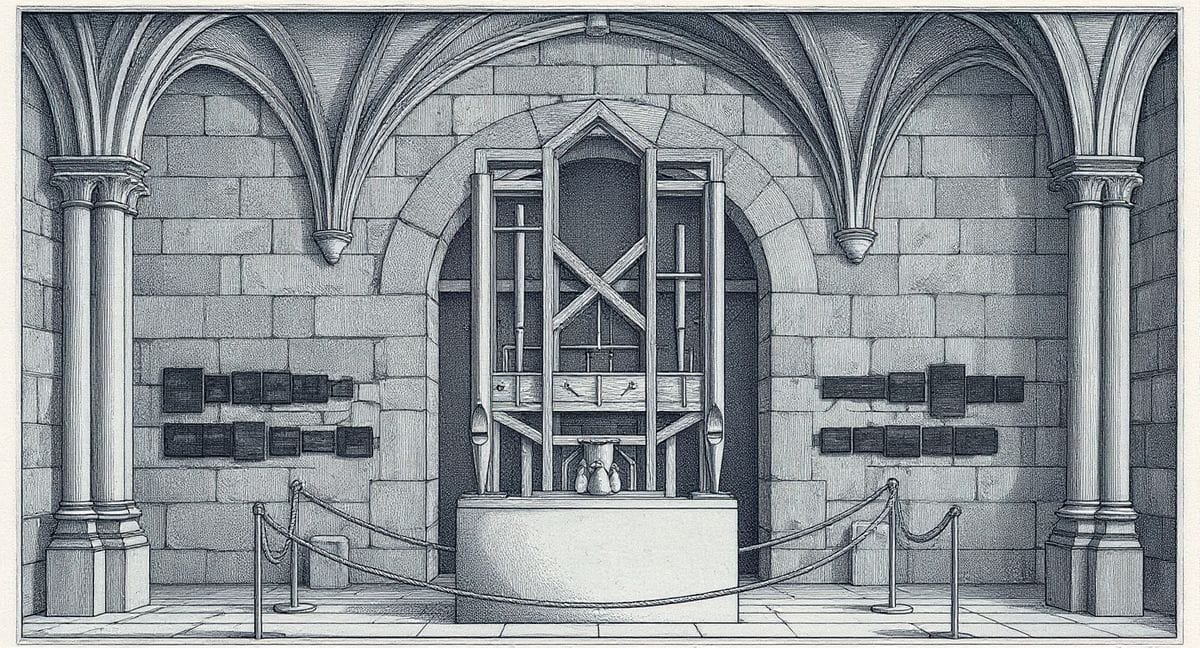
There's a small church in Germany that's been playing a piece of organ music since 2001, and on August 5th of this year the organ changed chords for the first time in over 2 years. This story has been recently featured by Artforum, and it is a performance of the famous composer John Cage. The composition is called "Organ² / ASLSP (As Slow As Possible)" at the St. Burchardi Church in Halberstadt, Germany. The piece runs for 639 years, so it'll finish in 2640.
My favorite little detail about this whole story is the fact that it's making money and selling tickets for the finale at $3,000.
Mind you, that is for a performance in 2640. So these are inheritable tickets passed on from generation to generation. With the hope that your great-great-great-grandchildren will get to hear the finale.
Worrying about and designing for artwork's permanence is nothing new for artists - and people like Cage planned for his performance to finish in 2640.
I myself haven't even planned for my next Cloud storage renewal invoice.
Cage handed his permanence to an institution that outlives everyone. Most artists never do. So who catches a website when the domain lapses or the login dies with its owner? Someone, it turns out, is quietly trying.
DIGITAL ARCHIVING AND ART PRESERVATION
When Your Website Is Your Legacy, Who Keeps the Lights On?
An artist's website is rarely just a business card anymore. It is a portfolio, a CV, a record of how the work changed over decades, sometimes a piece of art in itself. And it can vanish overnight: an expired domain, a server migration, a login nobody remembers after the artist dies. A blog post at the Internet Archive lays out how their Collaborative ART Archive, CARTA, is quietly saving these sites before they blink out.
What I love about CARTA is that it does not only chase famous names. There is outreach to artists and arts organizations, sure, but the public is invited in too. You can nominate a site, or just submit your own. I have done a few of these over the years, and honestly it is a small, real comfort. Knowing your work sits somewhere safe, even if the live site goes dark someday, takes off a weight you do not notice until it lifts.
"This could not come at a better time as I start to work on my artist legacy and I'm thinking of ways that my website can live on once I pass and won't be able to pay the fees after a while."
That line, from one artist quoted in the piece, is the whole thing in miniature. We build these digital rooms and assume they stay lit. They do not. When was the last time you checked whether your own life's work would survive a lapsed credit card?
A saved website assumes there was one clean place to save from. My work never lived like that. It scattered across drives and half-remembered accounts, which is exactly the mess Sam Meister sets out to name.
The Cloud Ate My Homework, and Probably Yours Too
As I mentioned earlier, I've had my share of hard drive crashes and lost work as a result. So I came across a guide on creating your own digital archive at Arts Midwest, written by Sam Meister. The guide is a 3-part series, perfect for people like me.
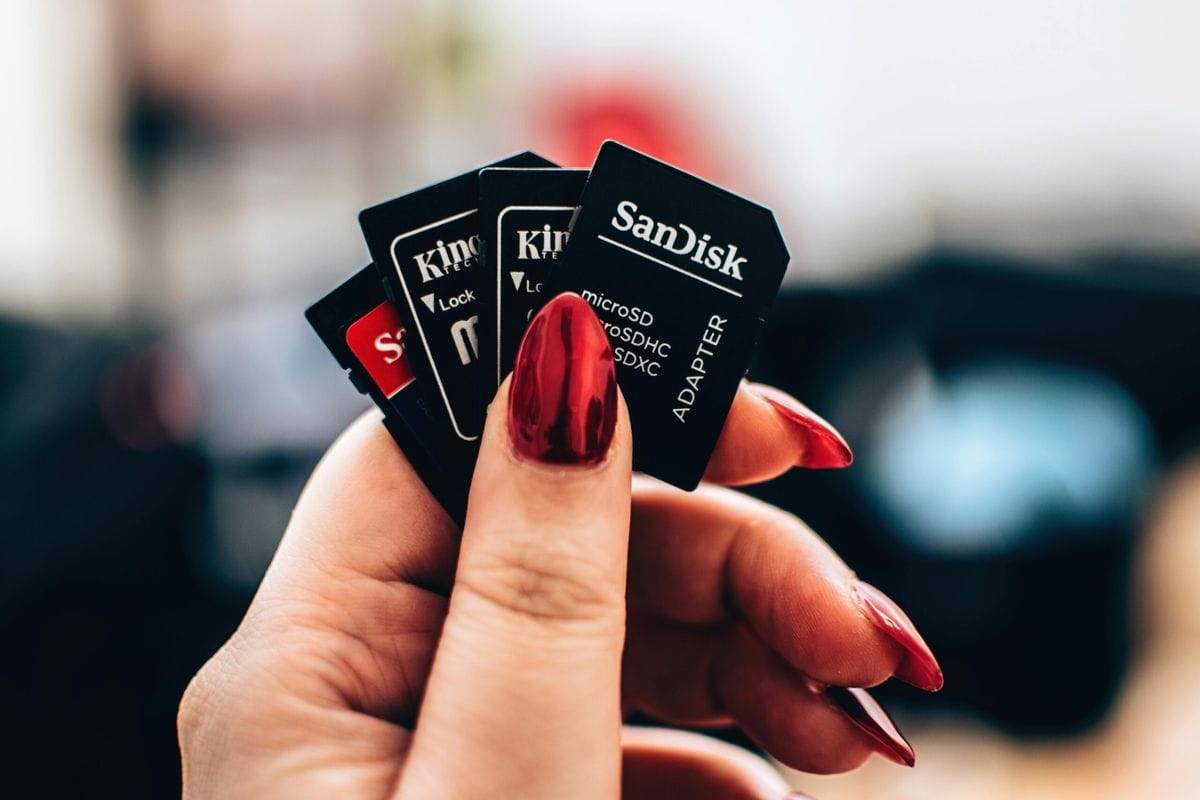
I don't care what kind of artist you are, there's a pretty good likelihood that some of your work is in digital form. Even painters have on-line portfolios or scans of their work. If you're of a certain age, some of this work might live on older computers that no longer boot, some might be in the cloud, some on thumb drives.
So if you've ever lost anything digital, you may realize how ephemeral and fragile digital information can really be. It's here today but may easily be gone tomorrow.
What I appreciate about that Meister's guide is that it does not moralize. Hard drives last about five years. Formats go obsolete. We delete things by accident. None of this is a failure of character. It is physics and neglect.
So if you, like me, never get famous enough for someone else to build your archive, here is the guide on how you build one for yourself, and for the people who might want it later.
Meister is calm about drives that stop spinning; it's just physics. But the physics gets stranger when the media itself rots in place, and a decades-old anti-piracy slogan comes back begging you to copy that floppy.
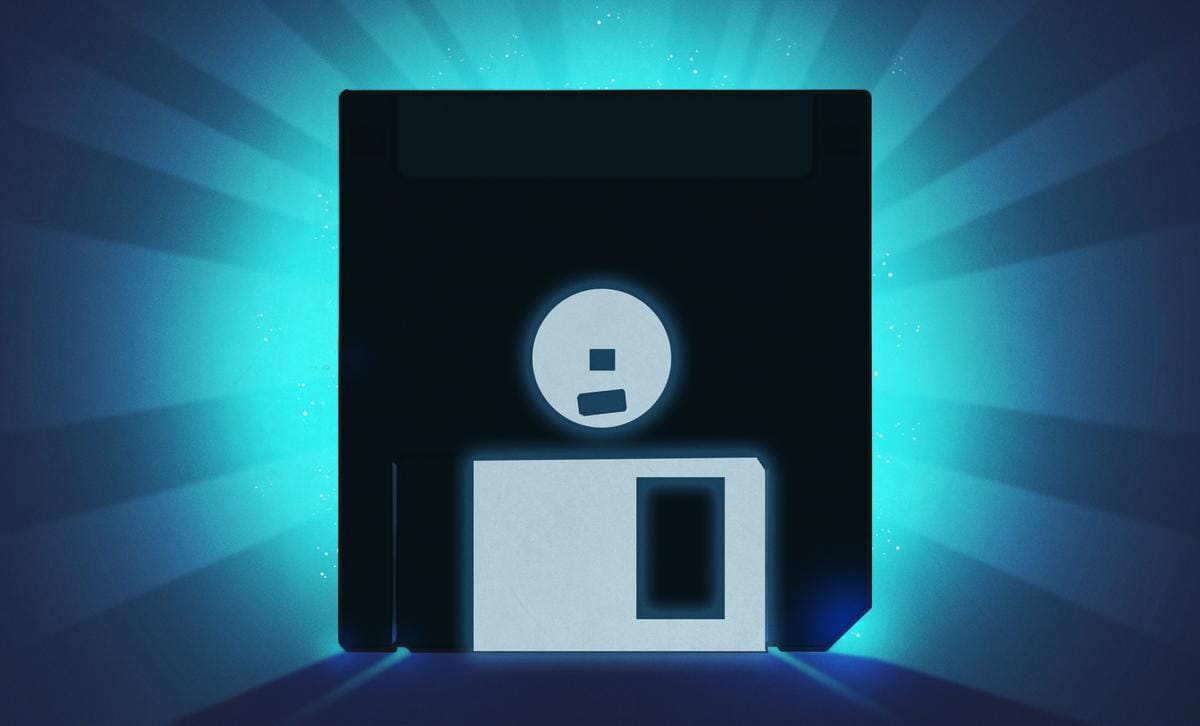
The Floppy You Should Have Backed Up Is Now a Preservation Emergency
In the early '90s, during the music piracy days, there was a campaign to try to scare kids away from pirating music, and that campaign was called "Don't Copy That Floppy!"
In my research about data preservation, I came across a piece written at Hack a Day by Tom Nardi: "Copy That Floppy!", an ironic twin concept launched by the University of Cambridge, of all institutions.
For me, floppy disks were sort of the canary in the coal mines on this. Floppy disks readily failed and were pretty flimsy. But for me, the fragility of digital storage somehow didn't seem to transfer to hard drives or computers. Until they started failing years later, I thought of them as pretty permanent.
But now, in a later stage of life, I've got tens of thousands of images sitting in the cloud. Once I'm gone and no one is paying the storage subscription fees, all that photography archive evaporates. I know of some photographers that select their best work and create traditional prints or have someone do it because those physical objects at least don't require a subscription.
How are you planning to hand down the pictures nobody printed?
THE LAST WORD
I didn't mean for this issue to be morose. There is a valid point of view to simply embrace impermanence and let it all vanish. After all, I'm not a famous artist, and this preservation desire may simply be vanity beyond my own death.
For now, I still don't have a real plan on what to do once I'm gone and no-one is there to pay for the cloud storage subscriptions. If anyone out there has thought about this and has an opinion, a plan or tips beyond the same guilty intention, I'd love to hear from you.
Best,
Juergen
Member discussion