
The Stupidest Way Is Sometimes the Best Way
 Greetings from Juergen
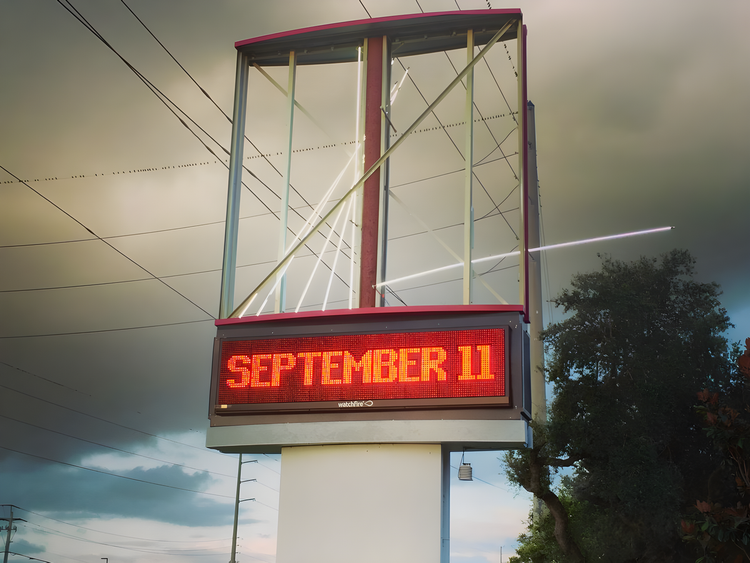
Last week was Issue 87 — the 25th anniversary of September 11th. This week I went looking for something lighter. And then the news had other ideas.
The AI safety panic finally jumped the fence. It went from tech Slack channels to friends and relatives asking me whether the robots were going to kill us all. The founders who spent years waving away the worry are now the ones sounding alarms. Republicans and Democrats agreed on something. That alone should tell you how strange the week was.
So I did what any reasonable person does when the future feels heavy. I went looking for people doing gloriously pointless things by hand.
I want to say it's purely lighthearted. And it is — mostly. But I'd be lying if I said I didn't also see a little desperate escapism in it. Maybe some deck chairs being rearranged on a very large ship. I can't quite decide whether that makes it more charming or more poignant.
Subscribe to 'The Intersect: Art in Tech and Tech in Art' podcast, a companion audio feature where we explore each week's topics in a conversational format.
DEFINITELY NOT AI
A Million Keystrokes, One Index Finger, Zero Algorithms
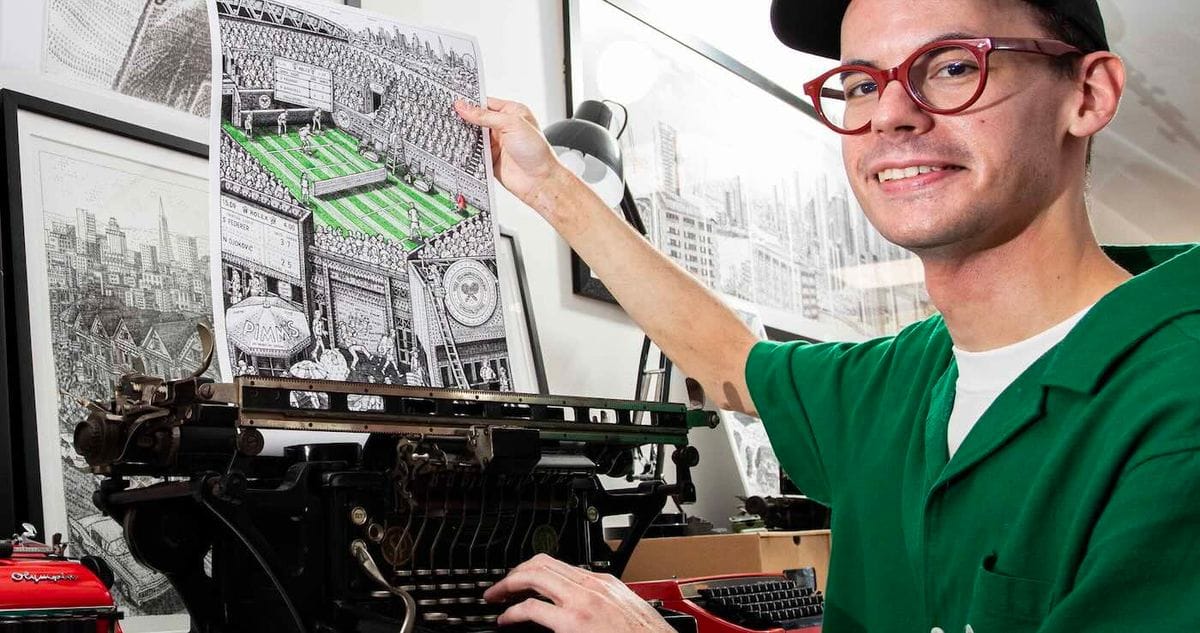
A million letters and symbols, tapped out with one right index finger. That's what James Cook, a London artist working out of a studio in Canning Town, did to make a single drawing of Wimbledon's centre court. Good News Network reports he builds these images on a vintage typewriter. No stylus, no tablet, no model. Just one finger and a machine most people binned decades ago.
I love this precisely because it is gloriously, stubbornly low-tech. He builds pictures the way you'd build a wall, one brick at a time, except the bricks are the letter "e."
Cook says he types over a million letters and symbols onto the piece of paper to create his masterpieces, using only his right index finger.
This week the AI panic finally reached the regular news, and it is a lot to sit with. So there's a specific comfort in watching someone do the most willfully inefficient thing imaginable. A machine could generate this Wimbledon scene in nine seconds. Cook spent months on it with one finger, and clearly found something there worth the ache.
That's the odd gift of doing the stupidest possible thing. When the machines are coming for everything, the hardest path becomes the one thing only a human would be stubborn enough to want. Creative freedom, or the most charming denial we've invented? I genuinely can't tell.
Cook spent a long time making his effort look effortful, but the next artist applied similarly detailed craftsmanship. Same stubbornness but with widely different tools.
DESIGN
A Brutalist Aluminium Display for the Stupidest Possible Problem
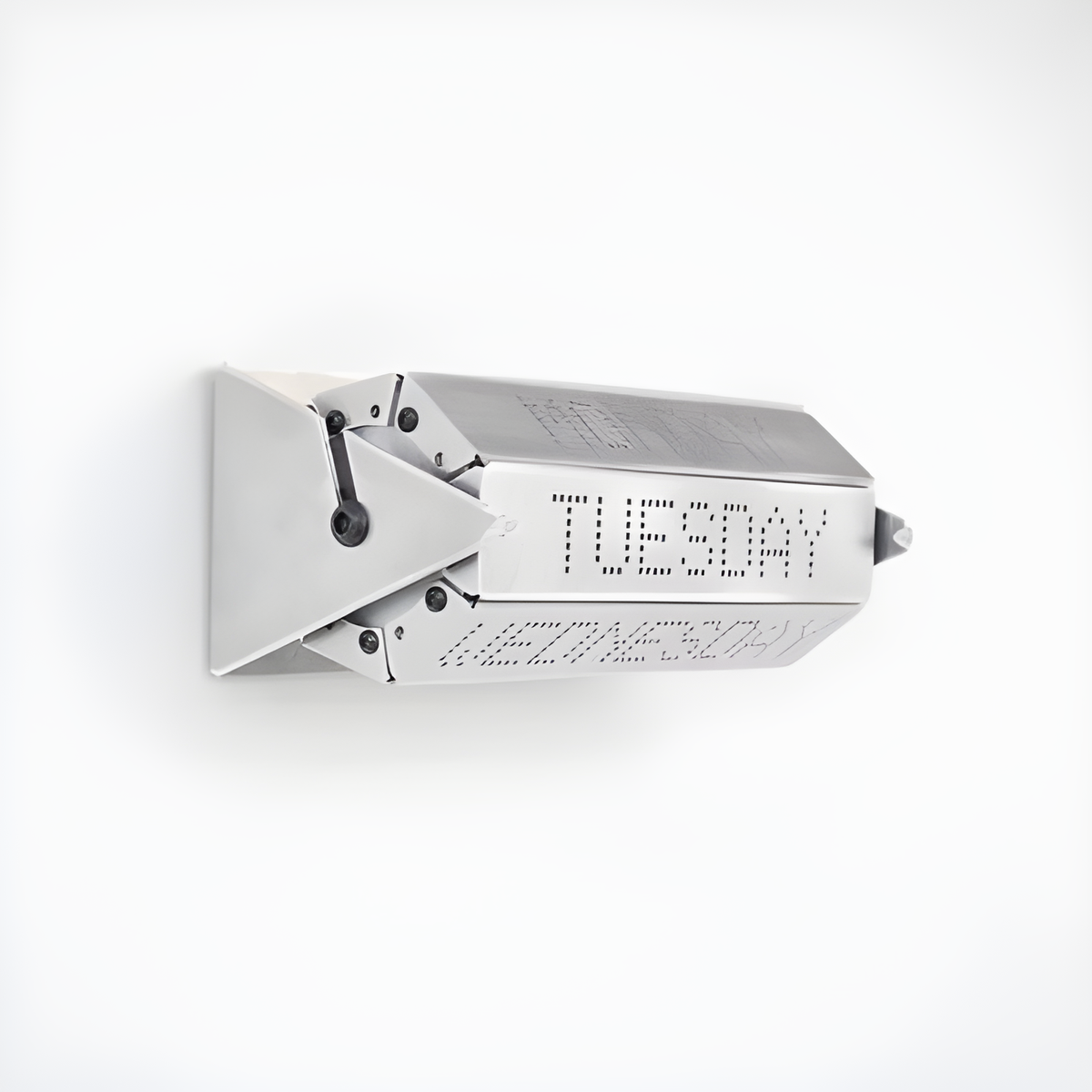
There is a wall-mounted slab of precision-milled aluminium in New Zealand whose only job is to tell you what day it is. Rain Noe wrote it up at Core77. It comes from an outfit named, with admirable honesty, Stupid Engineering. The designer, Ben, describes his work as solving problems in "the simplest, silliest, stupidest way possible." He overbuilt a refrigerator-magnet task in brutalist metal. On purpose.
So much of the design world performs gravity. Every object gets pitched as a fix for some urgent human need. This is the cheerful opposite. It is a beautifully made joke that knows it is a joke, and spends 2mm of bent aluminium on the punchline. I would absolutely hang it on my wall.
"Made of precision milled and bent 2mm aluminium, the Day Display is a Stupid solution to a stupid problem."
That line is the whole philosophy. Real craft, fully committed, aimed at something happily pointless. The commitment is what makes it good rather than dumb.
The rest of this issue is full of people picking the willfully inefficient path, and grinning about it. When did we decide good design has to justify itself? And what do we lose by never letting it just be silly?
That aluminum slab commits fully to a happily pointless job, and grins about it. When I was in college, there was a sign over my photography darkroom that Professor Wiley Sanderson had put there, and it read, "Most people would rather be ruined by praise than saved by criticism." This next story seems to come from the same vein. I think Wiley just wanted to prepare us artists for a challenging career ahead. But I'm not sure that a video game is the way I would choose to prepare. Still, it made me chuckle (uncomfortably)...
INTERACTIVE ART
A Video Game About the Slow Torture of Making Art
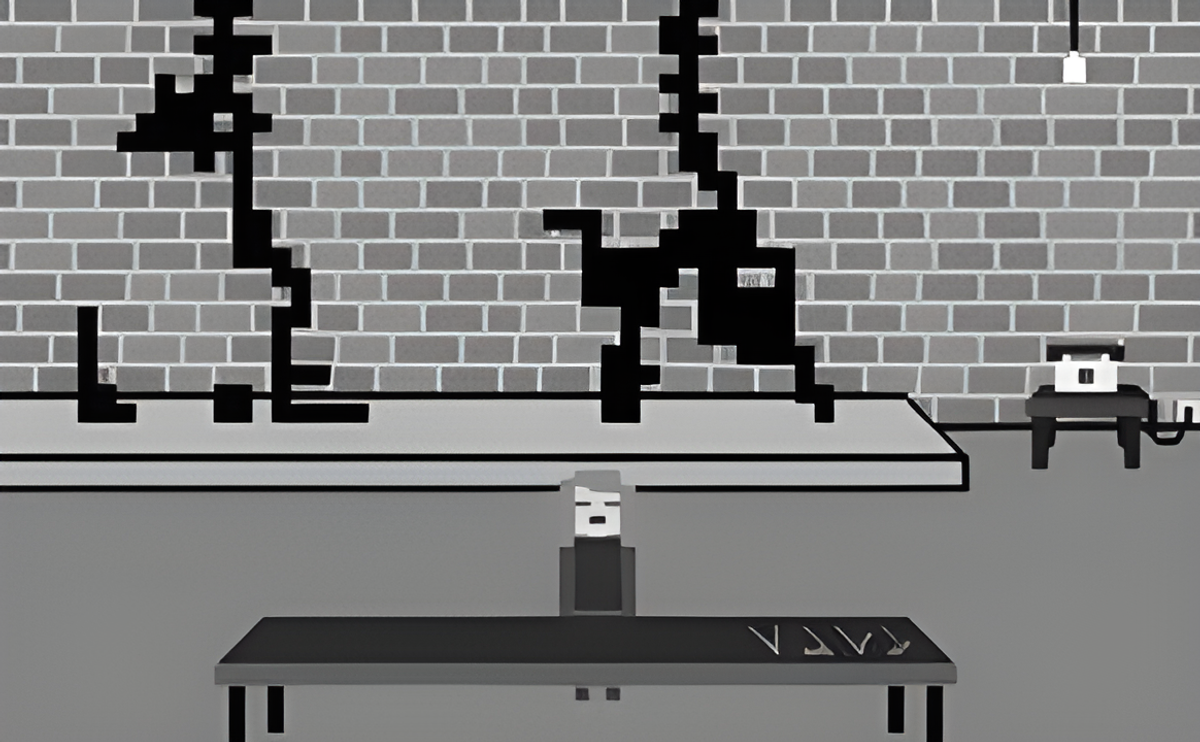
Somebody built a video game where the boss fight is a MoMA curator. As Kyle Chayka writes for Hyperallergic, indie developer Pippin Barr's "Art Game" takes the term literally. You pick a struggling New York artist, make work by playing warped versions of Snake, Tetris, and Space War, then wait for a curator to decide whether any of it deserves a wall. The catch: your artwork is only "finished" when you lose the game.
Here's where I get stuck. It's a genuinely funny collision of two worlds I love, and the craft is real. But I can't figure out who it's for. Hardcore gamers won't touch eight-bit SoHo gallery politics. And the rest of us, the potentially struggling artists, why would we volunteer for this? I already live the part where a stranger says my best work belongs in the bin. I don't need it in pixels too.
The time I spent as Tertanov felt wasted as Madame Curator told me that, "ultimately I think the best thing is for you to just re-engage with your practice," which a hilarious and pointed bit of International Art English that Barr did well to include. It feels like an insult.
That line is the whole game: the randomness, the fake-polite brush-off, value handed down by power brokers rather than made in the studio. Barr nails it. If the other willfully absurd projects this week are people choosing the hard, silly path on purpose, this one dares you to relive your worst day for fun. Is a game still fun when it perfectly simulates the thing you were hoping to escape?
Barr's game hands your artistic worth to a fake curator. The next project skips the gatekeeper entirely: two brothers rebuild a $200,000 clock installation and give it away on a free hosting tier.
A Wall of Clocks, a Vercel Deploy, and the Question of Craft
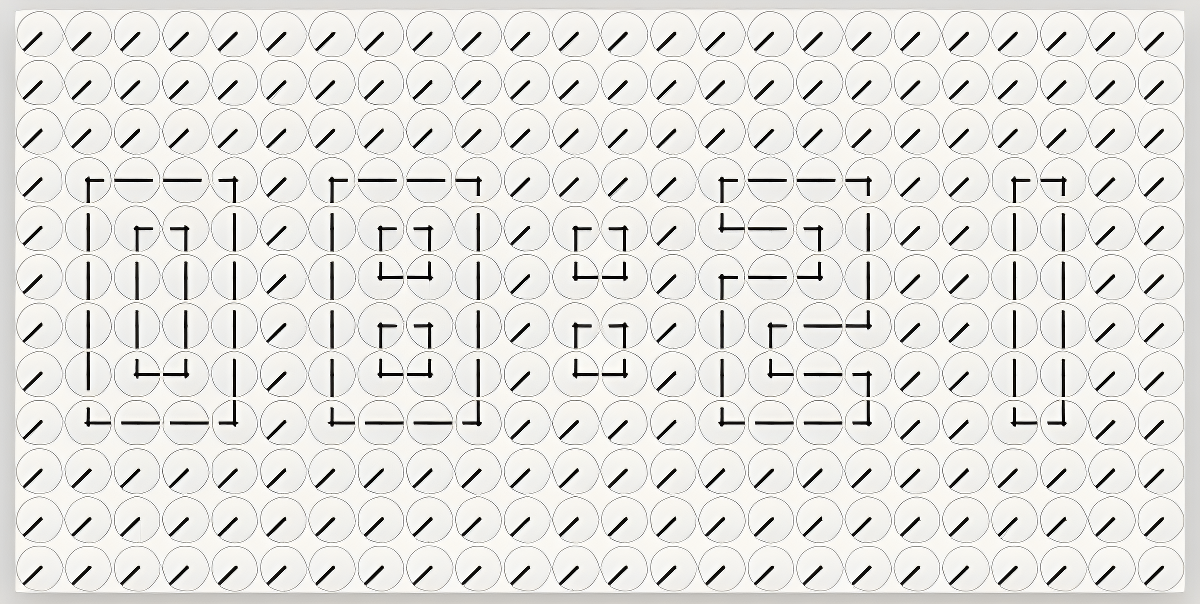
Some art sells for the price of a house. Some of it ships on a free hosting tier. Over at Neatorama, the writer points to A Million Times Tribute, a browser homage by Matt and Patryk Zatorski to the Swedish studio Humans since 1982. The original is a grid of synchronized analog clocks that arrange their hands into digital numbers. The tribute is 288 clock faces you can poke with your mouse, send waves through, and reconfigure into 504 if you find the little star in the corner.
As a tech nerd, I build software tools right now hosted on Vercel. This clock? Also hosted on Vercel. So the same machinery serves up my unglamorous product code and someone's mesmerizing geometric toy.
When it isn't displaying the time, it is a mesmerizing geometric artwork of rotating clocks.
That's the line that snags me. The maker crowd leans on friendlier coding tools every month, and I keep wondering where the threshold sits. Maybe this isn't art yet. Maybe it's coding craft, the fiddly hand-tuned kind, quietly climbing in ambition.
If the machines really are coming for everything, closing the issue on a free deploy that ships a small wonder feels like the right kind of stubborn.
THE LAST WORD
Thanks for reading this week, especially in a stretch where the AI news has felt loud and a little exhausting. I keep coming back to these four people who chose the hard, silly path on purpose. Part of me wants to call it creative freedom. Another part wonders if it's the most charming denial we've invented, a way of feeling human while the machines get on with everything else. I genuinely don't know which it is, and I'm not sure I need to. What I'd love is to hear from you. When you do something the slow, stubborn way, does it feel like resistance, comfort, or just plain fun? Hit reply and tell me.
Best,
Juergen
Member discussion