
Who Gets to Say What Something Is?
 Greetings from Juergen
Last week a Red Bull video crossed my feed. People in Europe build goofy flying machines and launch themselves off a platform into a lake. In this one, an improbable chicken contraption flew half a mile, turned around, and landed on the water. My very first thought was: that has to be AI. I still don't know if it was. And that reflex, the instant suspicion, is what this whole issue is about.
When we can no longer tell skilled human work from AI output, the burden lands entirely on the artist to prove they did the labor. That proof almost never arrives in time. Olalekan Jeyifous put years of work into his first museum solo at the Walker, and someone wandered in and posted an "AI slop alert." The tool's reputation showed up before his work did.
What bothers me is how cheerfully we've handed aesthetic judgment over to suspicion. Something cool or strange crosses your eyes, and the question is no longer "is this good?" but "is this real?" I'm not sure that trade is worth it. A thing is what it is partly because of what it isn't. So what happens to our eyes when we genuinely can't tell the difference anymore?
Subscribe to 'The Intersect: Art in Tech and Tech in Art' podcast, a companion audio feature where we explore each week's topics in a conversational format.
SOCIETAL IMPACT OF ART AND TECH
When 'AI Slop' Becomes the Default Accusation
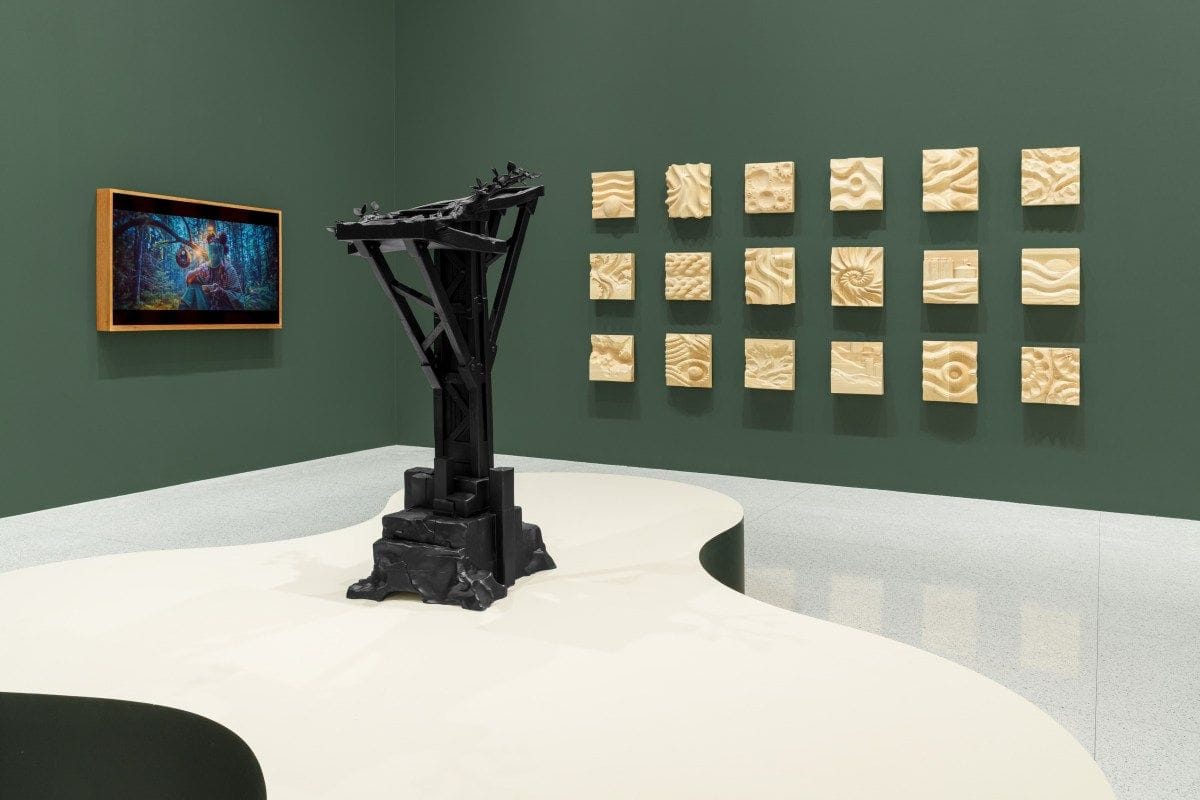
A Reddit user walked into Olalekan Jeyifous's first museum solo at the Walker Art Center, saw video, sculpture, and soundscapes drawn from African diasporic cosmologies, and posted an "AI slop alert." Brian Boucher's report in ARTnews lays out the aftermath: the museum and the artist pushing back, Jeyifous saying that prompting images and calling them his art would be "fundamentally at odds" with how he works. He is an architect and designer. He uses the tools those fields use. That was enough to get him branded.
The reflex is the real story. Our first response to a striking image now is suspicion, not wonder. I keep wondering whether that's human nature, the old pull toward the conspiratorial, or something more cultural. I notice it most in American reactions, though I can't prove that. Somewhere in the last few years the world got less trusting, less joyful, more skeptical by default.
"Nowhere in the exhibit did they let guests know that Jeyifous used AI, which feels so shady and wrong."
Here's the thing: a work is only what it is in relation to what it isn't. The moment we can't tell real craft from machine output, that line stops holding. So the proof lands on the artist, and it rarely arrives in time. We've swapped aesthetic judgment for suspicion. "This looks too good" used to be a compliment.
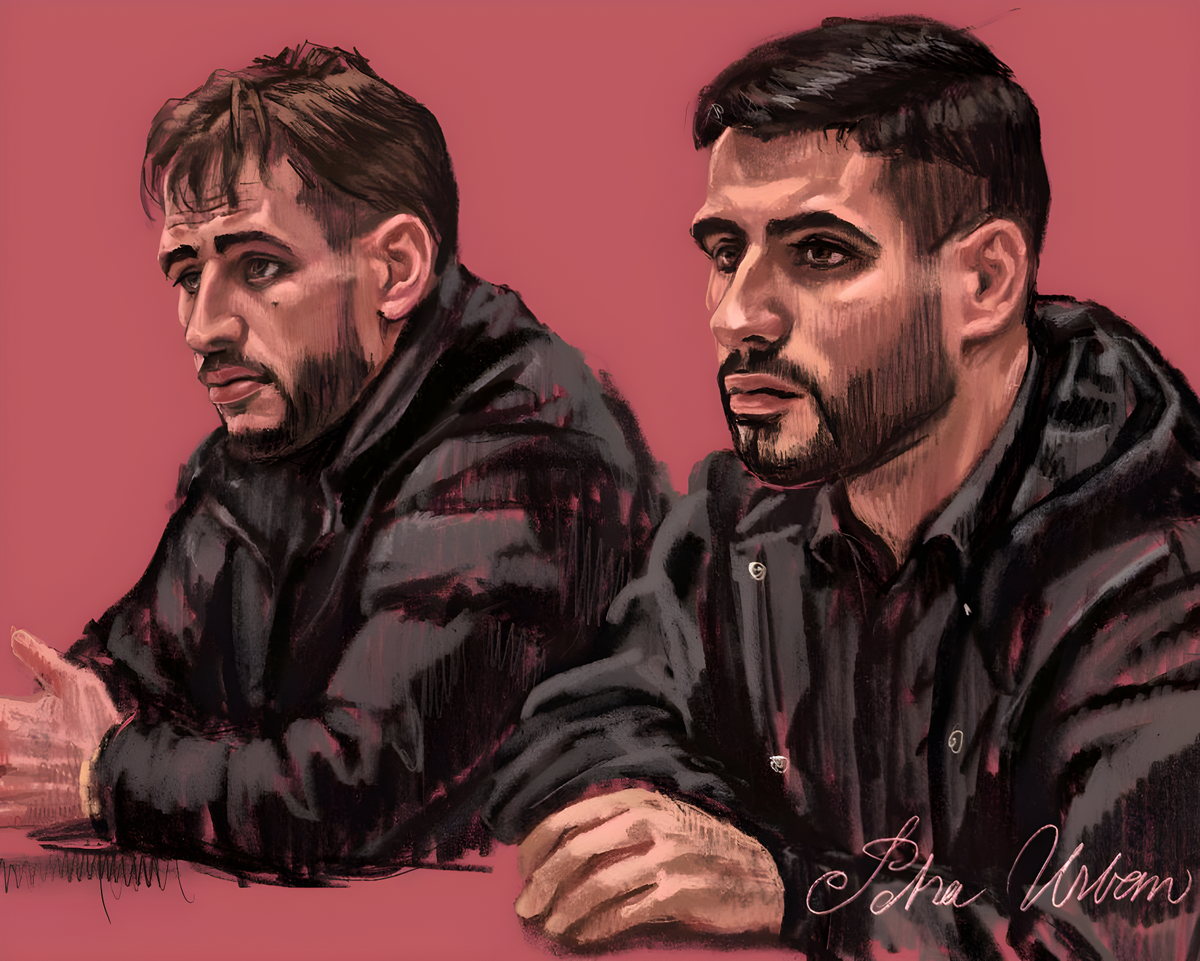
Jeyifous was accused of using a tool he didn't touch. Petra Urban's problem runs the other way: someone else ran her honest court sketch through AI and sent it back out wearing a snarl she never drew.
A Court Sketch, Two Faces, and the AI Distortion Problem
Senay Boztas reports in the Guardian on a story that made me stop and stare. Petra Urban, a Dutch court artist of 19 years, drew two brothers on trial for murdering their sister. Then a regional branch of Geert Wilders' far-right PVV grabbed her sketch, ran it through AI, and gave the men angrier faces for a social media video. She won damages under Dutch moral-rights law. The party's MP called to apologize.
Go find the before-and-after images. You really have to see them. Neutral faces become snarling ones, and the whole meaning of the drawing flips. But let me be clear: this is not a story about AI being evil. AI didn't decide to smear anyone. A person did. The tool just made the smear cheap, fast, and convincing.
"There are three things that upset me. One is that my work was used without asking my permission. Secondly, this was done for a political party, when I want to work as neutrally and independently as possible. And thirdly, and this makes it really strange, the distortion was done with AI."
Urban's third point is the one that lingers. The distortion is the old crime. AI is only the new speed. Which pushes the work onto us as viewers. We have to train our own suspicion, image by image, and that muscle only gets harder to build. So when the next outrageous face crosses your feed, will you already have asked who edited it?
Urban's sketch was altered to say something false. The Nikon cilia video raises a quieter version of the same worry: when AI enhances a scientific image, how do we know it's sharpening what was there, not inventing it?
When the Cilia Were Too Beautiful to Be True
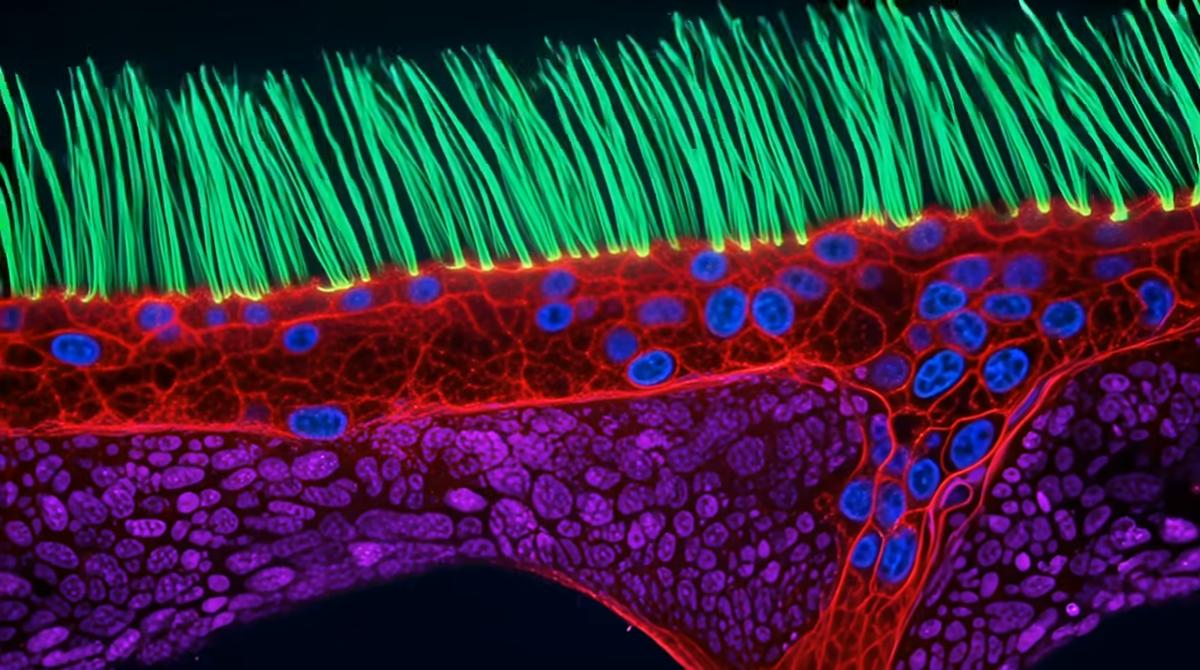
A microscopic video of cilia waving inside a child's airway won first place in Nikon's Small World in Motion contest. Then it lost. Stevie Bonifield reports at The Verge that Dr. Ning Xu's winning clip "did not comply with the competition rules regarding generative AI." Xu admitted on LinkedIn to using an unsupervised neural network for AI-assisted post-processing. The internet smelled it first; Nikon followed.
The AI authorship fight has quietly crossed from writing into scientific imaging. We have argued about ChatGPT essays and stolen paintings for years. This is different ground. Scientific illustration has always been enhanced by hand, honestly. Medical images come out low-contrast and muddy, and someone has to decide what to highlight. AI doing that work is not automatically a scandal. It is the next version of a very old practice.
An unsupervised neural-network method was subsequently used for AI-assisted post-processing to distinguish and visualize f...
But there is a line, and it runs through the source data. Enhancement has to start from something real. If the AI is sharpening features that were actually captured, fine. If it is inventing cilia that merely look the way we expect cilia to look, that is not a microscope anymore. It is an illustration wearing a lab coat.
So where exactly does "making the data legible" become "making the data up"?
With the cilia, the internet smelled AI before Nikon did. The same crowd-sourced suspicion flagged a horror novel as machine-made. This time, though, the author swears she wrote every word by hand.
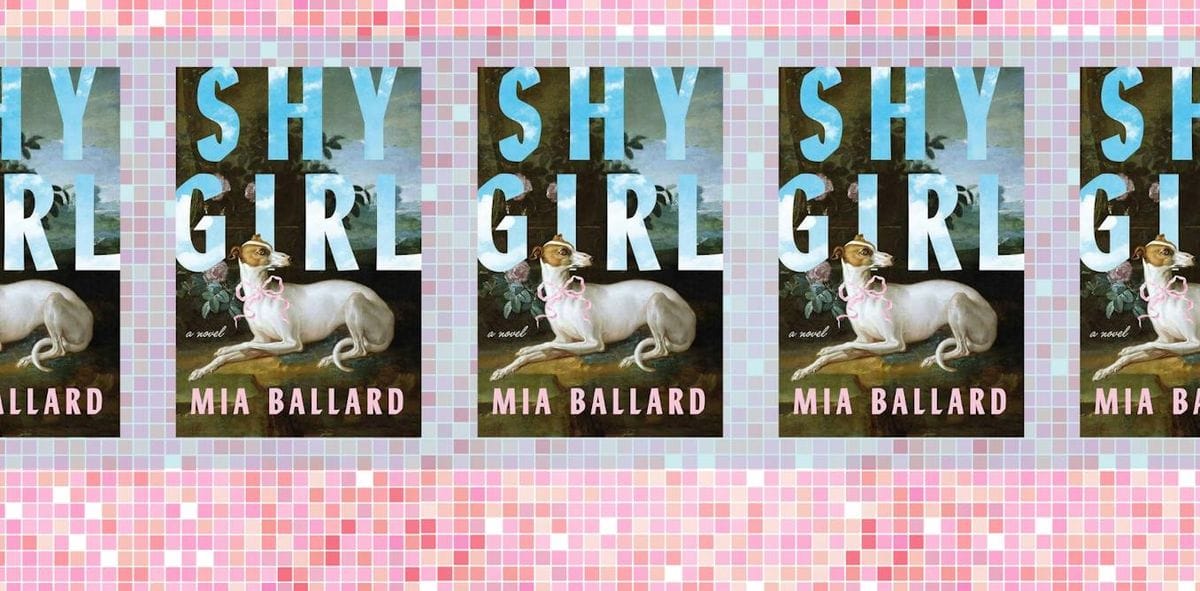
A Book Got Canceled Over AI. The Author Says She Wrote Every Word.
Natalie Wall's piece for The Conversation lays out the strange case of Shy Girl, a horror novel Hachette pulled from its Orbit imprint after Reddit sleuths flagged it as AI-generated. The tells were stylistic: adjectives before every noun, similes everywhere, descriptions in lists of three. Mia Ballard denies writing it with AI. She says an editor she hired on an earlier self-published version used AI tools. Then the book vanished, and so did she.
This one got personal. I listened to an interview with Ballard, and her account holds up. She wrote by hand; her editor reached for AI. I also ran my own writing through Pangram as a test, and it came back 70% AI. It was not. So the detectors are unreliable, which we covered back in issue 85. The deeper problem is the dogma forming around the tools themselves.
Cultivating a climate of distrust around writing and authors is also not necessarily productive, and further pushes AI use into secrecy.
Nearly everyone I know in communities like the London Writers' Salon uses AI somewhere for structure and editorial help. Their point is simple: an assistant that fixes clarity, not just grammar, often makes the writing better. But they are afraid to touch it now. If an LLM suggested a change, even one you typed in yourself from a fully human draft, that hint can sink a launch.
When a human-written book gets canceled because a machine helped tidy the sentences, what exactly are we protecting?
Ballard had no way to prove her sentences were hers after the fact. Two rival camps are now trying to settle that at the source, baking proof into the image file before anyone gets to squint.
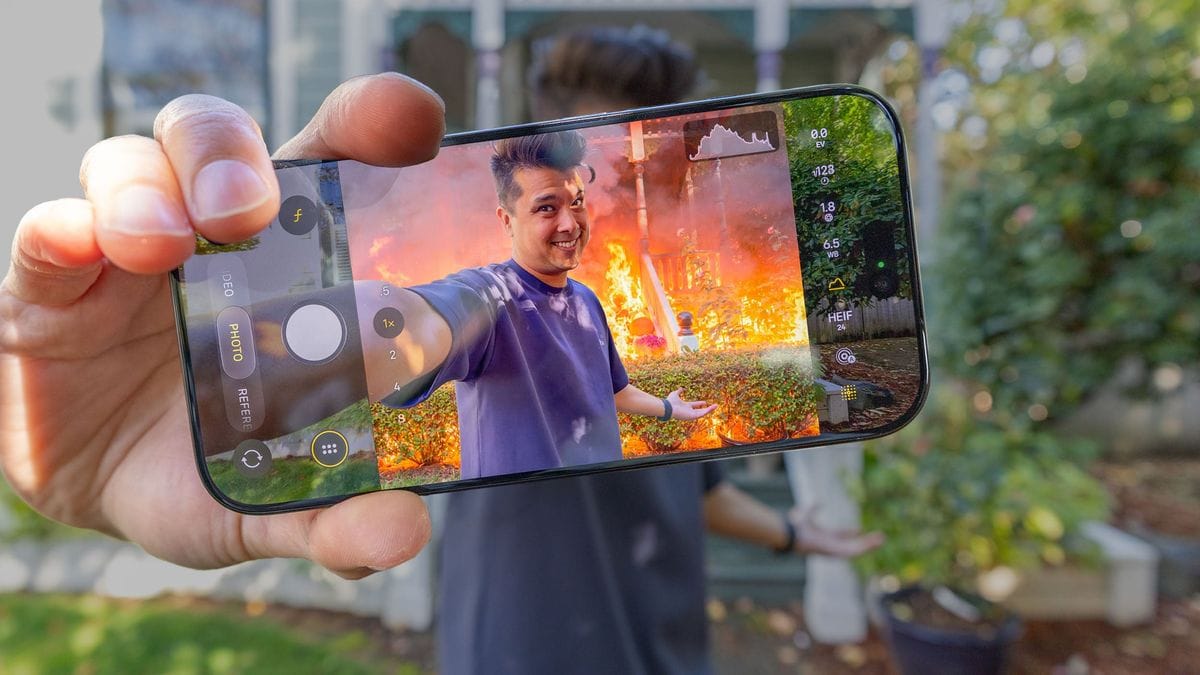
Two Rival Ways to Prove a Camera Actually Saw Something
Apple sat out the industry's big content authenticity push for years. Jaron Schneider's piece at PetaPixel finally explains why: Apple was quietly building its own answer, Apple Reference Image. So now there are two camps chasing the same deepfake problem. One is the Content Authenticity Initiative with its C2PA standard, already adopted by nearly every major camera and smartphone brand. The other is Apple, going solo. Schneider asks whether either approach is "best," and whether the two could ever work together.
I'm honestly still undecided whether fake images are a fundamental problem or just a passing fad. But when truth matters, news, politics, this feels bigger than most people are treating it.
Here's a confession. I was watching that silly Red Bull show where people build flying machines and leap into a lake. Then a clip showed an improbable chicken contraption flying half a mile, turning around, landing on the water. My first instinct: this must be AI. I still don't know if it was.
It is now easier than ever to type a few words into an AI generator and create a photorealistic image of something that never happened.
This issue keeps circling who gets to vouch for a work. These standards try to answer it at the file level, before a human ever squints. A Pope in a blue hat is harmless. A fake photo that swings an election is not. Right now I often can't tell which I'm looking at.
THE LAST WORD
Thanks for reading this one. It got under my skin more than most. I keep catching myself doing the thing I'm complaining about: something crosses my feed, and before I ask whether it's any good, I ask whether it's real. That Red Bull chicken is still rattling around in my head. I genuinely don't know what it was, and I'm a little bothered by how fast I reached for suspicion. So here's my question for you: have you noticed your own eyes changing? Do you trust what you see less than you did a year ago, or have you made some kind of peace with the fog? Hit reply and tell me how it's landing for you.
Best,
Juergen
Member discussion