
The Courage Gap
 Greetings from Juergen
Last week I watched someone share a protest image online. It got hundreds of likes, all from people who already agreed. Nobody's mind moved an inch. That stuck with me, because this issue is about a simple, uncomfortable idea: the loudest creative protest usually reaches only the people who are already on your side. The quiet one can slip inside a frame the audience already trusts, and tilt it from within.
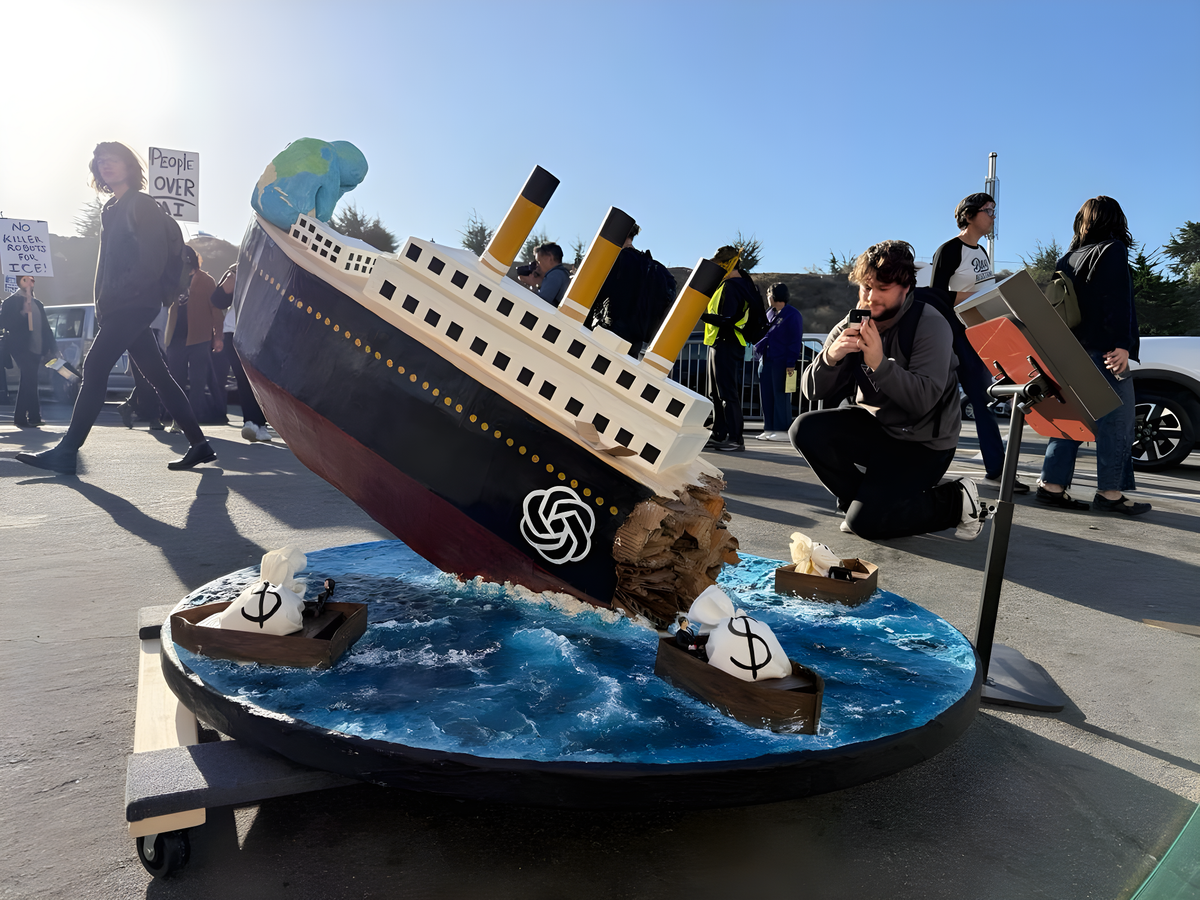
Take the papier-mache Titanic that showed up outside an OpenAI event, AI leaders fleeing a sinking ship. It's funny, it photographs well, and I genuinely admire the craft. But who was it ever going to reach besides the folks already nodding along? Compare that to a magazine cover, or a film, or a portrait that lands where people aren't expecting an argument.
I wonder if we tend to celebrate the obvious gesture, the one that reads clearly at a rally. Yet the work that looks least like resistance might be doing the most actual work. And a harder question sits underneath: who was each act ever structurally able to reach in the first place? Intention is one thing. Audience is another. The gap between them is part of the work, whether the artist planned for it or not.
Subscribe to 'The Intersect: Art in Tech and Tech in Art' podcast, a companion audio feature where we explore each week's topics in a conversational format.
PHOTOGRAPHY
Sam Altman as the Wanderer Above the Sea of Fog
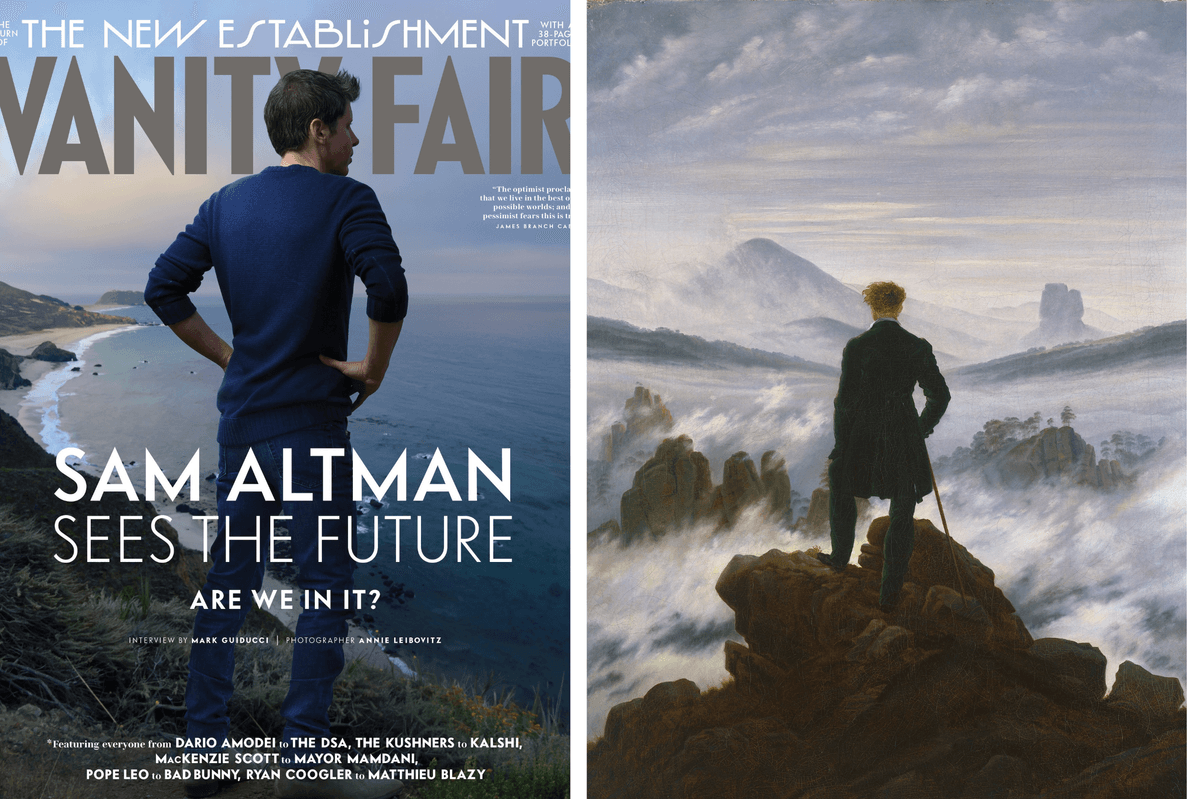
Annie Leibovitz put Sam Altman on the cover of Vanity Fair's revived "New Establishment" issue, staged as the figure in Caspar David Friedrich's 1818 Wanderer above the Sea of Fog. Katie White's piece at Artsy Editorial walks through the restaging: Altman seen from behind, hands on hips, surveying Bay Area bluffs instead of Bohemian cliffs. The caption carries the weight: "Sam Altman sees the future, are we in it?"
The device is clever. The Rückenfigur, the figure turned away so you can step into the frame, is genuinely good visual grammar. But Friedrich's wanderer stood at the edge of something vast and unmanageable. The point was that he couldn't control what he saw.
While Friedrich's figure contemplated nature's connection to divinity, Altman, it might be inferred, contemplates the future of artificial intelligence. The reference offers an uneasy inversion, with Friedrich's figure enthralled by nature, and Altman, the artificial and technological.
So the fog used to be the unknown. Now the fog is the product, and the man on the cliff is the one selling it.
This issue keeps circling what a frame the audience already trusts can quietly do. A Vanity Fair cover is exactly that kind of trusted frame. So is Leibovitz being subversive at all, or just flattering him? I honestly can't tell, and I'm not sure she can either.
Leibovitz used a trusted frame to flatter the man selling the fog. The next artist uses the fog itself, generative AI, to tell a story that couldn't safely be told with real faces at all.
AI IN VISUAL ARTS
When "AI Slop" Becomes a Film That Otherwise Couldn't Exist
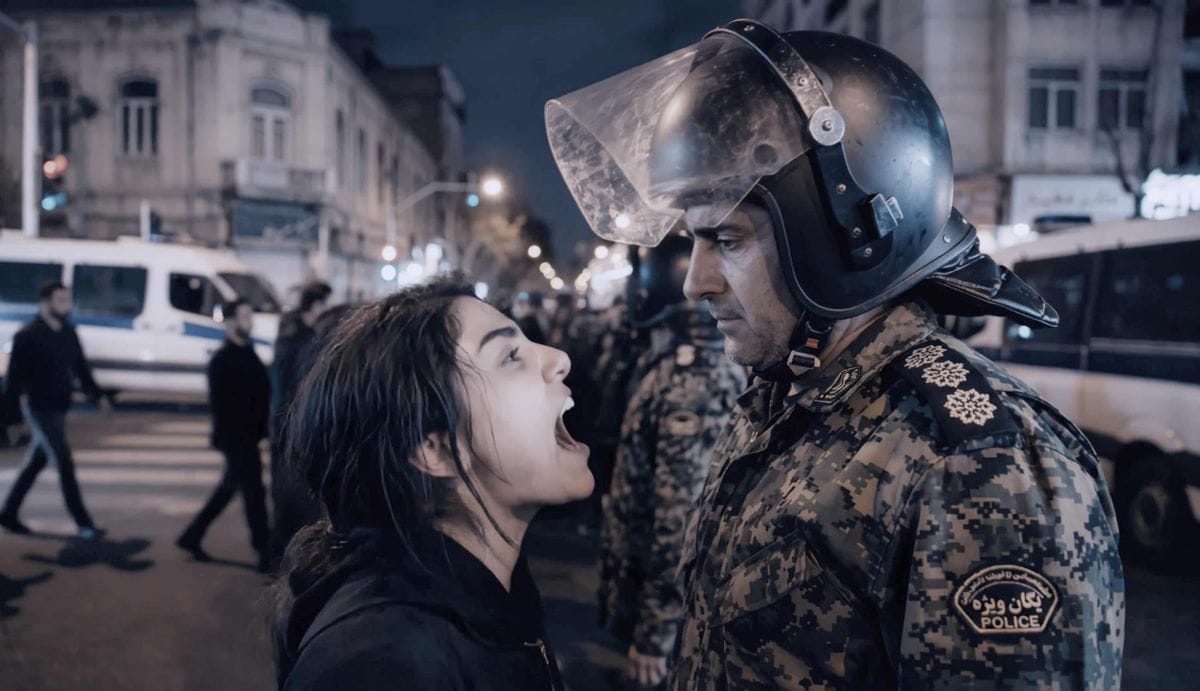
A 75-minute drama about Iran's protest crackdown, made in weeks for $2,000, premiering at Tribeca, and every image in it is AI-generated. Cath Clarke's piece in the Guardian introduces Dreams of Violets by Iranian-British director Ash Koosha, the first fully-AI live-action feature at a major festival. Koosha built his characters from descriptions of people he once knew, partly because basing them on living Iranians would be dangerous. About 80% of it, he says, recreates events that actually happened.
This issue opens on a real knot. We've argued before on The Intersect that AI is most palatable as infrastructure: the bookkeeping, the promotion, the image tools that now ship with AI features whether you asked for them or not. Generative AI making the actual work? Nobody in the art world wants that sort of "AI slop," even if we can't agree what slop means. And yet this film could not exist any other way. The CGI would have cost millions. The safety risk was real.
"A lot of the traditional festivals just don't want to touch AI. They don't want to even talk about it. What I've realised is that no one wants to be first."
So maybe the line between slop and something worth defending isn't the tool. It's whether the work needed to exist and had no other route there. Which raises a sharper question: are we forgiving the method because we approve of the message? Would we be this generous if the film were about nothing in particular?
Koosha keeps the method out of sight so the story can land. Sputniko! does the opposite: she leaves the detection boxes on screen, so you watch the machine build its beauty while you're being moved by it.
ARTIFICIAL INTELLIGENCE AND CREATIVITY
Sputniko! and the Uncanny Valley of Abundance
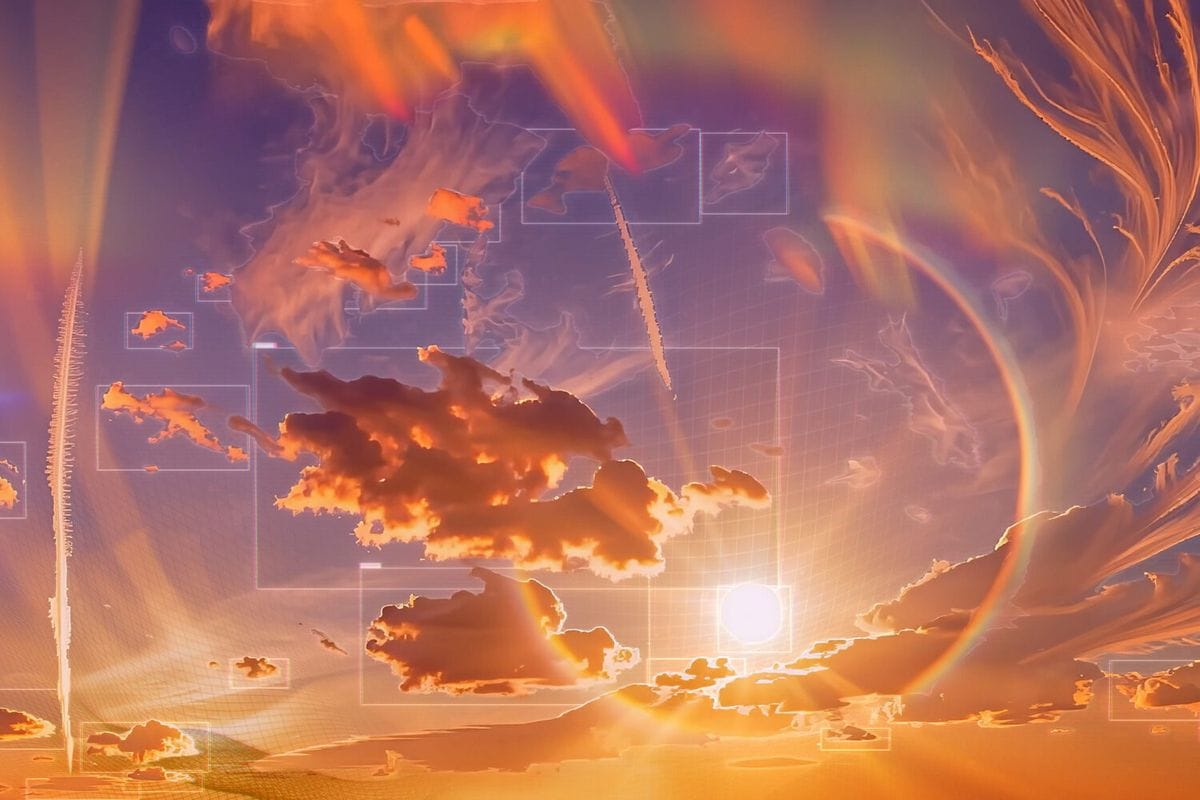
A twilight sky fills with good omens: iridescent clouds, halos of light, dragons and phoenixes forming overhead. In the Ars Electronica blog, the festival's editorial team profiles the artist Sputniko! and her new work, A Sky of Infinite Wishes, premiering in Deep Space during 2027. In East Asian traditions, these signs might appear once in a lifetime. In her AI-driven sky, they never stop. The blessings keep coming until the beauty condenses into something you can no longer relax into.
The sky starts as a vision of good fortune, then crosses some invisible line where more stops being better. Call it an uncanny valley of abundance. At the far end of the graph, a new authority has quietly emerged. Nobody announced it. It just accumulated into being. One sentence got me:
"...demonstrates how easily authority can emerge from technological systems and how readily people may place their trust in them."
Sputniko! refuses to hide the machinery. The detection boxes and algorithmic interventions stay on screen, so you watch the system build the spectacle in real time. That honesty is rare, and it makes the unease sharper, not softer. Elsewhere this issue leans on the overt gesture. Here the resistance is a tilt you almost miss: we treat AI like an oracle because it keeps delivering, and the delivering becomes the thing we bow to.
At what point does an endless stream of blessings stop feeling like a gift and start feeling like a ruler?
Her unease is a quiet tilt you could easily miss. The papier-mache Titanic outside OpenAI's door is the opposite register entirely: five feet of cardboard that wants you to see exactly what it means.
ART AND POLITICS
A Papier-Mache Titanic Shows Up to OpenAI's Party
A five-foot papier-mache sculpture of AI leaders fleeing a sinking ship turned up outside an OpenAI developer event in San Francisco. In a report at Ars Technica, Benj Edwards describes What Iceberg?, built over five days by Berkeley's Odd Friend Studio from cardboard, paint, and a repurposed table. One co-creator, who gave his name as Kevin, says the real metaphor isn't the collision. It's that the Titanic always had lifeboats for the wealthy, and everyone in the lower decks drowns.
The sculpture is good. The message lands. The craft-versus-shortcut tension is exactly the ground this newsletter lives on. But I genuinely wonder who it's for. The OpenAI crowd walking past it to a dev conference is not the audience most likely to soften over some wet papier-mache.
Creativity is our birthright, and when someone sells you a shortcut to escape that, that's insane to me.
Kevin leans hard on time: doing it slowly, by hand, no shortcuts. I love the framing. I also don't quite believe protest art changes the people it targets. It mostly speaks to the side that already agrees. Maybe that's fine. Maybe reminding your own people they're not crazy is the whole job.
Elsewhere this issue lingers on quieter gestures, the kind that slip inside a frame the audience already trusts. This one plants itself at the gate instead. So which is it: a real intervention, or a very handsome way of preaching to the choir?
Kevin's sculpture plants itself at the conference gate and still mostly reaches the already-convinced. These Filipino artists skip the gesture and the gallery both, standing instead on the actual farmland the machines want paved over.
When Artists Skip the Metaphor and Take the Street
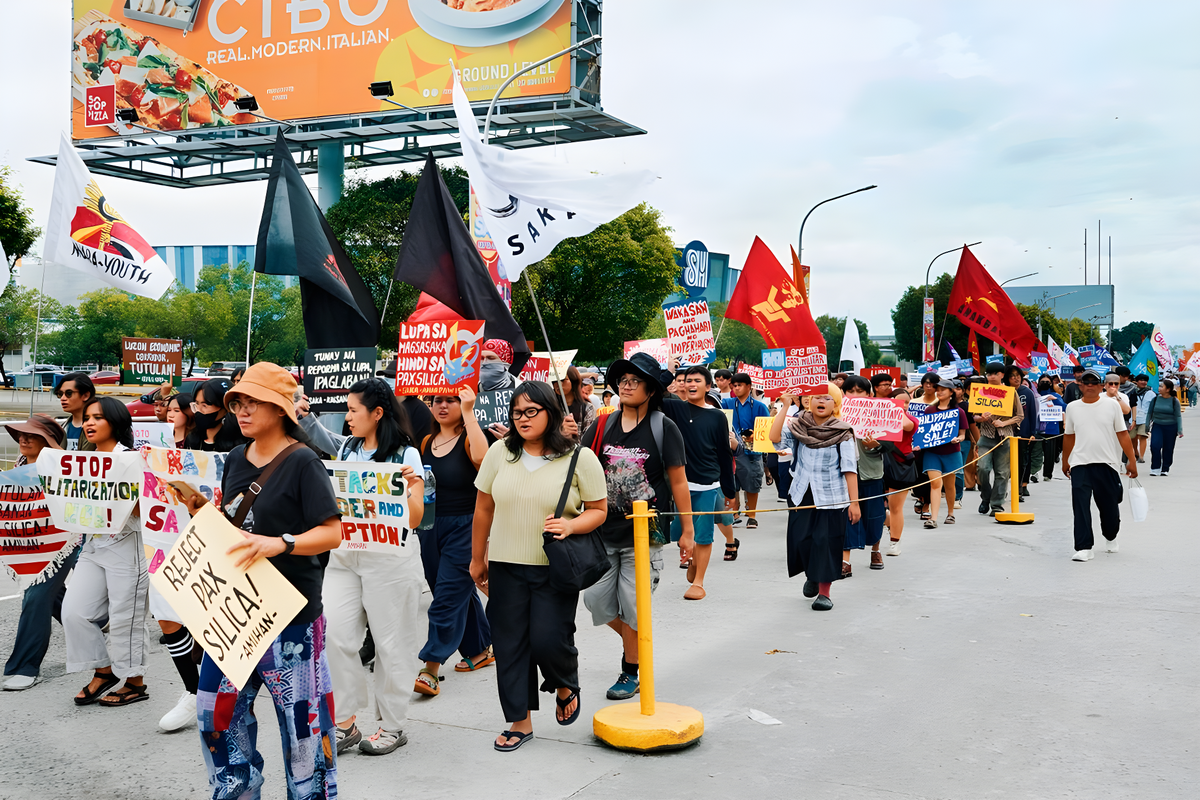
A coalition of Filipino visual artists, designers, writers and photographers has decided the most honest response to a 1,600-hectare AI hub is a rally, not a gallery wall. Zian Chen reports in Ocula Magazine on Artists Unite Against Pax Silica (AUPAX), who warn the US-backed project could have a "devastating effect" on land, labour and livelihoods. Their exhibitions tie two threats together: generative AI scraping artists' work, and farmland being paved over for the machines doing the scraping.
What strikes me is how blunt it all is. No allegory, no installation you have to decode. Just people marching to the project's intended site. I keep weighing whether this on-the-nose approach makes people think harder than an artwork quietly commenting on the same thing. My honest guess: it lands louder locally, and fainter globally.
"When AI crops out artists from art-making, steals works to train AI and takes over agricultural land, what are they expecting to harvest but resistance?"
That line does more work than most protest art, and in one sentence. A painting about displacement reaches strangers an ocean away, but it can also get absorbed as content, admired and scrolled past. A body standing on contested ground reaches fewer people, but nobody mistakes it for decoration. Elsewhere this issue lingers on work that hides its stance to travel further. Here the stance is the whole point, and it stays put.
When does art persuade more by being a statement, and when by being a question?
THE LAST WORD
Thanks for reading all the way through this one. I keep turning over a question I can't quite settle: when a protest looks least like protest, is it braver or just safer? When you make work that refuses to stay neutral, do you aim for the people already nodding, or the ones who aren't expecting an argument at all? Hit reply and tell me what you're wrestling with. The thinking is better when it's shared.
Best,
Juergen
Member discussion