
Artists on the Architecture of After 9/11
 Greetings from Juergen
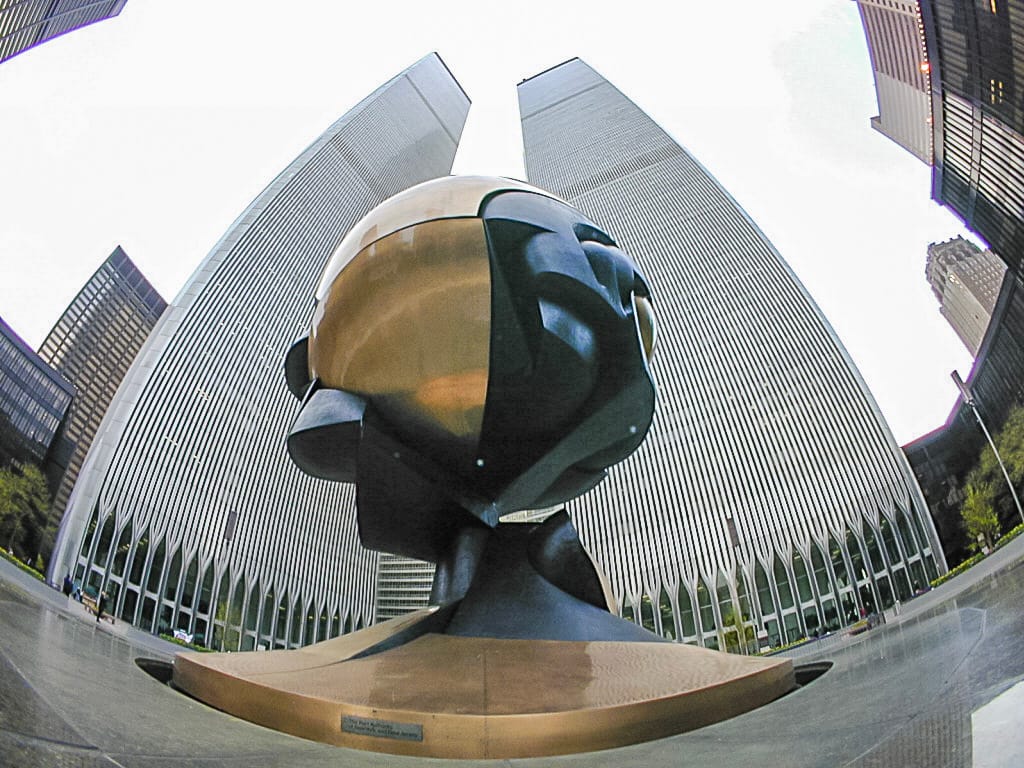
Twentyfive years ago, on September 11th, I was in my office in 4 World Trade Center, which was one of the smaller World Trade Center buildings nestled between Tower 1 and Tower 2, with our office looking out to World Trade Center Plaza. I heard the first explosion and saw the smoke, but like many people in our office, we all thought a small commuter plane might have hit. But then the second impact happened right next to us, with debris crashing on our roof. 40 minutes later, I escaped onto the street, walking through falling glass and seeing things I wished I had not.
Below the World Trade Center was an entire underground city. There were lots of shops, subway lines, escalators, commuters coming and going from all directions. All of that went dark within hours. Every tunnel, every train, every way out of Manhattan was shut down. Except, as it happens, the Staten Island Ferry, which is how I got home to Robyn, who had scheduled to come into the office that morning and had not. And by the evening, I was back at work.
Back then, I was working for a financial institution, and our data center was in Harborside, New Jersey, and turned out to be the only one on Wall Street still operational.
Which meant we had to help our competitors process all of their payments that day, something like $80 billion, while the rest of the financial system felt like it was teetering on the edge of collapse. For the next several days, I shared a rotational bed with other workers in New Jersey. Our cafeteria there looked straight across the water at the pit. The smoke only cleared slowly over weeks, as the full extent of the wreckage became more visible.
So in a way, I feel like I did my small part, not in Iraq, but in a server room in New Jersey.
I don't mean for this newsletter to be a memorial issue to reflect backwards. Here, I want to look at what's still standing. And with that in mind, artists have a role.
Because for me, the response to that day is what has shaped the world ever since then. The cameras, the algorithms, the drone programs, the surveillance networks, wars in countries that had nothing to do with it. A government deemed infallible. And none of that was temporary. And for me, all of it started 0n that day.
What artists do best is to refuse official versions. And in this case, to find the human cost of what we've built ever since then. So this issue features 4 artists that have something to say about the architecture of the aftermath.
Subscribe to 'The Intersect: Art in Tech and Tech in Art' podcast, a companion audio feature where we explore each week's topics in a conversational format.
SOCIETAL IMPACT OF ART AND TECH
Trevor Paglen and the Day We Stopped Trusting What We See
I've been following Trevor Paglen in this newsletter from time to time because he combines art and technology so often. He recently published a book called "How to See Like a Machine", which is a collection of his writing about how computers and technology have changed our visual culture. Nick Hackworth reviewed it for the Art Newspaper.
And Paglen is fantastic at naming things that are merely vague feelings for me. And reading this on the anniversary of 9/11, I keep thinking of that pivotal day being the start of how we've lost trust in photography particularly, and images generally. This pivot didn't happen just because the surveillance state that followed. It's a drift of how images shape our world. Photography used to be a source of truth, but we now expect CGI movies and generative images everywhere. And so we've stopped assuming that pictures and images are actually showing us the world.
digital images are no longer representational but are now operational interfaces servicing corporate or state interests to intervene ever more insidiously, ubiquitously and granularly in our daily lives to extract value and exert influence; that our traditional theories and language for understanding visual culture are obsolete and need radical updating
While photos and images may always have had an intent, it used to be that they were windows, and now they are levers - held by someone else. Which leaves us with an even harder question than Paglen's: if pictures no longer describe the world and instead are influencing it, what exactly are we looking at?
Paglen names the images that act on us. But someone has to teach them what they're seeing first. Follow the lever back to the hands that built it, in a refugee camp in Erbil.
The People Who Taught the Machine to See
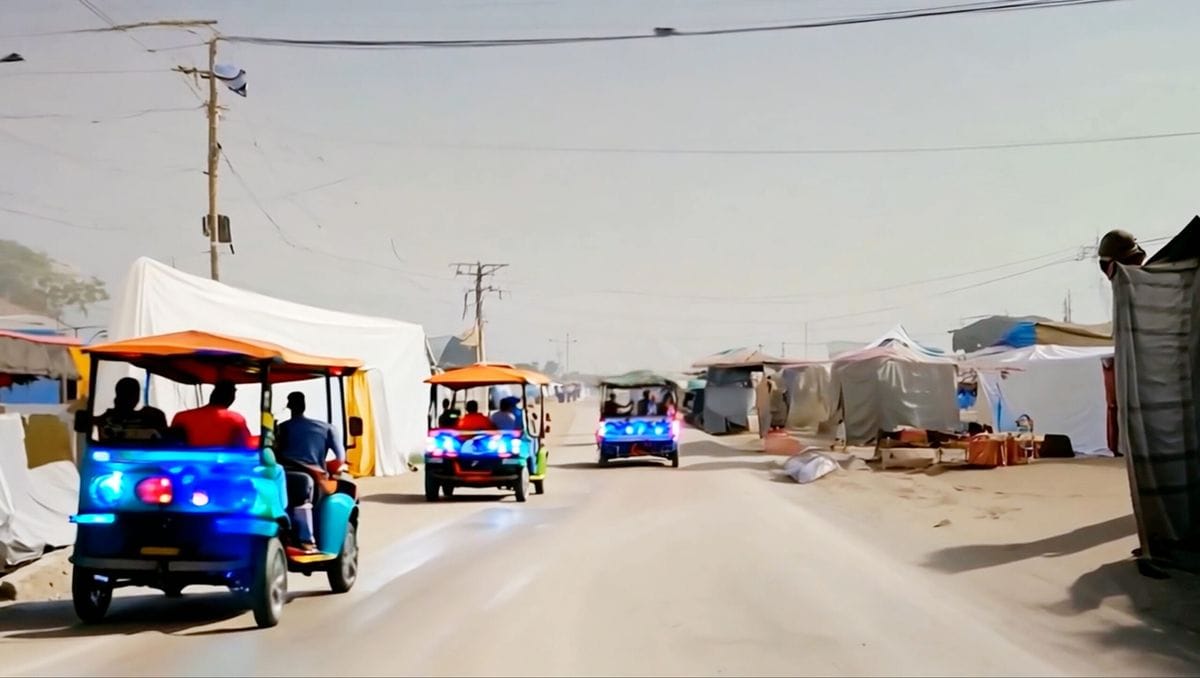
Three Kurdish-Syrian refugees in a camp in Erbil tagged thousands of images for crowdsourcing platforms. Their labor helped train the very image recognition systems now sitting inside our cars, cameras, and drones. That is the story at the center of Hito Steyerl's "Mechanical Kurds," which just won a 2026 STARTS Prize. Mario Schmidhumer's interview with Steyerl on the Ars Electronica Blog traces how she filmed it, and why she let her subjects be more ambivalent about the work than she is.
For me, this feels like one more ironic downstream consequence of 9/11, one nobody could have plotted 25 years ago. Starting with the post 9/11 FISA courts, surveillance culture grew and grew, and somewhere along the way refugees ended up teaching machines the visual language and skills that now power our surveillance systems back home. The people flagged as suspect helped build the tools that flag.
Their work contributed to the development of image recognition systems, technologies that are used today in both civilian and military applications.
And the strange part is the backlash. Here in the United States, resistance to Flock camera networks, to data centers, to AI in general, is going bipartisan. Left and right agree on something at last, and it is a wariness about being watched.
Those tagged boxes stay invisible in the street. In a Geneva gallery, two artists drag them into the light and point them at you, so you feel the sorting instead of just reading about it.
A Blimp That Decides If You're a Target
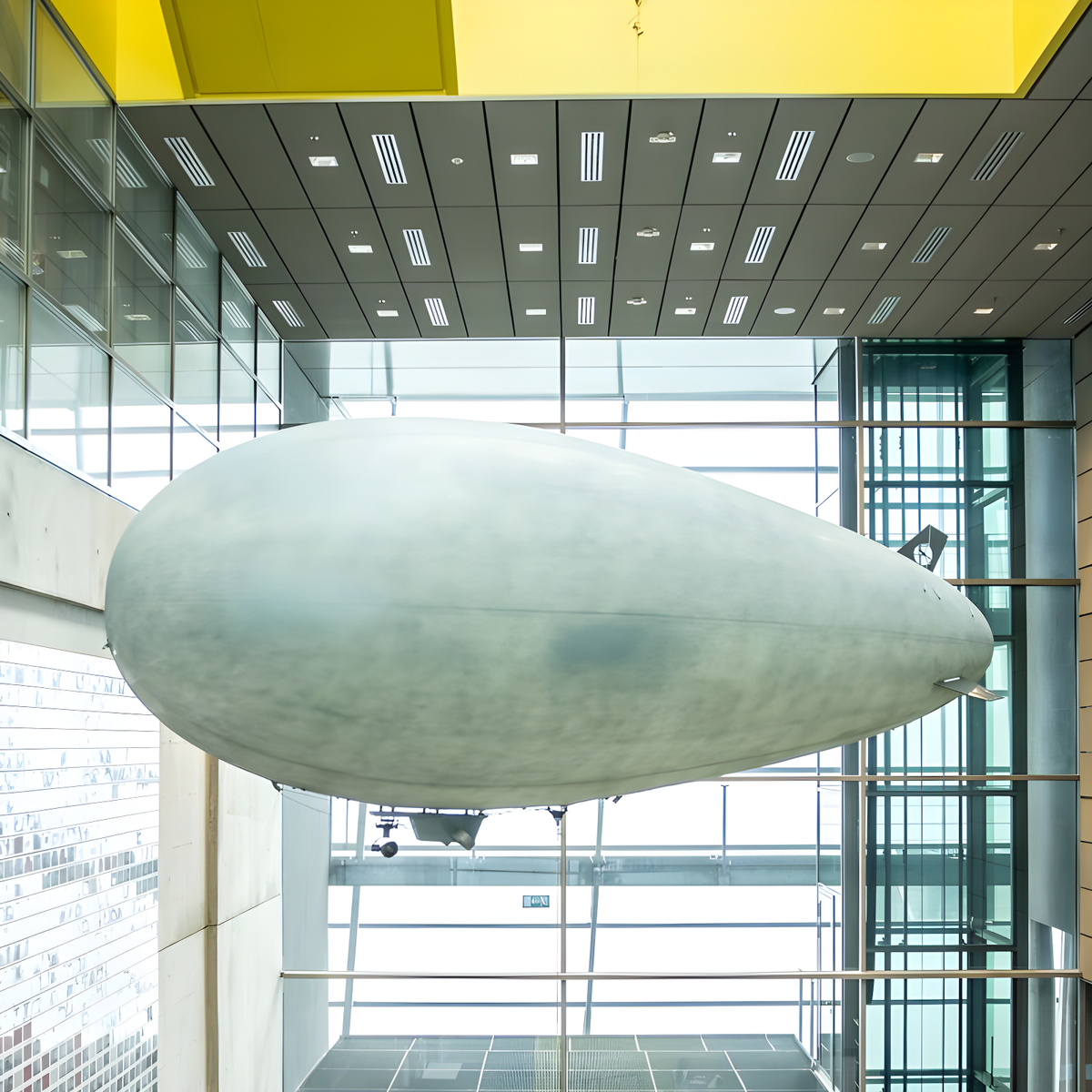
Walk into a gallery and get tracked by a helium blimp that quietly decides whether you're an enemy or a civilian. That is Droning, the installation Marta Revuelta built with Laurent Weingart, documented at Ars Electronica's 2025 "Panic" festival. The dirigible runs computer vision trained on real combat footage. It watches how you move, reads your posture, and sorts you into a threat category. A ground control station shows the verdict, strike decision included.
I have some skin in this one. I was a licensed commercial drone operator and photographer at one point, which is part of why we keep circling back to drones here. But the camera-in-the-sky I flew was about pretty aerial shots. This is the other branch of the family tree. Since 9/11, warfare has drifted toward the asymmetric, and nothing shows that drift faster than autonomous killing machines. Two artists in Geneva are holding up a mirror, safely far from the front lines in Ukraine.
Droning exposes the epistemic violence embedded in machinic perception and challenges audiences to confront the ethical asymmetries of AI-mediated warfare.
The genius, if that is the word, is that they made you the subject. You do not read about algorithmic targeting; you get targeted, in a gallery, holding a day pass. Same posture-reading logic, minus the missile. I think it is a brilliant piece of commentary, surveillance tech turned back on the people who usually get to watch.
Would you stand under that blimp and wait to see how it classifies you?
The blimp classifies you before you can object; it does the interpreting so you don't. Caragh Thuring works the opposite way, handing you a threadbare carpet and refusing to tell you what it means.
ART AND POLITICS
Caragh Thuring Paints the World on the Brink, and Lets You Join the Dots
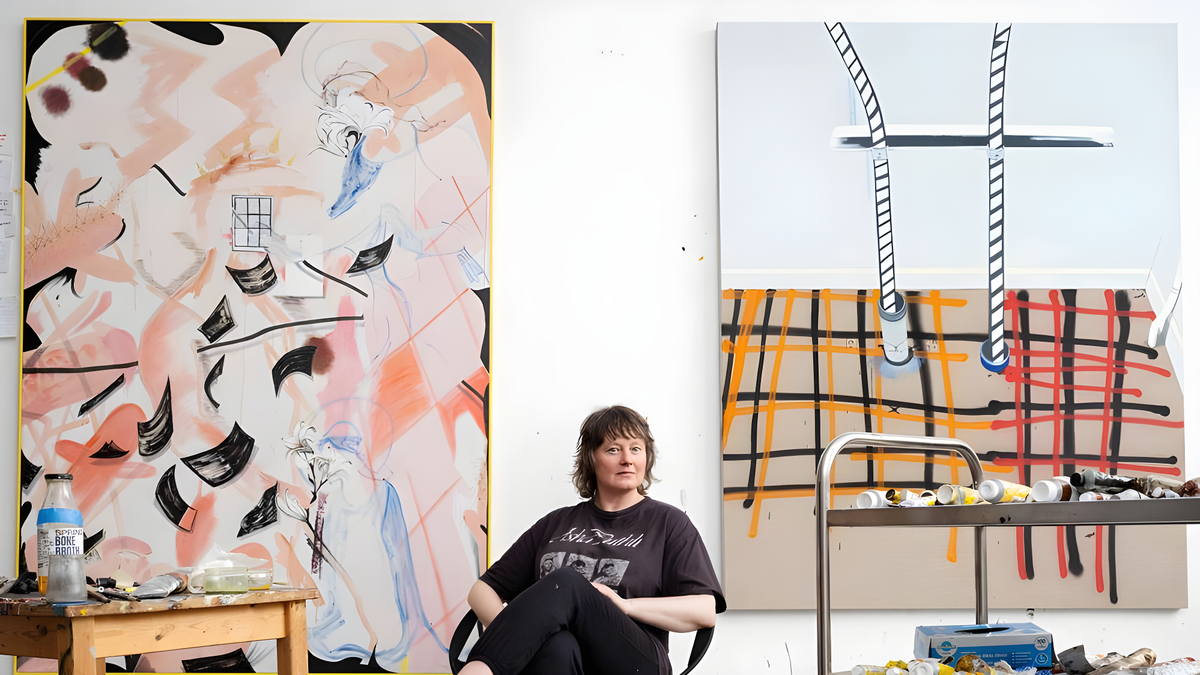
A B-52 that turns into a medieval knight on a tomb. Submarines gliding, volcanoes brooding, a hot pink Annunciation that breaks every rule of religious painting. Ben Eastham's studio interview at the Guardian's Art and Design section introduces Caragh Thuring, who paints chaos on purpose and refuses to make preparatory drawings. She calls painting right now "total folly." Then, in the same breath, "utterly rebellious."
What I keep coming back to is what her rebellion is actually aimed at. Not the usual protest-art targets. Thuring rebels against our own stupidity and hubris, the quiet certainty that our view of the world is the only correct one. Twenty-five years after the World Trade Center attacks, one of her paintings makes that point through something almost aggressively ordinary: a piece of office carpet.
World Trade is based on a photograph sent to her by a friend because, she tells me with a laugh, it reminded them of her work. It shows a corner of a nondescript office, distinguished only by a threadbare check carpet and two twists of electric cable. We could be anywhere in the world, if the title didn't tell us that we are looking at history.
That is the whole trick, and it lands harder than any burning tower would. A threadbare carpet could be anywhere. Only the title makes it history. She hands you the dots and steps back. In an age of AI images that pre-chew every meaning for you, leaving the connecting to the viewer starts to feel less like folly and more like the actual work.
So what do we lose when the machine joins the dots for us?
THE LAST WORD
So thank you for reading. This one was a little harder for me to write than usual issues, and I hope you don't mind me putting myself in it. I guess if that only happens once every 25 years, it might be okay.
I have the sense that everything changed for us on that day. But this might be apparent to fewer and fewer people. Many of us were born after that pivotal event, and do not remember any "before that day" state.
I would love to hear from you: Since that day, do you think our culture seems different to most, or do we just see it as the new normal?
Member discussion