
Can You Measure the Feeling?
 Greetings from Juergen
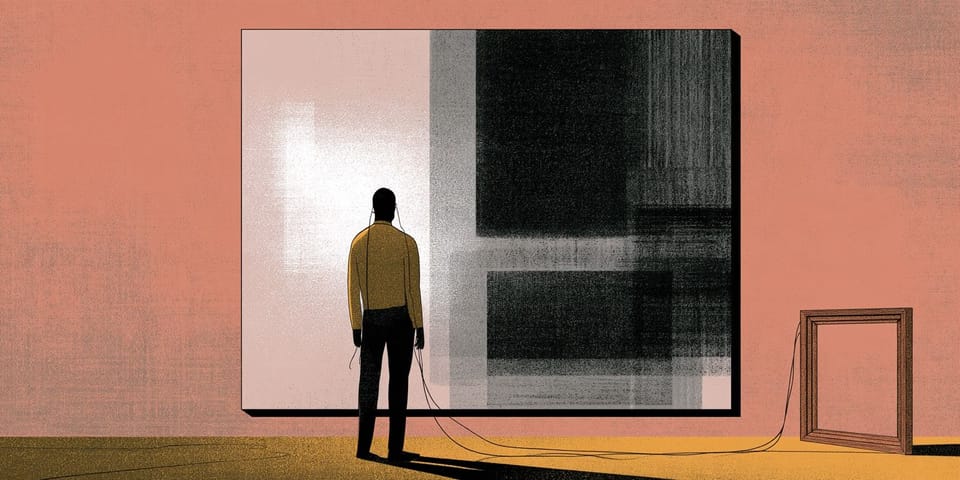
My wife Robyn handed me a Neil deGrasse Tyson quote last week, and it has been rattling around in my head ever since. He says The Starry Night never matched any real sky, ever, and that is not why he loves it. Van Gogh painted what he felt. That line sits at the heart of this issue: science keeps getting closer to how art works, and it keeps missing why.
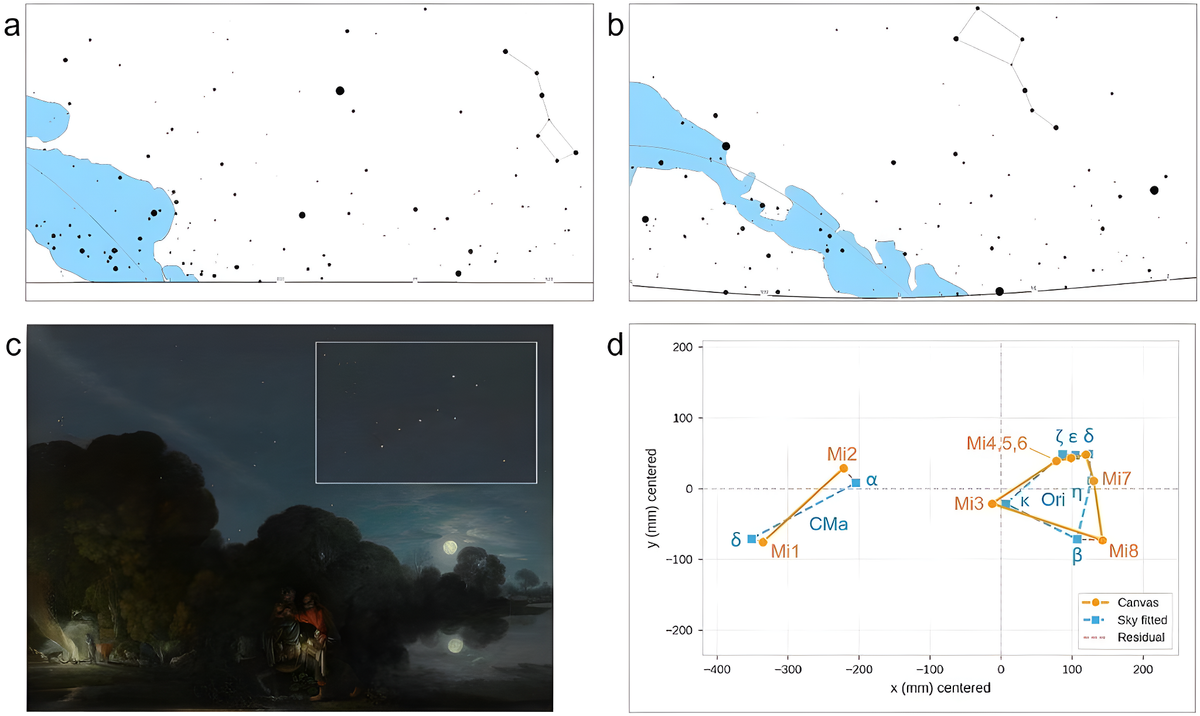
A team in Seoul thinks they have dated The Starry Night to a real predawn sky in July 1889. Clever work, genuinely. But knowing the date tells you nothing about the ache in the paint.
And that is the thread. Researchers can wire you up in a museum, map your brain meeting a Turner, even rebuild the color trick in a Roman cup. Each study answers a real question. None of them answers the one that matters most to me: what did the artist feel, and what do you feel back? That gap is small. It might also be the whole thing. I do not have a tidy answer, and I am not sure I want one.
Subscribe to 'The Intersect: Art in Tech and Tech in Art' podcast, a companion audio feature where we explore each week's topics in a conversational format.
ART & SCIENCE
The Romans Had Nanotech, and We Just Figured Out How
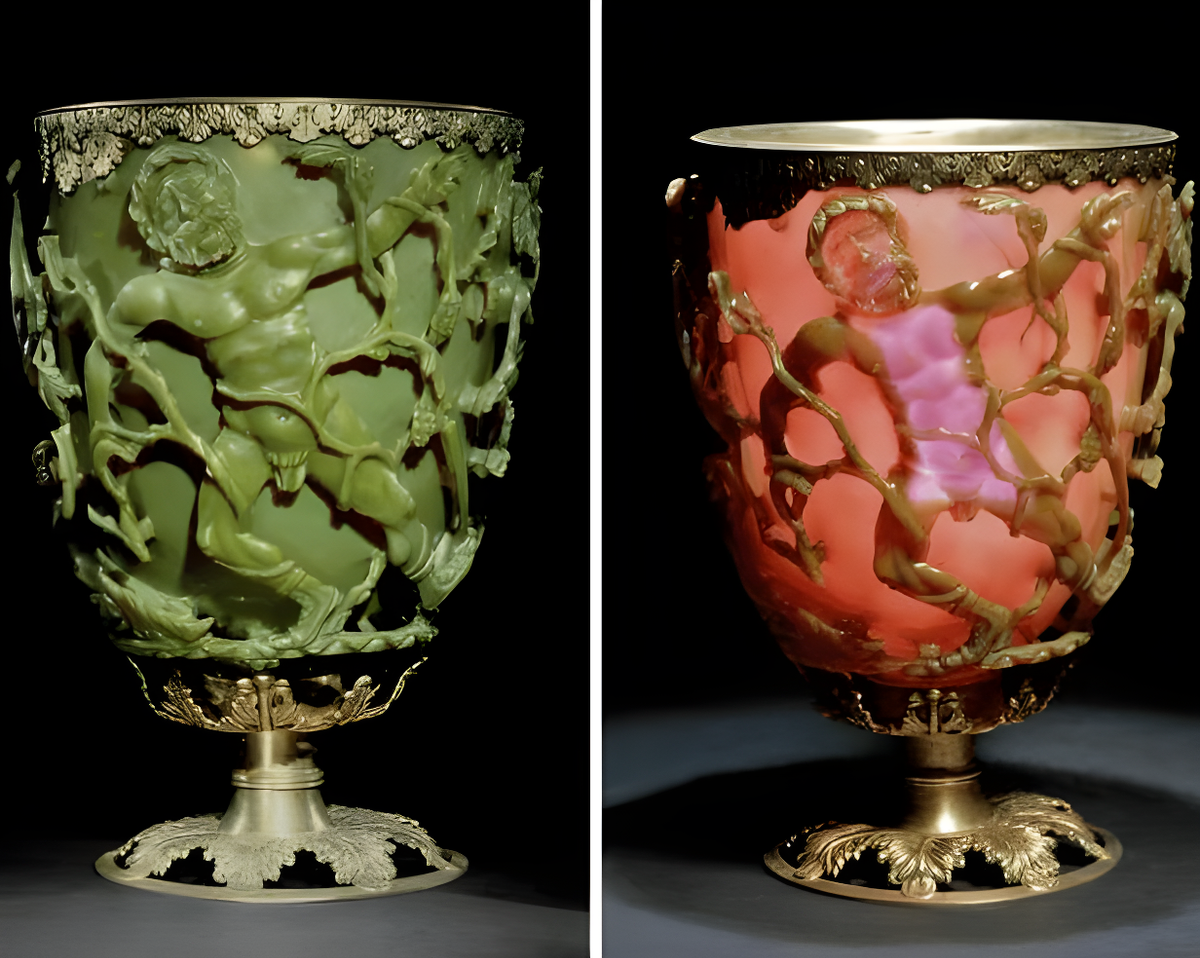
A 1,600-year-old Roman cup turns from green to red depending on where the light hits it, and for ages nobody could say why. Andy Battaglia reports at ARTnews that scientists at the University of Sheffield have recreated the trick behind the British Museum's Lycurgus Cup. The secret is gold and silver particles so small you could lose a few thousand in a single grain of sand.
So this is nanoparticle technology, and it is roughly two thousand years old. Fine, 1,500 to 1,600 if we want to be honest. We like to tell ourselves nanotech is the frontier, the thing the future runs on. But Roman glassmakers were already embedding metal at that scale, almost certainly without knowing why it worked, only that it did. That reorders how I think about the whole art-and-tech split. The two were never separate. They have been tangled from the start.
"So, for this glass, if light is shone through it, the gold and silver particles block blue and green light, only allowing reds and oranges to pass through."
Lisa Hollands, a technician on the project, called it magic, and I like that she didn't flinch from the word. Craft this old often is magic, right up until someone finally measures it. Which makes me wonder which of our own tricks we are pulling off now without understanding them.
Sheffield measured a trick Roman glassmakers pulled off blind. Now a lab in Florence straps electrodes to a visitor and tries to measure the response instead. Same instinct, pointed at the viewer rather than the object.
Measuring Beauty in the Brain, but Is That the Same as Art?
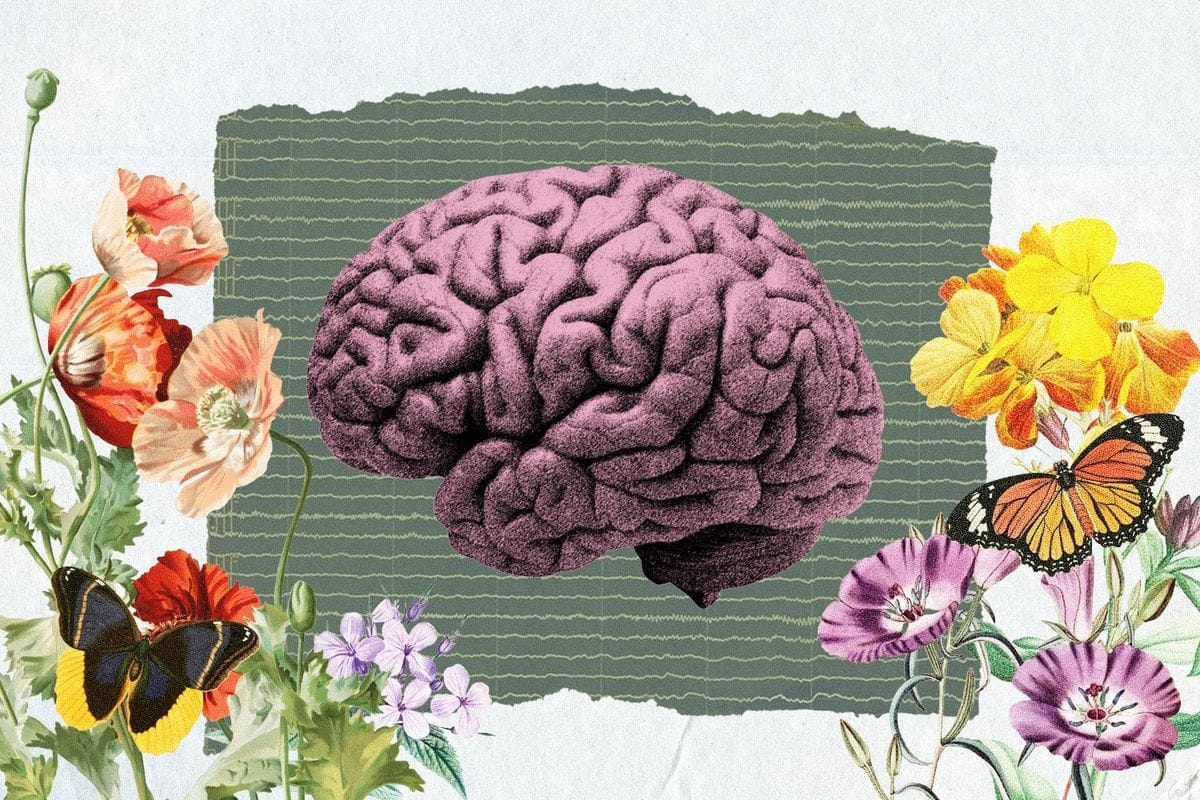
Thirty-two electrodes on the skull, two more on the clavicles, a pair on the hand to track sweat. That is Manuela Callari, wired up at the Galileo Museum in Florence, staring at a brass astrolabe while neuroscientists hunt for the biological signature of beauty. Her piece for Sonar follows a new Laboratory of Neuroaesthetics as it measures brain waves, heart rate, and neurotransmitters, all chasing a scientific value for art.
Maybe my idea of art is hopelessly out of date. In the old days, art invoked beauty, and beauty was the celebrated point. Modern art mostly stopped doing that. It trades in social commentary, the stuff that makes you think and maybe understand our conflicts a little better. So I keep wondering whether measuring how beauty shows up in the brain has much to do with how art shows up there at all.
Goretti is part of a research team measuring how people react to the beauty of items in the historical and scientific collections at the Galileo Museum.
Notice the word: beauty, not art. A Galileo astrolabe is gorgeous. It is also not trying to indict anyone. Point an electrode cap at a work built to unsettle you, and I suspect the readout looks nothing like awe. Which raises the question this whole issue keeps circling: if the lab can map the beauty signal, what is it actually catching?
That lab chases beauty's signature in the body. A team in Seoul chases something stranger: the exact predawn sky behind The Starry Night. One measures the feeling, the other measures the night the painter was supposedly feeling about.
Van Gogh Painted What He Felt, Not What the Sky Did
A team in Seoul thinks they have pinned The Starry Night to a real predawn sky over Saint-Remy-de-Provence, right around July 22, 1889. Andy Battaglia's piece at ARTnews lays out the forensic astronomy: charts, a crescent moon and Venus, even Van Gogh's letters mentioning cicadas as proof of high summer. The team's leader, a telescope maker named Elijah Jeong-hyun Kim, is so sure he says he will bet on the date. Another researcher calls it an intriguing hypothesis rather than a settled one, which is the polite way of raising an eyebrow.
My wife Robyn actually sent me this. She had just come across a Neil deGrasse Tyson quote about the painting, and it fits so well I have to hand him the mic.
"My single favorite painting is Van Gogh's The Starry Night. I can tell you, as an astrophysicist, the sky never looked like that, ever, at any time in the history of the universe. That's not why I appreciate it. I think he saw the sky and he painted what he felt."
So we can date the night down to a predawn hour, and it changes nothing about why the picture works. We need artists to feel the world, not survey it. The swirls were never a mistake in his observation; they were the whole point.
What exactly do we learn when we prove a feeling had a timestamp?
Tyson says Van Gogh painted what he felt, not what he saw. A 7T scanner now suggests the brain handles those two jobs separately: one circuit reads the image, another decides how much you like it.
What the Brain Does When It Meets a Turner
Thirty-four people climbed into a 7T MRI scanner and looked at 96 Chinese watercolours. The result, written up by Deniz Vatansever, Emmanuel A. Stamatakis and Xinyu Liang for The Conversation (via Sonar), is a neat finding: the brain doesn't treat beauty as one thing. It splits the job in two. One system reads what the image shows. The other decides how much pleasure it gives you, using the same circuits that fire for food or money. Odder still, the researchers borrowed collaborative filtering, the same math behind Netflix recommendations, to find the agreement buried in everyone's ratings.
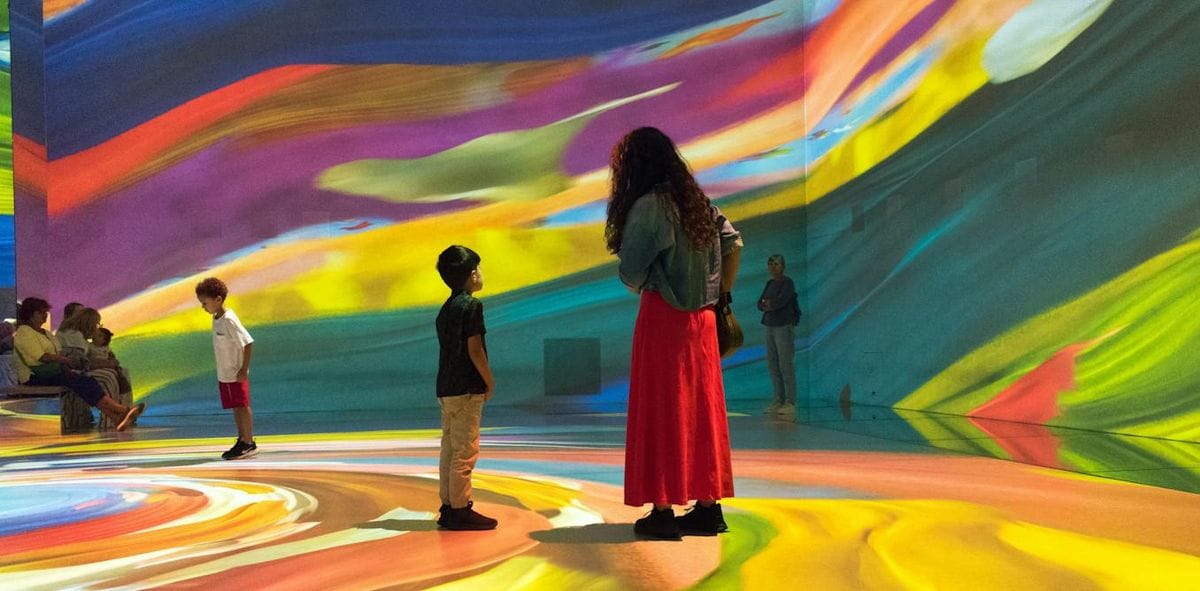
What I keep thinking about is the immersive-experience boom. Van Gogh's Starry Night in a warehouse. The Sphere in Las Vegas. Rooms built to flood you with color until you feel something on cue.
Beauty feels intensely private, and at the same time, we keep discovering we collectively share it.
So here's my suspicion. Maybe all this technology is a crutch. Awe used to arrive on its own, in a cathedral, on a mountain, in front of an actual Turner. In a busy, screen-lit world, that kind of moment got harder to stumble into. So we build machines to manufacture it. I'm not sure that's a loss. I'm not sure it's a win either.
If the brain splits beauty into seeing and reward, which half is the Sphere actually feeding?
THE LAST WORD
Thanks for reading all the way through this one. It got under my skin more than most. Science can now date the sky in Van Gogh's painting, map your brain meeting a Turner, even rebuild a Roman color trick. All of that is real, and none of it touches the ache in the paint. I keep landing on that gap, the one between how a thing works and why it moves you. Maybe that gap is small and closing. Maybe it is the whole point and will never close. I honestly do not know. So tell me: when a painting stops you cold, do you want to know the mechanism behind it, or does knowing spoil the thing? Hit reply, I read every one.
Best,
Juergen
Member discussion