
Already Somewhere Else
 Greetings from Juergen
I read a recap of Christie's latest Art + Tech Summit this week, and the whole thing was basically one long question: will the new tech billionaires eventually buy paintings? The IPO money from Anthropic, OpenAI, and SpaceX is real, so the auction house wants to know what all those people will someday want hanging on a wall. Someone even called it "a historic moment in wealth creation," which is a strange thing to say about a room full of people guessing at other people's future shopping habits.
Here's what got under my skin. The same technology that made those fortunes is already in artists' hands, and they aren't using it to accumulate anything. Simon Weckert printed an AI-generated pattern onto a coat, and surveillance cameras stop registering that there's a person wearing it. Nobody made that coat hoping Christie's would call.
There's a second thing I keep circling, and it's the more personal one. We spent decades telling people an art degree was impractical - that law, computer science, finance were the serious choices. The irony is that those degrees train you to be one specific thing, and being one specific thing is precisely what AI will replace well.
An art education is inherently more flexible and future proof. It teaches you to notice, to question, to reframe a problem, to make something coherent out of incomplete information, and none of that is bound to a field.
It goes wherever you go. I'm a case in point: the work I do now didn't have a name when I was an art student. An engineer told to defeat facial recognition reaches for cryptography, or a lawsuit. Weckert asked what if the garment itself is the argument.
Subscribe to 'The Intersect: Art in Tech and Tech in Art' podcast, a companion audio feature where we explore each week's topics in a conversational format.
SOCIETAL IMPACT OF ART AND TECH
Christie's Bets Its Future on AI Billionaires Who Won't Buy Art Yet
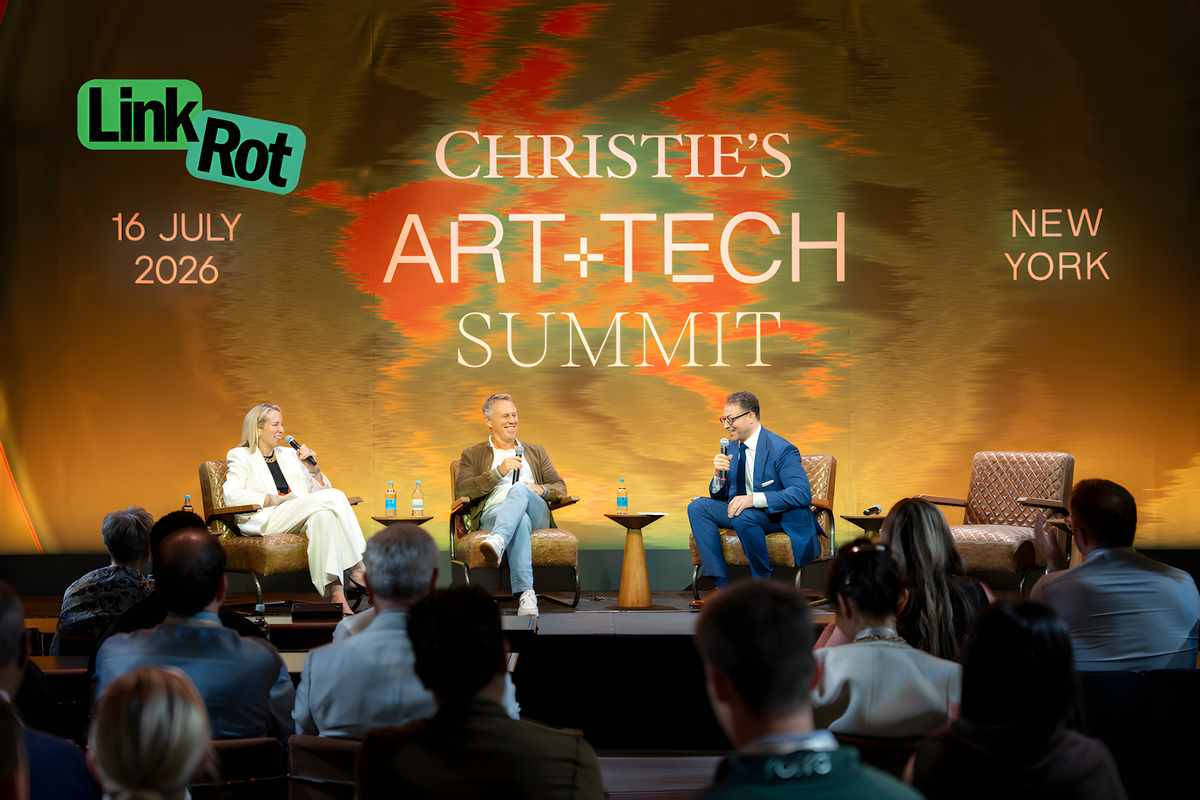
An "Art + Tech Summit" whose central question is whether newly minted tech billionaires will eventually buy paintings sounds less like a summit and more like a sales forecast. That's roughly what happened at Christie's 2026 edition, as Shanti Escalante-De Mattei reports for ARTnews. CNBC's Robert Frank called it "a historic moment in wealth creation," pointing at the IPOs of Anthropic, OpenAI, and SpaceX. Everyone on stage tried to guess what all that new money might someday want to hang on a wall.
I kept hoping there was more to a summit about art and tech than working out whether tech billionaires will become the next class of collectors, quietly replacing the boomers Christie's has leaned on for decades. There's something deeply elitist about a panel devoted to the future desires of the mega-rich - and whether those desires will graciously extend to art. Fine, this is the natural terrain of a high-end auction house. But I'd hoped for a slightly wider aperture.
"AI is driving a pursuit of experience, for art, something you can get your hands on," said Michael Anders of ICONIQ Capital - before conceding these same workers are "so busy building they haven't woken up to that."
The one thing the panel seemed sure of: if these people ever do collect, they'll want rare, unique estates, not anything digital. Isn't it a little funny that the people building our digital future apparently want their art analog?
Christie's seems to miss the circuit it's standing in the middle of. It's trying to broker a marriage between the art world and the people who built the AI surveillance systems, the software that turns photographs into 3D models, the code written to copy itself endlessly. And while the summit counts future wallets, the artists have already walked off with those exact tools: growing gardens out of malware, sewing coats that make a wearer invisible to a surveillance camera, coaxing sound from the earth's magnetic field. None of them are waiting for a buyer. So while Christie's studies the billionaires, I keep landing on the same thought: the billionaires might be studying the wrong people.
A Coat That Confuses the Cameras - and the Politics Behind It
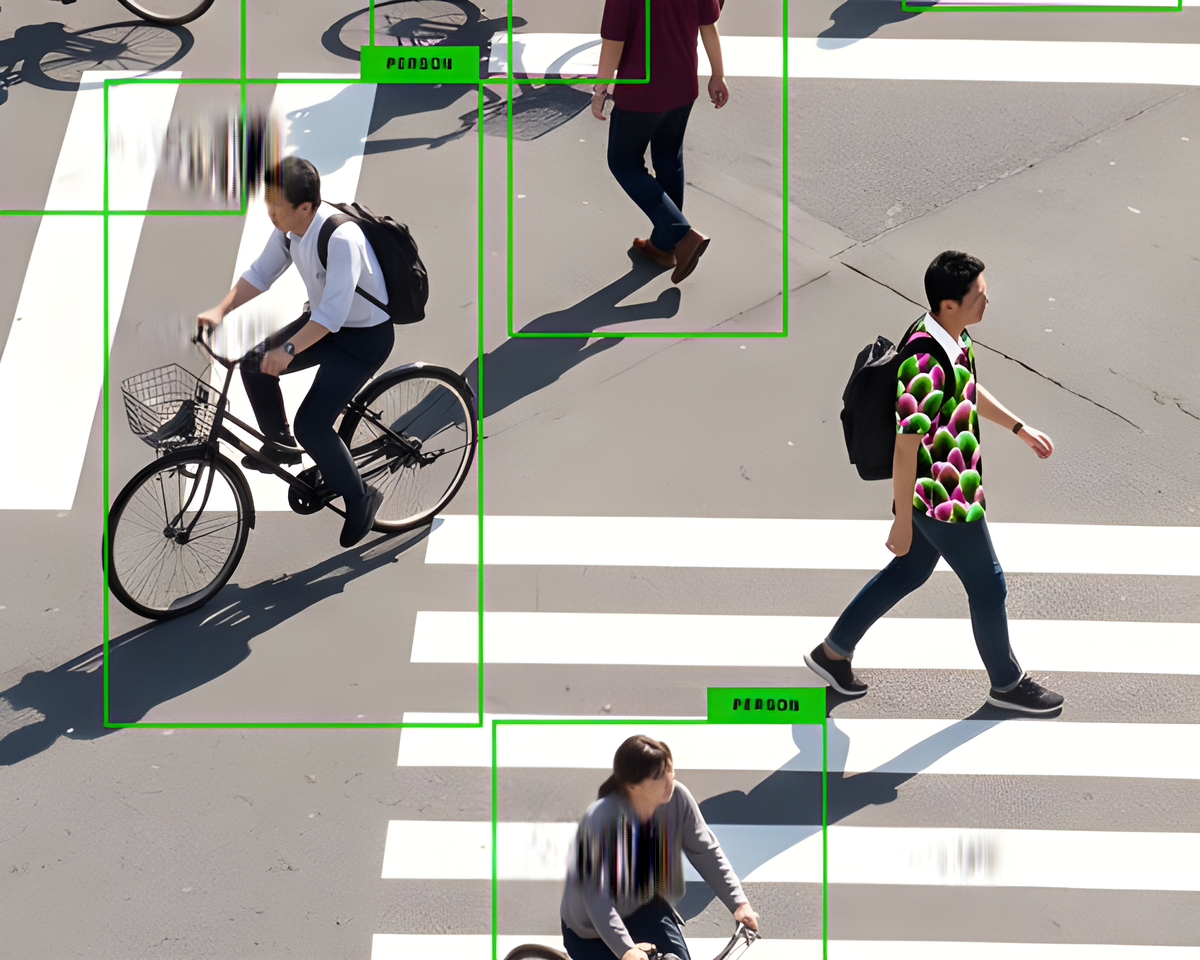
Simon Weckert made a coat that surveillance cameras can't find a person in. As DLVR reports at Designboom, his Digital Camouflage collection covers a garment edge to edge in AI-generated visual noise - a pattern that reads to us as an abstract graphic and to a camera as very little at all.
It helps to know how these systems actually work. An AI surveillance camera runs in two stages: first it decides whether the shape in the frame is a person, and only then does it try to work out whose face it is. In China there's a camera on effectively every corner doing exactly that. Weckert attacks the first stage. The camera never registers a person standing there, so the facial recognition never runs - it's never handed a face to identify. He didn't defeat the recognition. He made sure it was never asked the question. Earlier attempts used printed patches, which fell apart the moment the fabric folded or the camera moved; covering the whole surface is what makes it hold.
the garments are intended to make the wearer difficult for AI-based person detectors to recognize, disrupting the system's ability to identify the human figure
Notice the shape of that solution. It isn't legal, it isn't regulatory, it isn't cryptographic. It's aesthetic - a textile artist slipping the watching while commenting on it, built from the same generative methods the surveillance itself runs on. That's a satisfying bit of judo, and exactly the kind of double move I can't resist.
But here's where my enthusiasm cools. This works beautifully as art and as protest. As an actual defense against mass surveillance, it's a workaround for a problem that shouldn't be ours to wear. Real protection takes political will, regulation, and a genuine fight for privacy. That job can't fall to artists alone, and it definitely can't require the rest of us to dress in camouflage to keep our own faces.
So the garment makes its argument, and no buyer is required. Should freedom from being tracked really depend on what you put on in the morning?
When Malware Grows a Garden and Tells You to Go Outside
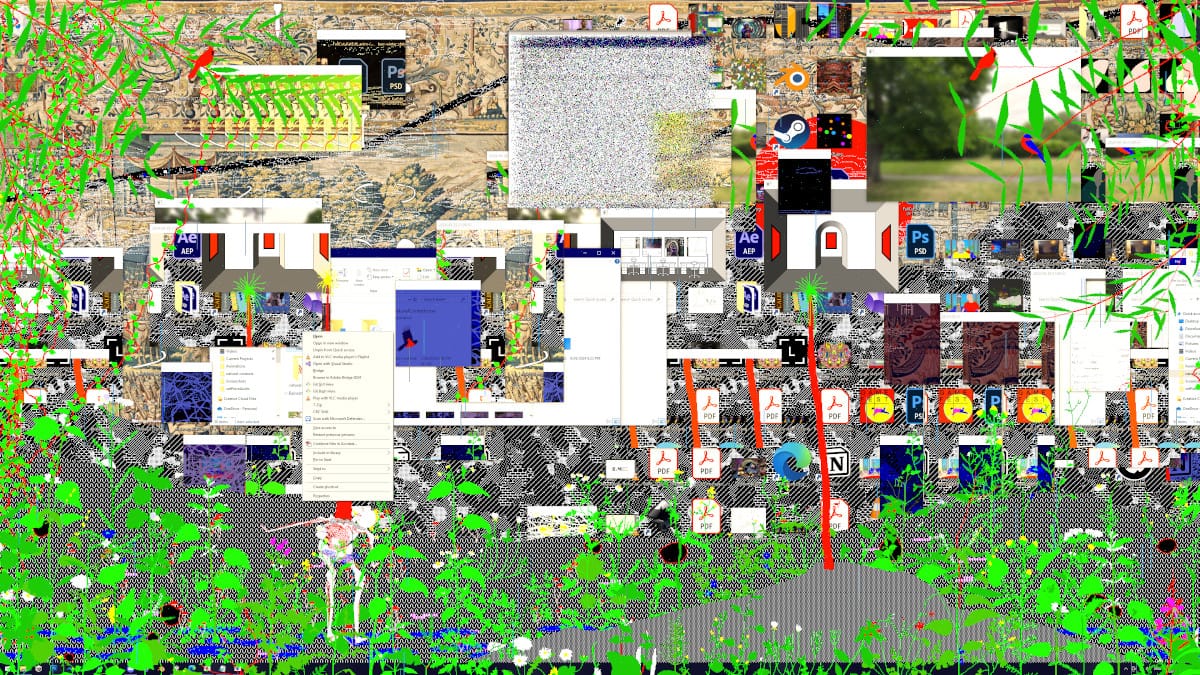
A virus that locks your machine for 24 hours and grows a garden on your screen - plants, birds, no access, no productivity. That's Natural Contacts, the early-2000s malware project by Peter Burr, Mark Fingerhut, Bridget DeFranco, and Matthew D. Gantt, written up by Neural Magazine. It asks a question I keep chewing on: when does disruptive code stop being an attack and start being an argument?
This one sits right at the heart of the issue's thread. Christie's is out courting the people who built the rendering pipelines and the viral-spread code. Meanwhile these four artists took that exact logic - code that propagates, code that disrupts - and pointed it at something slower. Nobody's waiting to sell you Natural Contacts. It just wants you to go outside. We've built whole economies on the idea that an unavailable machine is a crisis. They flipped it. What if the crisis is the availability?
The obstruction of the machine's availability enforces a halt to all forms of productivity, which is visually replaced by simulated plants and birds.
There's something tender about swapping your locked desktop for a garden. It's not ransomware demanding Bitcoin. It's ransomware demanding a walk. The coercion is the point, and the softness of the substitute makes the critique sharper, not gentler. The same tools built for viral spread, turned toward patience - the one thing the tech world is least designed to accommodate.
Nobody trained purely as a coder builds a virus that tells you to touch grass. Turning malware into a critique of malware is a sideways move, and it's the part I keep chewing on - the tools of viral spread rewired to argue for patience, which is the one thing the industry that built them is least designed to accommodate.
So maybe the real question is whether forced disconnection still means anything now that we pay subscription fees for apps that do roughly the same thing, voluntarily, on a timer we set ourselves.
ART AND SPATIAL COMPUTING
The Art of the Deliberate Mistake
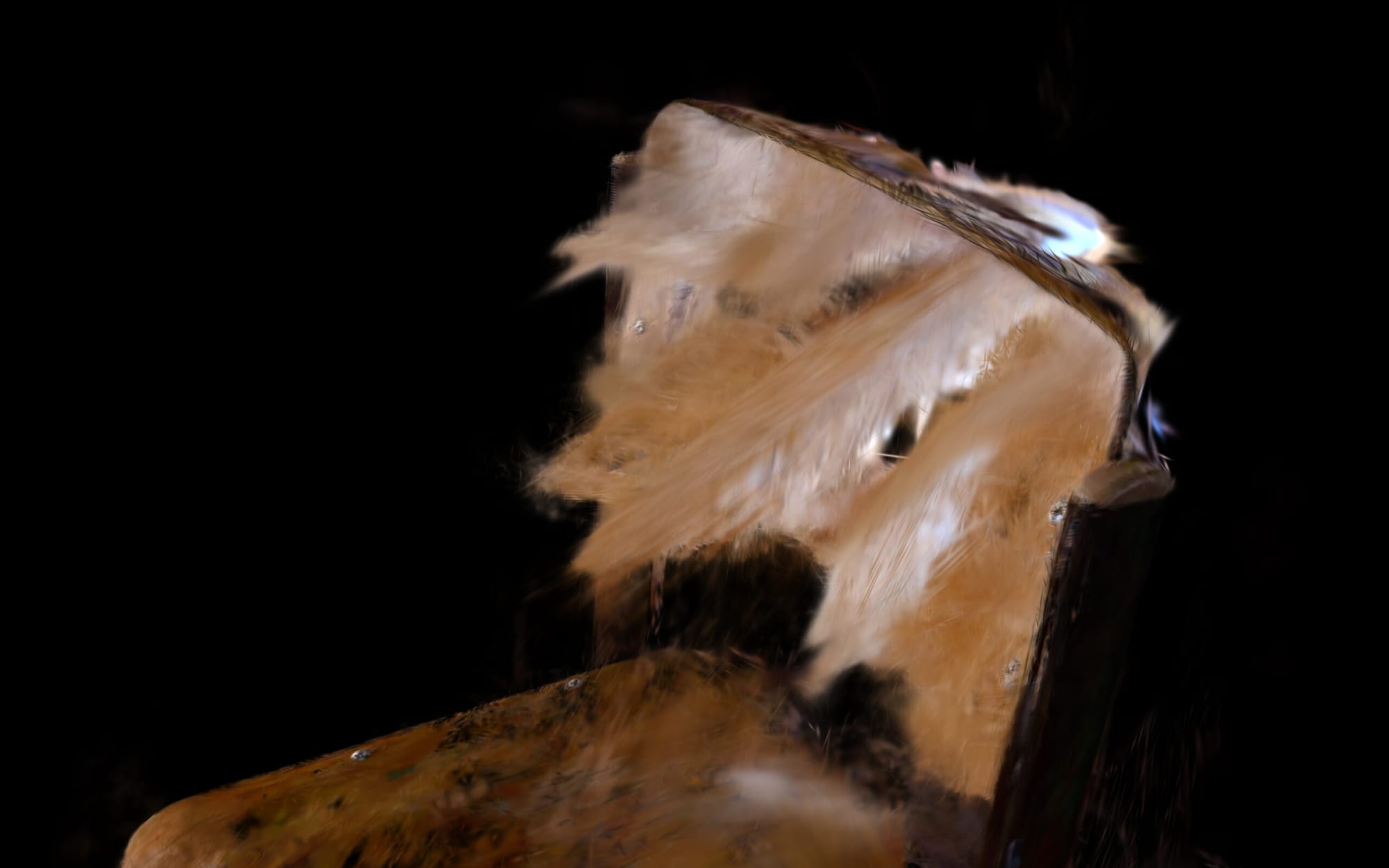
A school chair, scanned wrong on purpose. That's the seed of "Reverse Rendering," the project that just won Jannis Berner a Golden Nica in the u19 category. Hannah Bachl profiles him at the Ars Electronica Blog, and the idea is deceptively simple. He scans an ordinary chair using Gaussian Splatting - a technique that rebuilds objects from photos as millions of tiny floating points rather than solid surfaces. Then he pushes that messy scan back into physical space, errors and all.
The inversion is the whole trick. Normally you scan a real object and the software politely hands you back the same object, faithful and clean. Berner did the opposite. He fed it only parts of the chair and let the program fill the gaps with its own confused guesses. The result is sculpture built from omission. It reminds me of that old story about blindfolded people touching different parts of an elephant - one finds a wall, one a rope, one a snake, none of them wrong, none of them whole.
Depending on your viewing position, the arm "moves," or maybe there are even two arms in the middle because it isn't clear where it actually is in space.
That line, about scanning his moving family in Budapest, is the whole project in miniature. The point cloud doesn't lie, exactly. It just refuses to pretend it knows more than it does, which is more honesty than most of this software offers. This is the tool the tech world built to capture everything - and Berner turned it into a practice of honoring what it can't see.
There's something in doing this at nineteen. Berner took a tool built for accuracy and asked what its failures mean, rather than accepting the clean answer it hands you - which is a harder question than getting the scan right.
So when did we decide a perfect scan was more truthful than one that admits what it never saw?
ART & SCIENCE
Chijikinkutsu and the Art of Noticing
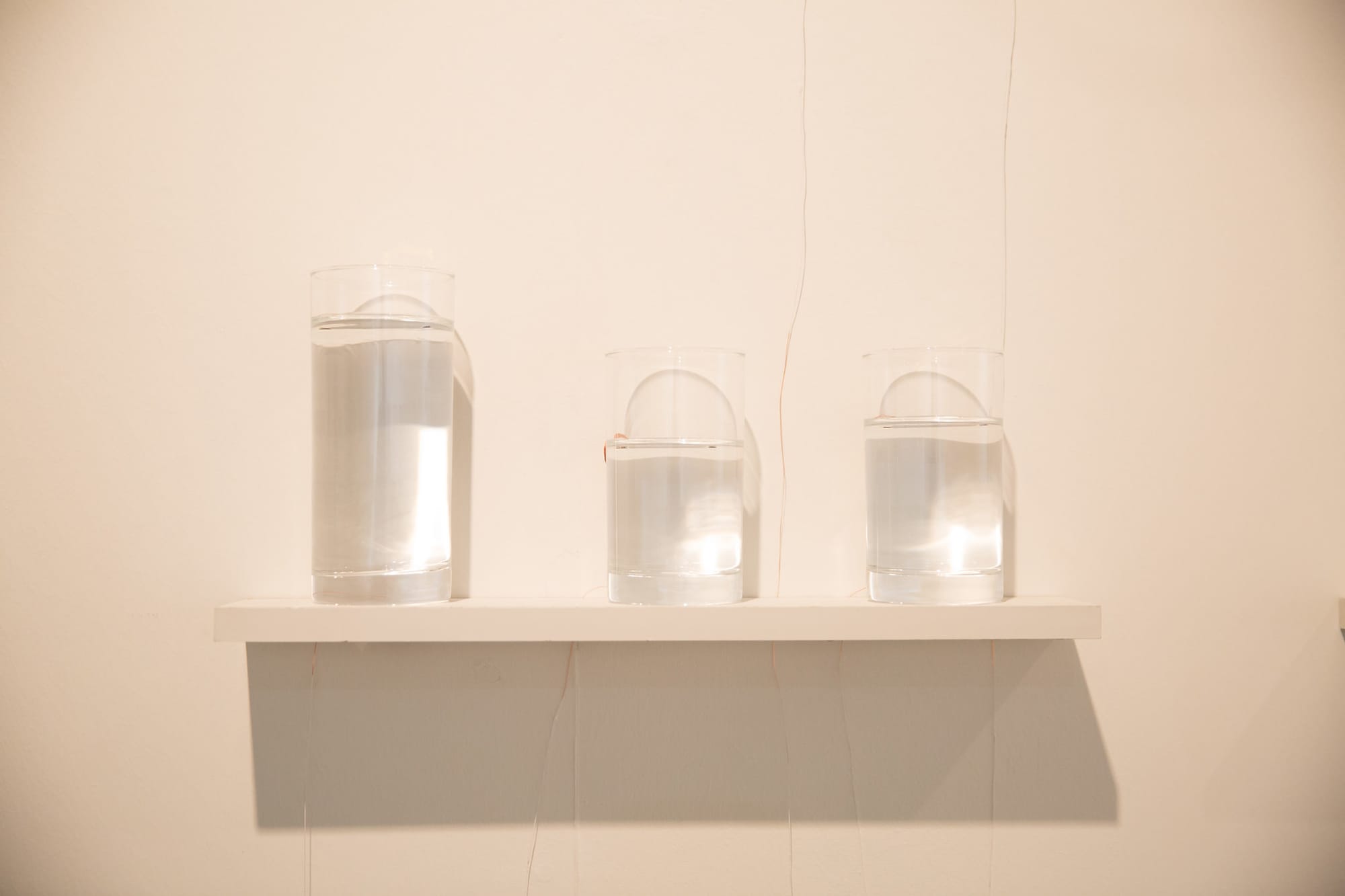
Magnetized needles float on water in drinking glasses. They twitch when the Earth's magnetic field nudges them, then tap the glass to make a sound you can barely hear. That's "Chijikinkutsu" by Nelo Akamatsu, a 2015 Golden Nica winner that Nicole Grüneis revisits for the Ars Electronica Blog. She pulled it from the archive because its tenderness stayed with her - sounds so fragile you only catch them if you decide to listen.
We just got back from Japan, and I'll admit I knew almost nothing about Shinto going in. It isn't a religion in the usual sense. It's a practice of noticing, of being present. That clicked something into place. It explains my long pull toward Zen, mindfulness, and, honestly, photography. When I'm deep in a shoot, the work isn't really about the camera. It's about paying attention.
These sounds do not unfold as a dominant sound cloud, but rather as very fragile, spatially distributed resonances. They emerge randomly and are perceptible only through conscious listening.
So a piece that makes geomagnetism audible - a force always around us and never noticed - feels like the same act, just moved from the eye to the ear. We can't feel the Earth's magnetic field. Akamatsu hands us a way to hear it, but only if we slow down enough to bother.
Sensors that read the Earth's magnetic field exist to measure and record - to capture more, faster. Akamatsu takes that same instinct and flips it. He isn't gathering data. He's asking a room to go still. A tool built to catch everything, pointed instead at one thing you'd otherwise walk right past.
We close the issue here, with needles tapping glass. What else are we surrounded by that we'd hear, if we stopped filling the silence?
THE LAST WORD
Thanks for reading this one. What stays with me is the gap in timing. Christie’s spent a day asking what the new fortunes will eventually want on their walls, and every artist in this issue had already stopped waiting to be asked. They took the tools that money was built on and pointed them somewhere else: a coat a camera cannot read, a scan kept deliberately wrong, needles tapping glass. That is where the title came from. By the time a market decides what it wants, the work worth looking at is already somewhere else. So here’s what I’d love to hear from you: have you ever made something with a tool and watched it get pulled toward a market you never had in mind? Did that change the work, or just change who was looking? Hit reply. I read every one.
Best,
Juergen
Member discussion