
Stories Behind Faces: Portraits in a Digital World
 Greetings from Juergen
Hi folks,
This edition explores the fascinating space where technology meets artistry. We begin with Shelly Palmer's thought-provoking stance on AI-generated music—does it matter who or what created a tune if we can't tell the difference? Then, there's the buzz around Spotify's Wrapped feature, where some feel it lost its creative touch by relying too much on algorithms. You'll also read about Google Photos' surprisingly thoughtful AI recaps, and a theater production that uses robots to mirror human imperfections.
Additionally, we're looking at how AI predicts which art pieces stick in our minds, the potential of telepresence robots in museums, and an artist's creative use of electronic waste. Each story offers a chance to reflect on how technology shapes our experiences, for better or worse.
ART NARRATIVES
National Portrait Gallery Partners with Immersive Institution to Tell the Human Stories Behind Its Collection
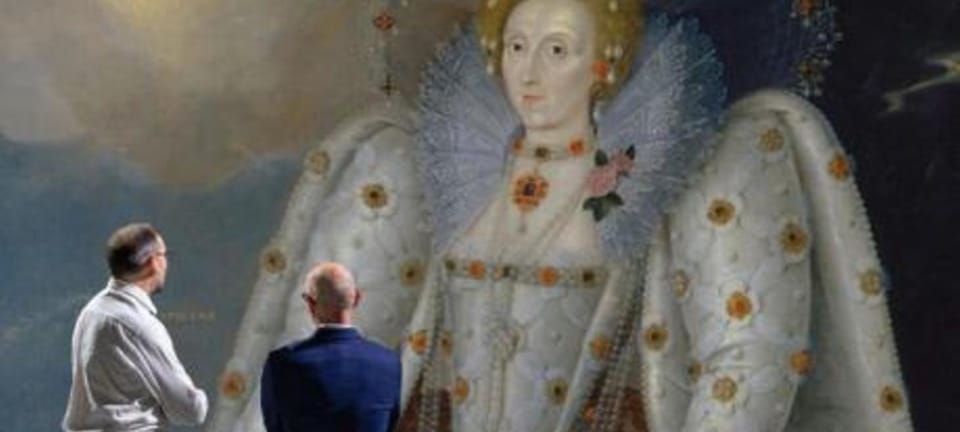
The Art Newspaper reports that London’s National Portrait Gallery is teaming up with Frameless Creative for a touring immersive project called Stories – Brought to Life. Launching in May 2025 at MediaCity, Salford, this initiative pairs curators with digital storytellers to explore the lives behind iconic portraits. Frameless promises “Hollywood-style visual effects” to reintroduce works ranging from Elizabeth I to Liam Gallagher.
I’m fascinated by this approach. Portraits often feel familiar, but how often do we really know their stories? Museums tend to offer minimal context—just a plaque with sparse details. But storytelling, especially in a multimedia format, could unlock so much more. Imagine the impact of hearing the voice behind the brushstroke or the history lurking in the background.
“Even the act of curating works of art into a series has some sort of implied narrative within it. So, why not extend that and take it much further?”
Does this signal a shift where museums become not just guardians of art but narrators of its soul?
TECHNOLOGY IN MUSIC
If You Can’t Tell If The Music Is Created By AI, It Doesn’t Matter
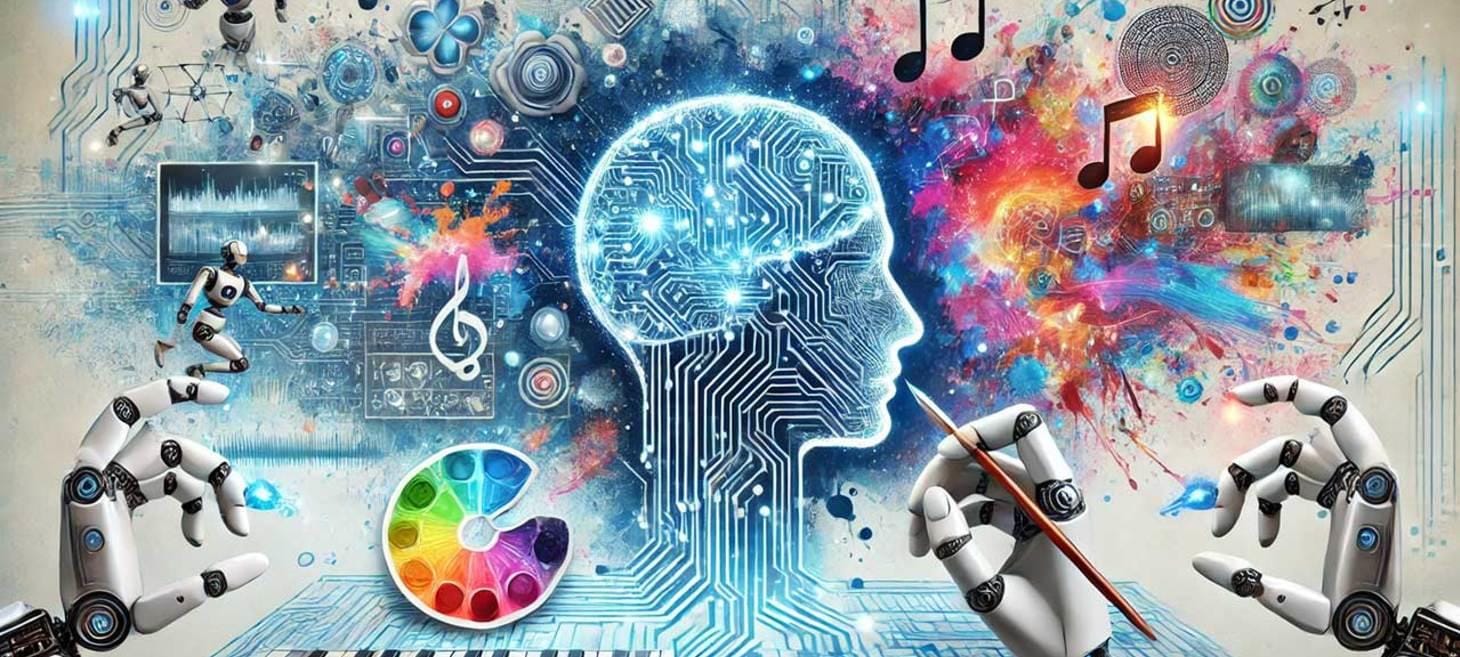
Shelly Palmer’s recent article, If You Can’t Tell If The Music Is Created By AI, It Doesn’t Matter, raises a provocative point: if audiences can’t differentiate between AI-generated and human-created music—or simply don’t care—does it even matter who (or what) created it? Palmer highlights how AI is now producing commercial music that meets emotional and technical requirements at a fraction of the cost, leaving businesses to question the necessity of human composers.
Here’s where I struggle. It’s not just about the final product but the story of its creation. Would you feel differently about a song you love if you found out it came from an algorithm, not an artist? This reminds me of the debate around enjoying works by controversial creators like Roman Polanski—can we separate the creation from the creator?
“If the audience can’t tell the difference… for all practical purposes, there is none.” —Shelly Palmer
So, does knowing how something was made change its value, or is the experience all that matters?
‘So LAZY This Year’: The Internet Is Furious that Spotify Wrapped Embraced AI—and Got Boring
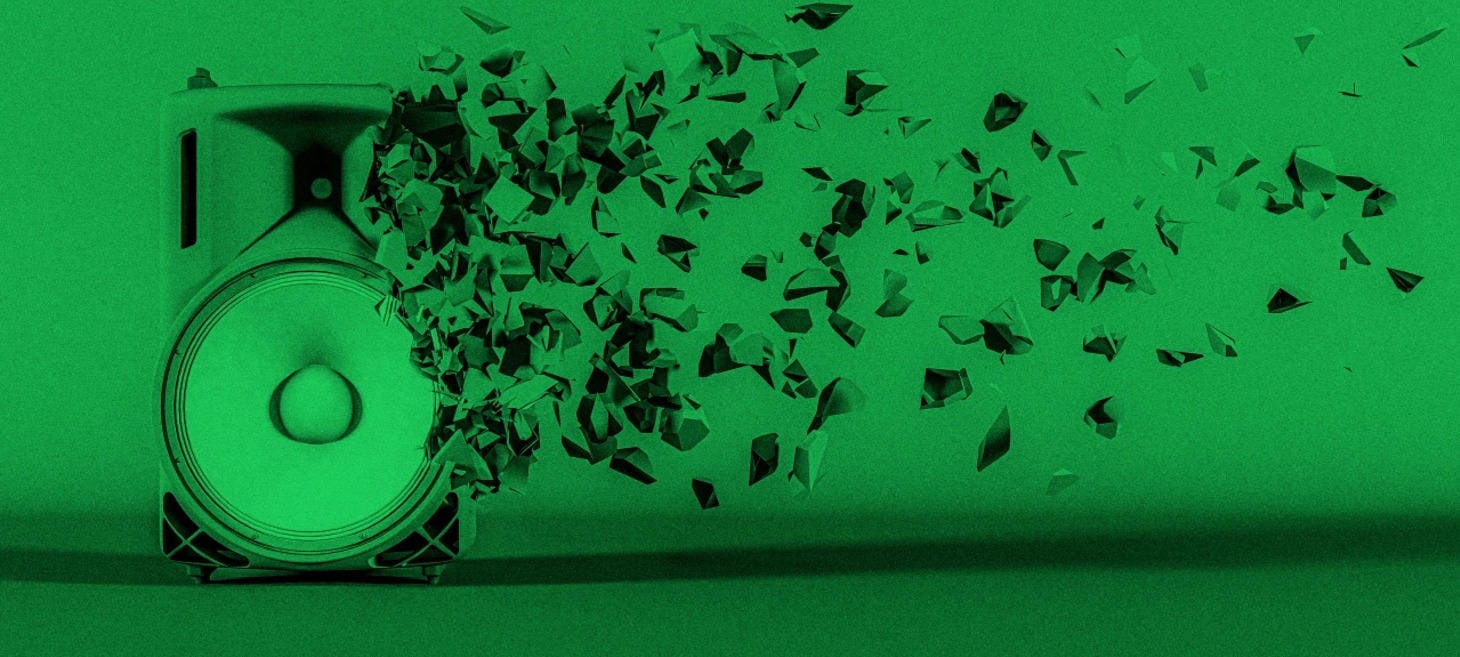
Spotify Wrapped has always been a playful snapshot of our listening habits, but as Kat Tenbarge highlights in NBC News, this year’s version leaned heavily into AI-generated features—and users weren’t impressed. Many felt it lacked the creative spark that once made it a joy to share. The internet didn’t hold back, with some calling it “lazy” and others mourning its shift from quirky fun to algorithmic blandness.
Elsewhere in this issue, I talked about those auto-generated “year in review” videos from Google, Apple, and Facebook. They’ve got their charm, but they often feel like they’re built for machines, not people. Spotify’s misstep made me laugh because it’s the same problem: relying on AI to replace creativity instead of enhancing it.
“When AI becomes the main act instead of the supporting player, you get something that feels efficient but uninspired.”
What’s the line between useful tech and losing the human touch?
FILM & VIDEO
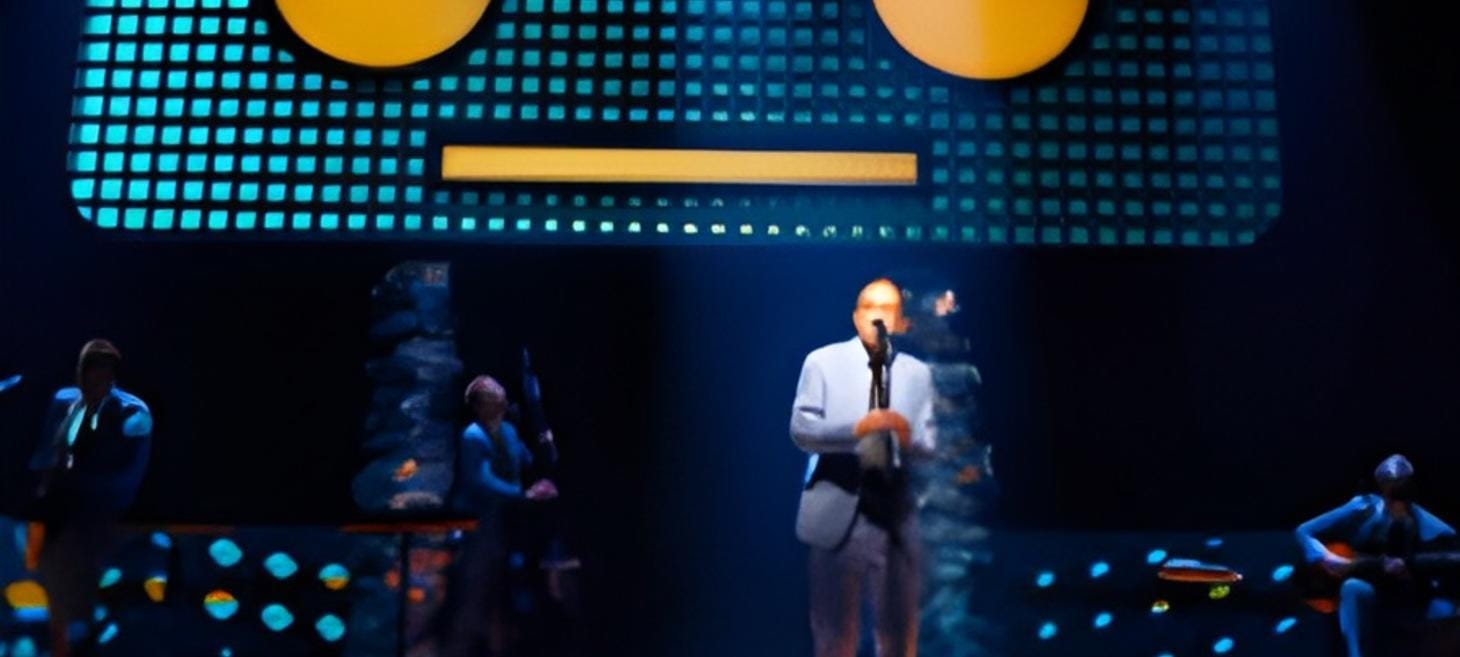
Theatre in Review: We Are Your Robots (Theatre for a New Audience/Rattlestick Theater)
Ethan Lipton’s We Are Your Robots, reviewed by David Barbour for Lighting & Sound America, blends jazz, sci-fi, and biting cultural commentary into a theatrical cabaret. The show features Lipton as the frontman for a band of musical “automatons,” riffing on AI, panpsychism, and humanity’s penchant for self-destruction. The production is packed with sharp humor, rich musical performances, and clever design elements like Katherine Freer’s robot-inspired projections. But as Barbour notes, its conclusion drags, losing some steam before the final curtain.
Here’s my take: can we give AI a break? It feels like every creative conversation gets looped back to algorithms and singularities. What happened to stories that stretch beyond today’s saturation points? I want theater to surprise me, not just echo TED Talks.
“If robots are fatal to humanity, it’s because they too accurately reflect our most violent flaws,” Lipton suggests. That’s a heavy thesis wrapped in comedy, music, and robot suits.
Do we need art to keep mirroring our anxieties, or is it time to tell stories that imagine something radically different?
PHOTOGRAPHY
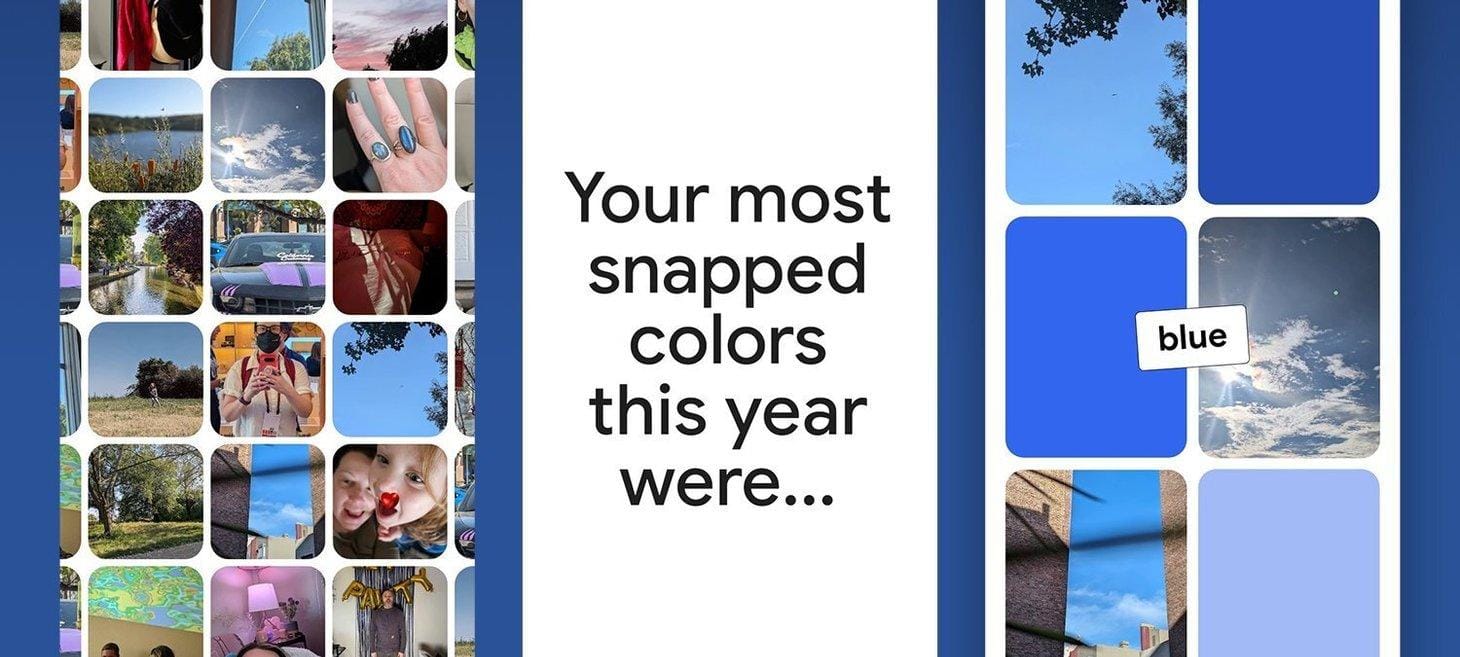
Google Photos Does a Surprisingly Good Job at Recapping the Year With Gemini
Florence Ion at Gizmodo highlights how Google Photos’ year-end “Your Recap” feature, especially its AI-powered Gemini version, is pleasing users with personalized captions and vivid summaries of their most memorable moments. Unlike Spotify’s attempt at AI personalization, this one seems to avoid the usual cringeworthy pitfalls.
As a photographer, I’ve always enjoyed these year-end reflections. Platforms like Facebook and Apple Photos turn my travel snapshots into engaging mini-films, giving me a fresh perspective on the year. While I’m deeply entrenched in the Apple ecosystem and rarely use Google Photos, I can’t help but admire the way these tools reinterpret our experiences through algorithms.
“It surfaces the most memorable moments from the year as Google’s algorithms interpret them,” writes Ion. “There’s even an option that reveals your color palette for the year.”
Do these digital curations truly capture the emotional depth of our memories, or do they simply mirror what the algorithm thinks matters most?
ART & SCIENCE
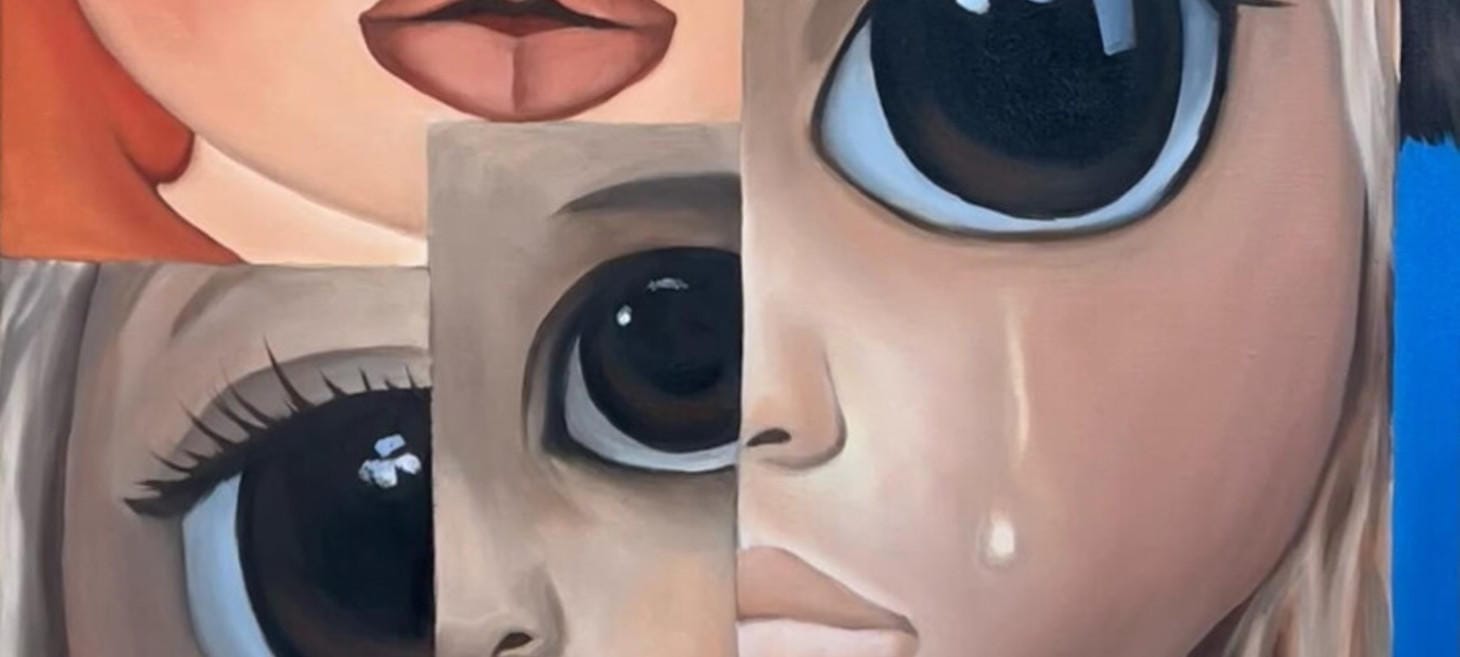
Art of Science: Memory for Artwork is Predictable
In a fascinating exploration of memory and art, The Visualist highlighted a recent talk by Prof. Wilma Bainbridge of the University of Chicago. Her research reveals that certain artworks are inherently more memorable due to their visual features. Even more intriguing, her lab developed an AI capable of predicting which pieces people are likely to remember—tested successfully during a study at the Art Institute of Chicago.
This hit close to home for me. As both an artist and someone involved in marketing, I couldn’t help but laugh at the idea of intentionally crafting forgettable artwork. It’s such a strange, yet oddly liberating, thought experiment.
Of course, I think I’d excel at making forgettable art. Sometimes, it feels like my sketchbooks are full of them already. Maybe that’s where my true talent lies—creating subtle, quiet works that fade into the background.
What do you think makes a piece of art unforgettable—or forgettable?
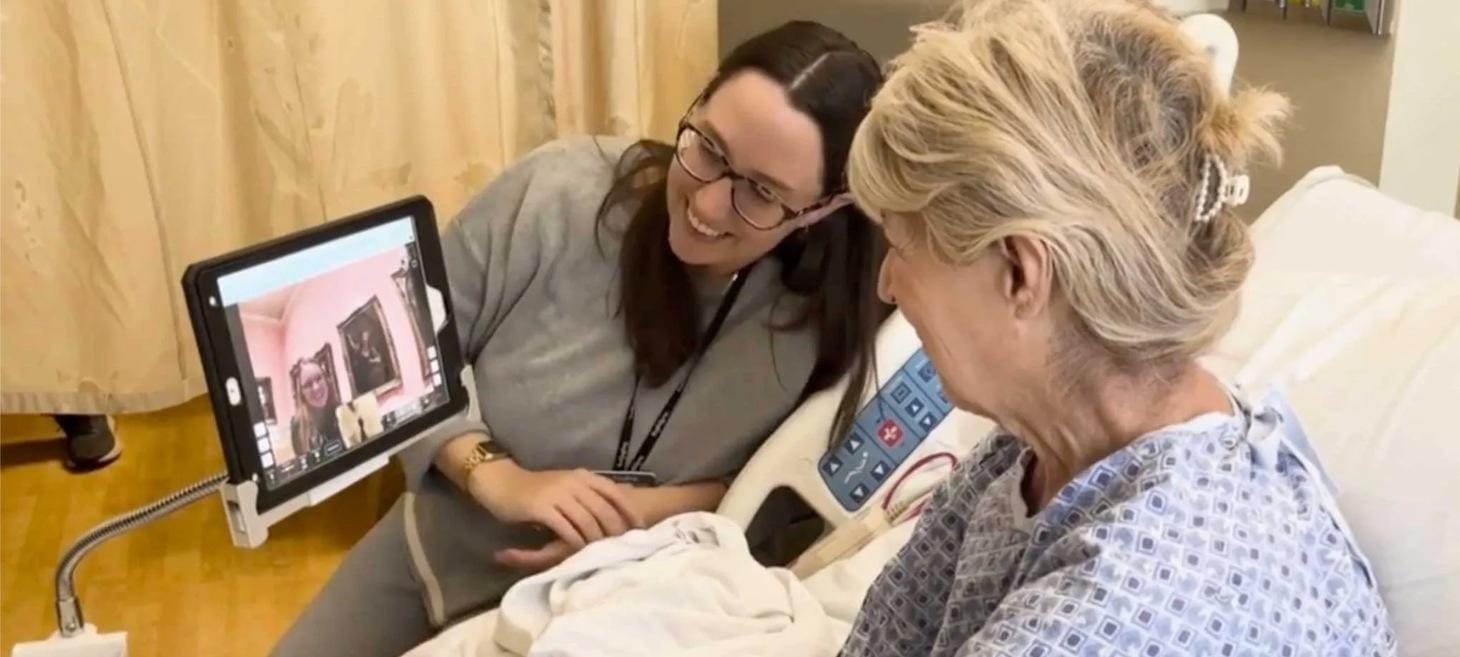
Artie, The Tour Robot: Best Practices in Blending Art, Technology, and Healthcare
At The Ringling in Sarasota, Florida, a collaboration with Sarasota Memorial Healthcare has produced Artie, a telepresence robot that brings museum tours to hospital patients. As detailed in MuseumNext’s article, this initiative combines art, technology, and healthcare to provide a unique form of integrative care. Artie's mobility and 4K camera make it possible for patients to engage with art from their hospital beds, offering relief from pain and anxiety.
I have to admit, I’m not entirely convinced an art robot would brighten my spirits during a hospital stay. Still, living in Sarasota, it’s a quirky possibility I might encounter. The concept itself is undeniably fascinating—technology as a literal bridge between healing and creativity.
"Artie demonstrates how museums can step beyond their walls and redefine their role as active agents of societal well-being," writes MuseumNext. It’s a bold vision, even if a robot tour guide feels a bit... impersonal.
Would a virtual art experience like this truly comfort you, or does art lose something essential when the human connection is replaced by a screen?
SUSTAINABILITY IN ART AND TECH
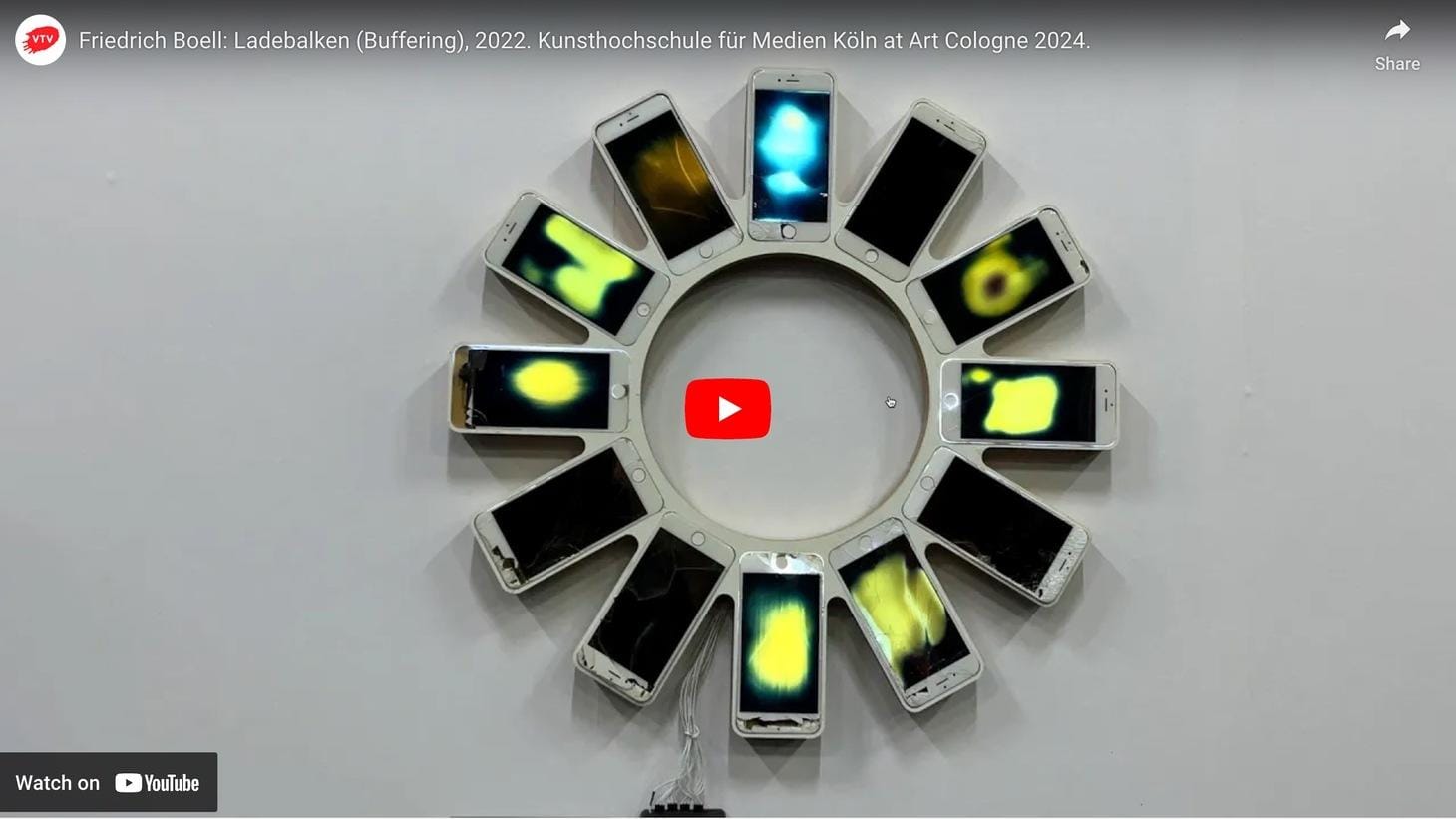
Friedrich Boell: Ladebalken (Buffering) / KHM at Art Cologne 2024.
Friedrich Boell’s work, Ladebalken (Buffering), showcased at Art Cologne 2024, is highlighted in an article by VernissageTV. Boell, a media artist from Wesel, integrates digital technologies like 3D modeling and reverse engineering into his art, often using recycled electronic waste as his primary material. His background in IT and media arts, along with his time in Cologne—where he studied at the Academy of Media Arts—shapes his unique approach to rethinking discarded technology.
What truly resonates with me is his use of electronic waste. Growing up near Wesel, where my aunt still lives, and having lived just a few hours north of Cologne myself, Boell’s trajectory feels oddly familiar. His ability to transform technological debris into something meaningful is both creative and deeply necessary today.
"The mountains of electronic scrap behind the flashing digital façade" inspired Boell’s practice—a stark reminder of the waste our digital lives generate.
Do we see the art in the discarded, or do we let it pile up unnoticed?
VIRTUAL AND AUGMENTED REALITY IN ART
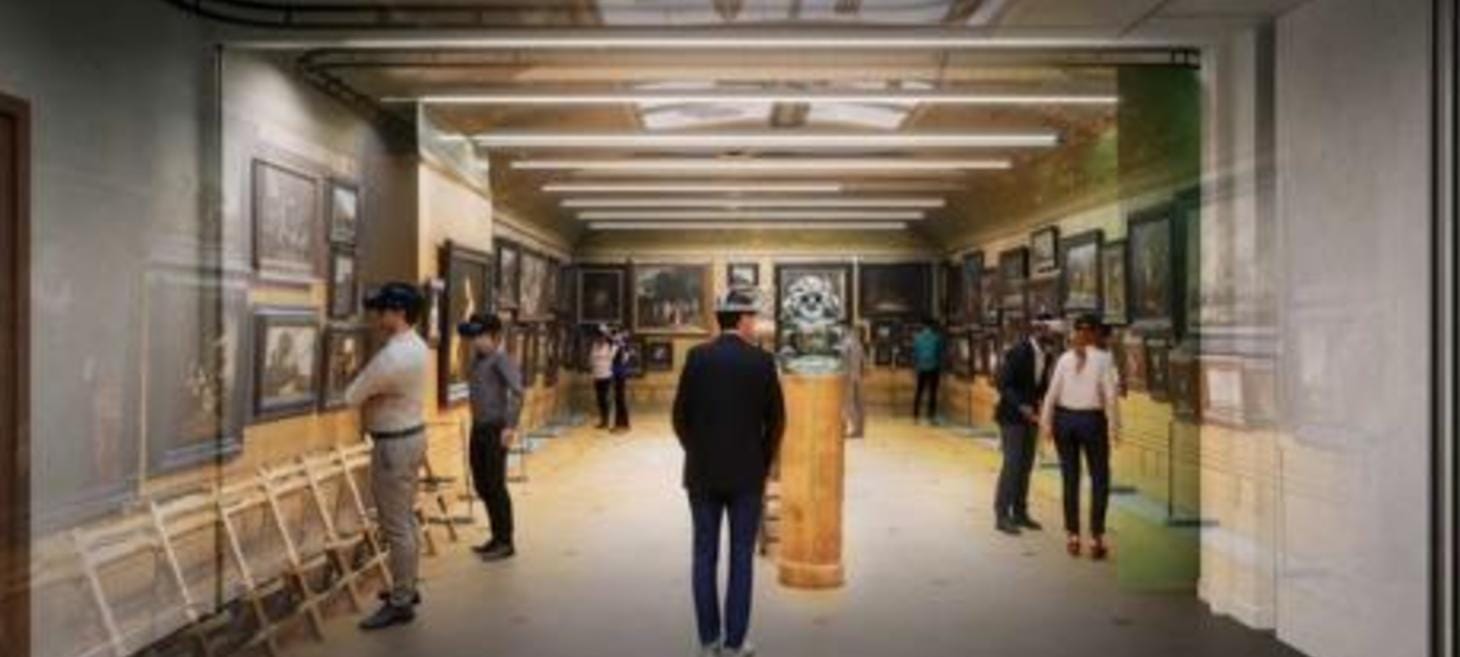
Museums without Vitrines: The Scottish Research Team Transforming the Way We View Art
A recent piece by The Art Newspaper highlights a project from the University of Glasgow that uses extended reality (XR) to create virtual museums. Through photogrammetry and VR headsets, users can explore high-fidelity 3D models of artifacts like the Lewis chess pieces, manipulating their scale and viewing them up close. Researchers envision this as a way to democratize access to cultural heritage while sidestepping intellectual property issues.
For me, this raises a deeper question about how we display stolen artifacts often tied to colonial histories. Imagine a world where technology could credibly showcase these works in their original contexts—free of glass cases and colonial narratives. But honestly, lugging around a VR headset doesn’t excite me.
"If this tech evolves into holograms in physical spaces, where I can walk freely like in a real museum, then I’m all in. Until then, it’s not quite there for me."
What about you—would you embrace this virtual shift or hold out for something more tangible?
ART AND POLITICS
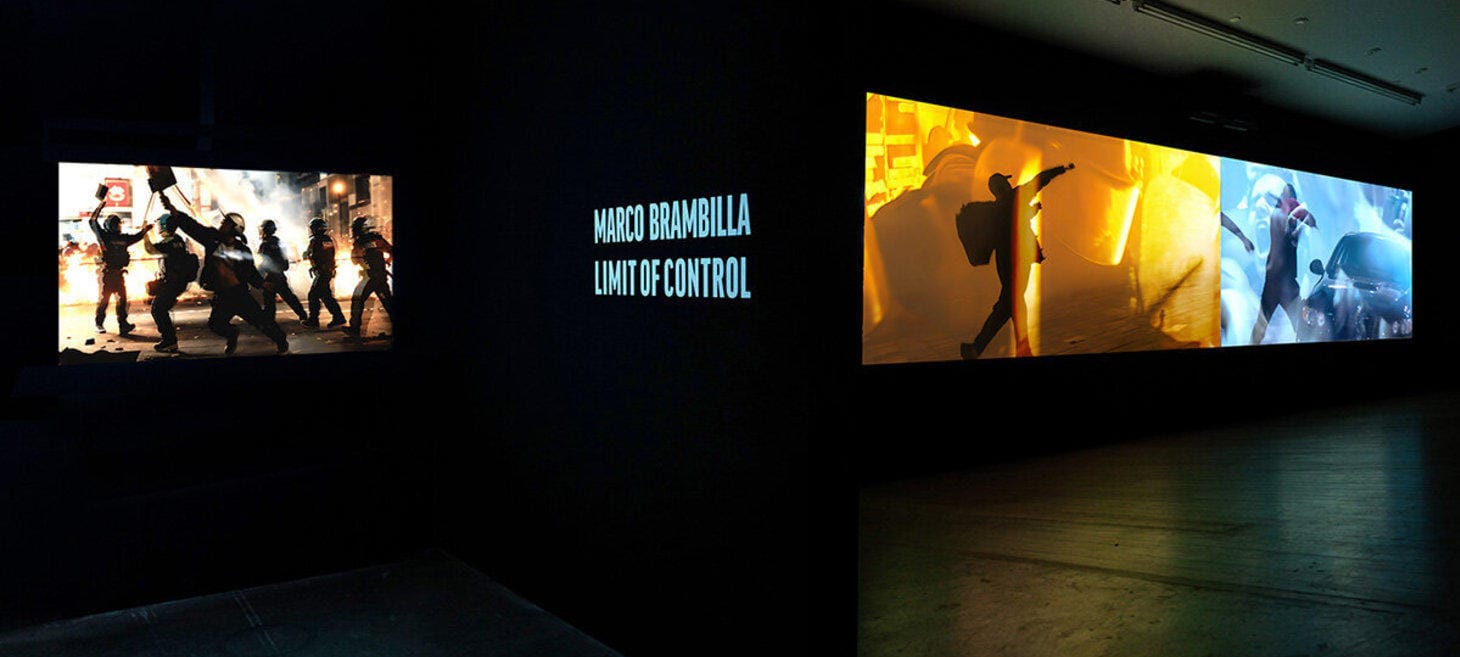
Hollywood Protest Meets AI News in Marco Brambilla’s US Media Critique Video Installation
Marco Brambilla’s Limit of Control, featured in designboom, is a layered critique of media politics and the erosion of truth in the digital age. Presented at New York’s bitforms gallery, the video installation combines AI-generated imagery, Hollywood footage, and protest recordings, creating a frenetic montage that mirrors the chaos of modern media consumption. The rapid-fire, almost hypnotic visuals straddle photorealism and surreal abstraction, blurring the line between reality and fabrication.
While I found the sequencing overwhelming, some stills and collages stood out as compelling moments of visual clarity. It’s a fascinating project, though I admit it was hard to fully enjoy due to the sensory overload.
Both disturbing and interesting, the imagery and videos created in this artwork are a little hard to enjoy for me, primarily due to the rapid-fire sequencing. However, I appreciated some of the stills and superimposed collages that were part of this project.
Does this type of art provoke understanding—or just exhaustion?
THE LAST WORD
I appreciate you joining me on this exploration of where art and technology intersect. Your interest and engagement are what make these discussions valuable. If any of these topics sparked a thought, I'd love to hear your perspective. Let's keep this conversation alive and continue to explore these compelling intersections together.
Best, Juergen
Member discussion