
 Greetings from Juergen
Hi all,
This week's stories kept circling back to one uncomfortable question: when our tools get smarter, who's actually making the creative decisions? Take that experimental camera from Carnegie Mellon that can focus on everything at once—sounds impressive until you realize it's removing one of photography's most fundamental artistic choices. Or those AI-powered gallery TVs from LG and Samsung that cycle through subscription art libraries on your wall. They're convenient, sure, but who's curating your visual environment—you or an algorithm?
The pushback is already forming. Designers are embracing what they're calling "human imperfection"—deliberately wobbly lines, torn edges, analog artifacts—as visible proof that a person still holds the pen. Brain imaging of improvising jazz musicians reveals something fascinating: mastery looks less like careful planning and more like trained instinct taking over when you stop overthinking. These aren't unrelated stories. They're all asking whether our increasingly helpful tools are actually assisting our creative vision or quietly authoring it for us.
The Intersect: Art In Tech
Don't miss 'The Intersect: Art in Tech and Tech in Art' podcast, where a companion audio feature explores each week's newsletter topics in conversational format.
captivate.fm
Public Art

"Coming Together" Exhibition in Washington Explores Post-Pandemic Transformations of Community and Public Spaces
Washington D.C.'s National Building Museum has launched Coming Together: Reimagining America's Downtowns, an exhibition that feels less like a traditional gallery show and more like a living workshop. Running through Fall 2026, it brings together examples from over 60 U.S. cities—parklets in Norfolk, adaptive reuse in Alexandria, community kitchens in D.C.—all showing how communities responded when the pandemic exposed what wasn't working in urban centers. Antonia Piñeiro's piece in ArchDaily walks through the three-gallery experience, including the City Action Hall where organizations can book space to strategize and share their downtown revitalization efforts.
Strictly speaking, this isn't an art exhibition. But I find myself thinking about it like public art—people get to participate, vote on city initiatives, and shape how their urban spaces develop. That's meaningful. It serves a practical purpose, which I appreciate.
The line between art and design blurs when you're visualizing data about community needs or mapping out alternative futures for public space. Maybe it's not gallery art, but it's definitely design practice—and there's creativity in making complex urban planning decisions legible and inviting.
Can participatory urban planning exhibitions like this bridge the gap between policy and the people those policies affect?
archdaily.com
Photography

This Experimental Camera Can Focus on Everything at Once
Researchers at Carnegie Mellon University have developed a camera lens system that can focus on everything at once—near, far, and everywhere in between. Using what they call "spatially-varying autofocus," the experimental setup essentially gives each pixel its own adjustable lens, combining a Lohmann lens with a spatial light modulator and two types of autofocus methods. Jess Weatherbed reports for The Verge that while this tech won't appear in consumer cameras anytime soon, it could reshape everything from microscopy to autonomous vehicles.
As a former photographer, I find this technologically interesting, but I think controlling depth of field is a better option than something the camera does automatically. Our smartphones already have super wide-angle lenses with great depth of field built-in. In fact, the reverse phenomenon is being added computationally—phones now add pleasing blur (bokeh, from the Japanese term for that aesthetic quality) to portrait images, simulating the expensive shallow-focus lenses that photographers have long prized.
It's somewhat ironic that these technologies are going computational now. For medical imaging and specialized applications, sure, I can see the value. But for consumer devices? I don't think it will be a hit because smartphones already handle depth of field perfectly well for hobbyists.
Maybe the real question isn't whether we can focus on everything, but whether we should.
theverge.com
Definitely Not AI
The Improv Artists Working for AI Companies
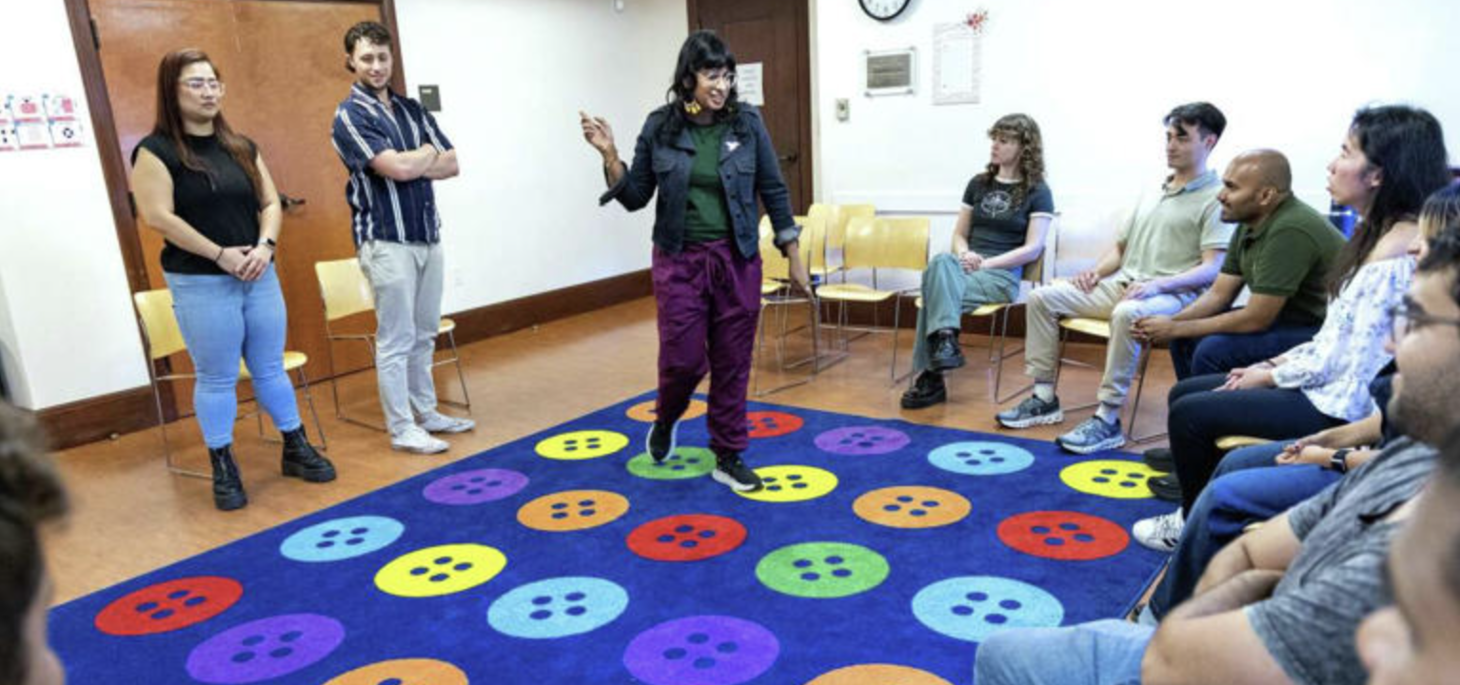
When theater artists start showing up at AI companies, something unexpected is happening. Lily Janiak's piece for the San Francisco Chronicle explores how Bay Area improv performers and visual artists are finding surprising opportunities inside the tech world—not as data points to be harvested, but as essential human facilitators teaching genuine connection and creative adaptability.
I'm cautiously optimistic about these early partnerships. They represent a shift from AI simply consuming artistic labor to actually employing artists for their irreplaceable human skills—active listening, spontaneous collaboration, the ability to pivot when things don't work. It's the kind of cross-pollination that makes me curious rather than defensive.
What strikes me most is the role reversal: tech companies discovering that their employees need what artists have always practiced—the courage to say yes to wild ideas, to fail gracefully, to stay present in moments of uncertainty. These aren't soft skills; they're survival skills in an industry built on constant disruption.
But I keep wondering: will this recognition of artistic expertise expand, or will it remain a niche curiosity?
msn.com
Design
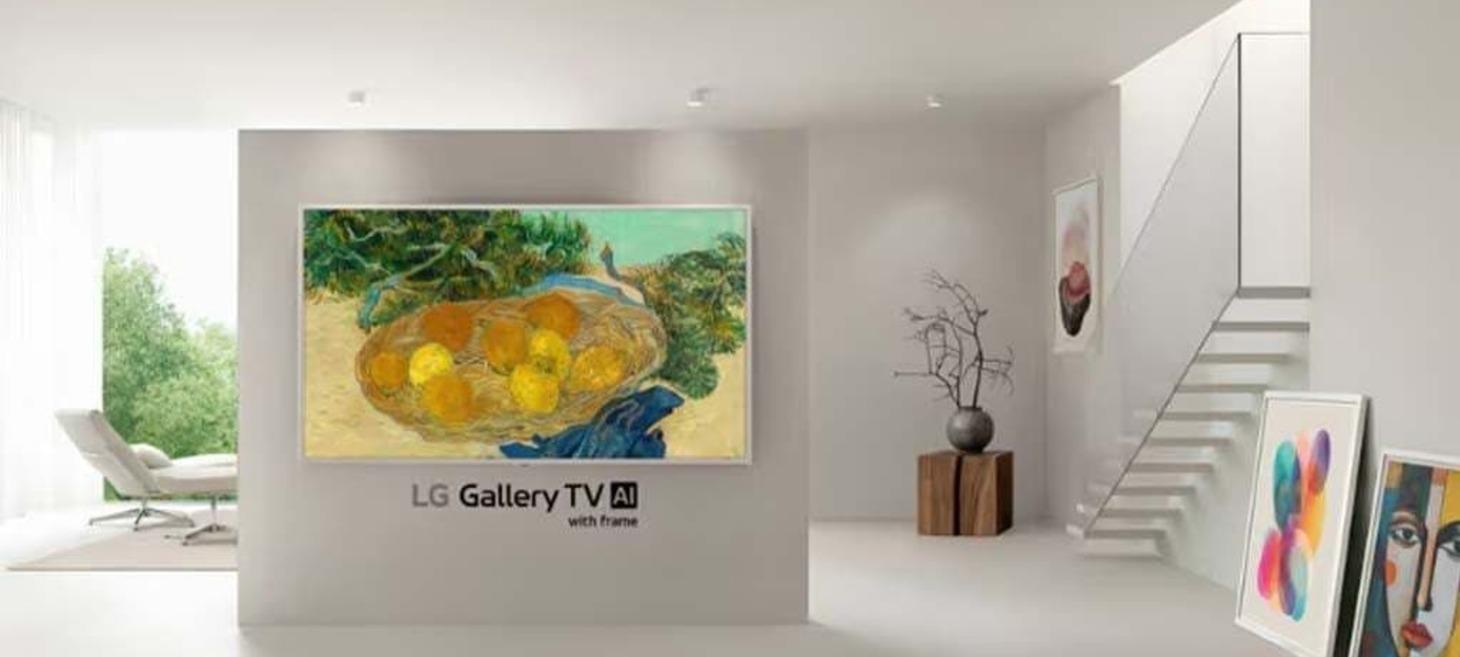
LG Challenges Samsung's the Frame with Its New Gallery TV
LG just unveiled its Gallery TV ahead of CES 2026, taking direct aim at Samsung's wildly popular The Frame. As Sammy Fans reports, both devices follow the same playbook: wall-mount flush, swap magnetic frames, and display artwork when you're not streaming. LG's version uses MiniLED tech with anti-glare coating and packs over 4,500 artworks through its Gallery+ service, plus AI image generation and Bluetooth music playback.
We've covered various digital frames in this newsletter before, and this is yet another sign the market's growing. I still prefer e-ink displays—they feel more like actual picture frames you can hang independently, with batteries lasting around 500 days. No plugging in, no unsightly wires dangling down your wall.
The Samsung and LG picture frames are really stand-ins for a TV that looks a bit like a picture frame but still requires installation with HDMI cables and power supplies—not exactly practical if you just want to hang a picture frame in some places around the house.
That said, these TV-based frames are priced like TVs, which makes them affordable for really large displays, while the 31-inch e-ink frames we've featured still hover around $1,200. Will this broader market interest eventually make e-ink display frames more accessible?
sammyfans.com
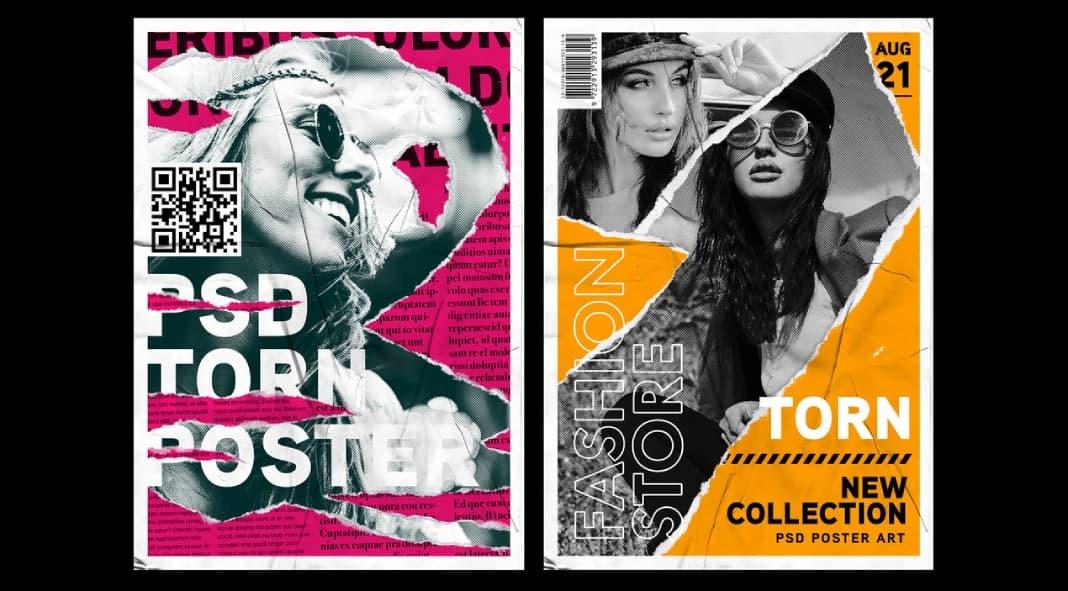
Why the Biggest Design Trend of 2026 Is Human Imperfection
Design's newest rebellion has a name: human imperfection. WE AND THE COLOR examines how designers in 2026 are deliberately breaking the rules of polish and precision—embracing torn edges, asymmetry, and analog textures—as a direct countermeasure to AI's relentless perfection. The movement isn't just aesthetic; it's existential. When algorithms can generate flawless imagery in seconds, the wobble in a hand-drawn line becomes proof of human authorship.
I find "aggressive imperfection" absolutely fascinating as a design trend. It's this beautiful paradox: prove your humanity by showcasing your imperfection, so we can tell you're not an AI. What strikes me even more is how this might reshape our standards of beauty itself—what we find authentically pleasing versus what we've been conditioned to admire.
The irony runs deep here. We've spent decades perfecting digital tools to eliminate every flaw, and now we're using those same tools to deliberately inject mistakes back in. The flaw becomes the signature, the error becomes the style.
Are we witnessing a temporary reaction to AI fatigue, or the beginning of a permanent shift in how we value creative work?
weandthecolor.com
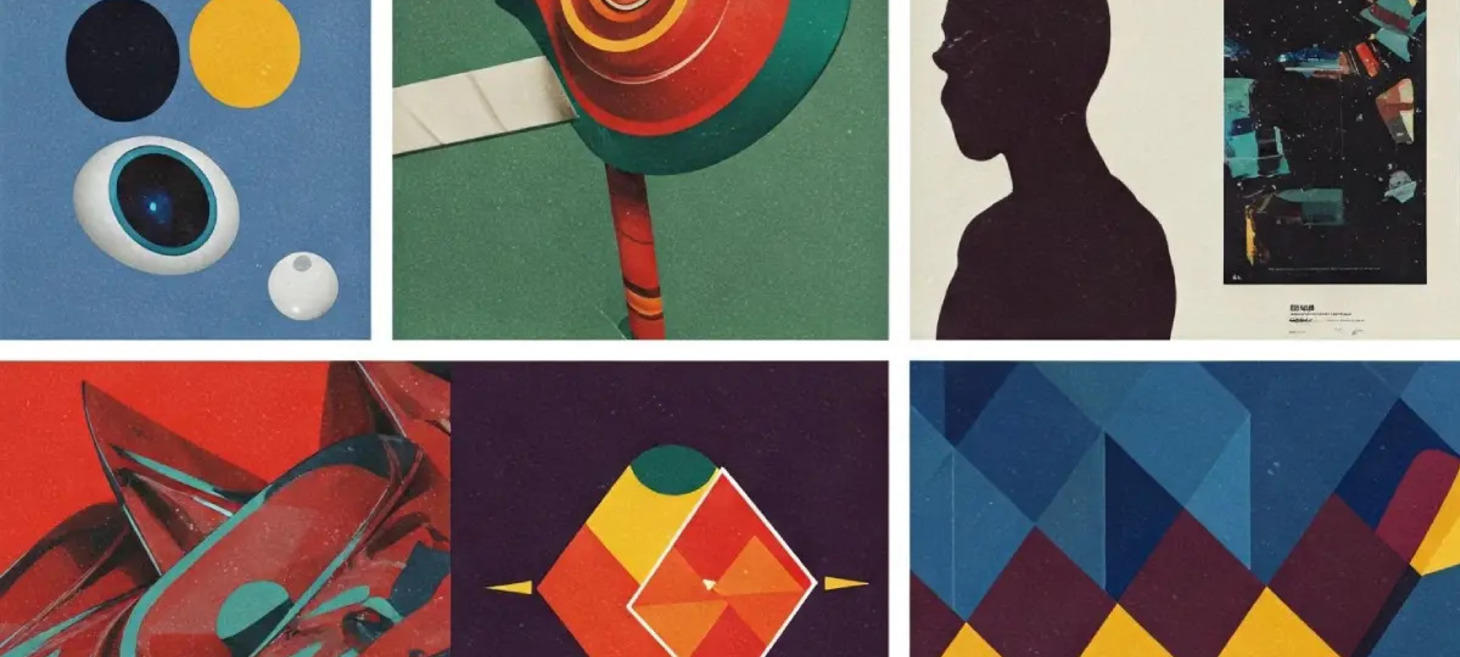
Generic Design Will Be Punished in 2026 — Why Original Thinking Becomes the New Competitive Advantage
The age of safe, interchangeable design is ending—and not gently. In a sharp piece from WE AND THE COLOR, the argument is clear: 2026 will punish generic work because AI has made polished visuals abundant, stripping sameness of its protective value. When everyone can produce clean layouts and neutral branding, those qualities stop mattering. What rises instead? Intention, specificity, and visible decision-making.
I keep circling back to one idea: taste cannot be automated. Generic design avoids taste because taste invites disagreement, and disagreement feels risky. But that's exactly what creates distinction. Strong brands don't need everyone to like them—they need clarity over consensus. Taste means saying no, excluding alternatives, making choices that some will reject. That's what separates authors from operators.
The designers who thrive won't be the ones who follow every trend or apply every template. They'll be the ones willing to exclude, willing to stand behind decisions that feel uncomfortable, willing to create work that doesn't please everyone but resonates deeply with the right people.
So here's the question: when was the last time you designed something that made you genuinely nervous to show?
weandthecolor.com
Art & Science

Here's What's Happening in the Brain When You're Improvising
When jazz pianists at the Royal Academy of Music improvised their way through "Days of Wine and Roses" inside brain scanners, neuroscientist Peter Vuust and researcher Henrique Fernandes discovered something unexpected: the freer the improvisation, the less the brain relied on networks associated with planning and self-monitoring. Instead, it fell back on fast, well-trained auditory and motor systems. Kristen French reports in Nautilus that as creative freedom increased, entropy in the music increased too—more notes, less predictability, more surprise.
I find myself wondering how this translates to other creative zones. Does a painter entering flow experience this same neurological shift? What about writing poetry or coding an elegant solution? The brain scan findings suggest that practiced improvisation isn't about thinking harder—it's about thinking less and trusting your trained instincts.
The researchers compared jazz improvisation to conversation, and that comparison resonates deeply: "musicians rely on a shared vocabulary, respond to dynamic cues in real time, anticipate replies, build phrases on the fly." The brain data backs this up—improvisation looks less like planning and more like fluent, embodied communication, like speaking to a loved one.
If creativity emerges when we stop overthinking and let our trained networks take over, what does that mean for how we teach and cultivate artistic practice?
nautil.us
Virtual and Augmented Reality in Art
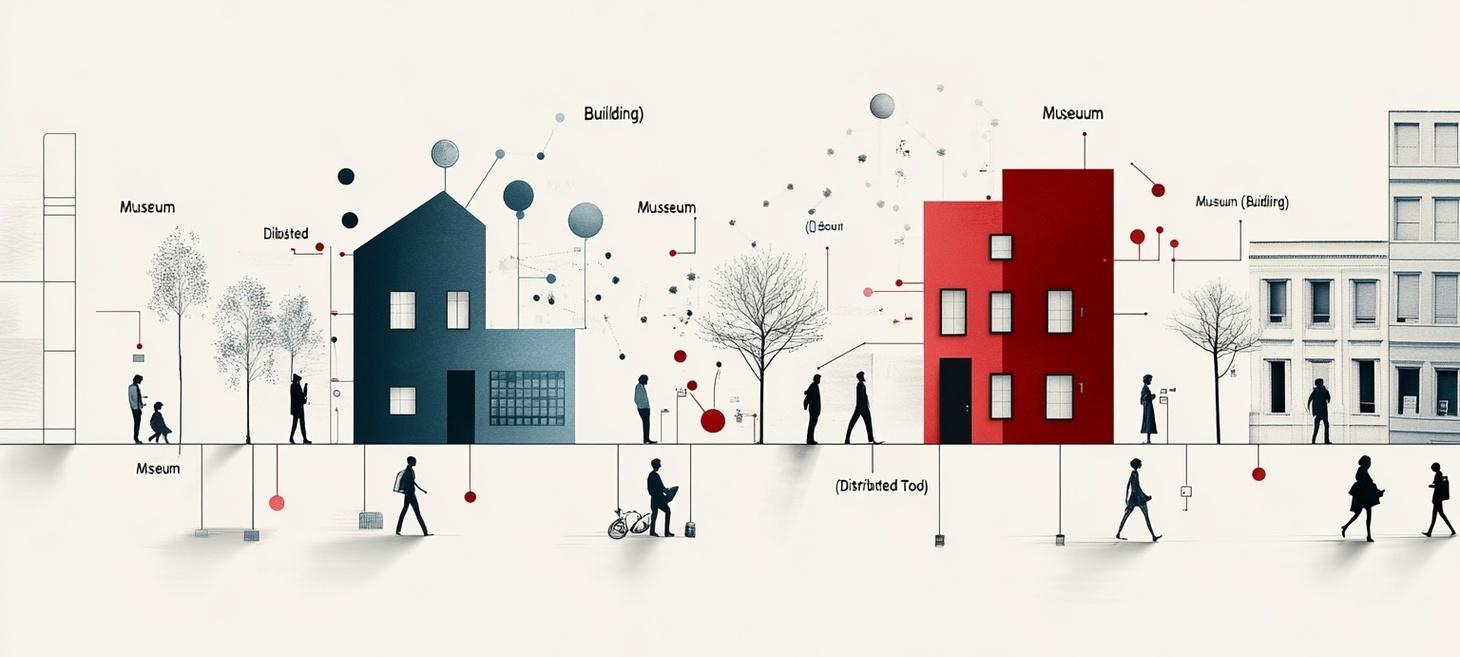
The Convergence Era: Why Museums Must Move Beyond the Building
Imagine pointing your smartphone at a leaf and instantly accessing a museum's botanical collection, historical artwork featuring that species, and environmental data about the tree. Mark Walhimer, a 30-year veteran of museum design, calls this future "Museums Everywhere"—a distributed intelligence that transforms our surroundings into interpretive layers. He's released two white papers exploring how AI, IoT, and blockchain could create what he describes as a "singularity" where museums become tools for public empowerment rather than buildings we visit.
I see these ideas as proposals for extending museum reach, not replacing the physical experience. The notion of engaging curiosity about art history in the natural world outside museum walls? I'm completely on board for that.
What excites me about Walhimer's vision is how it positions technology as a bridge between formal institutions and everyday wonder—enabling someone to look at a tree, a building, or a painting in their local cafe and immediately access the kind of context that museums have traditionally guarded within their walls.
Could this distributed approach actually democratize access to cultural knowledge, or will it become just another app we ignore?
museumplanner.org
