
 Greetings from Juergen
Hi all,
This week's stories keep circling back to the same uncomfortable question: are we building better tools for creativity, or are we just making it easier to hand everything over? Dave Stewart's new platform wants musicians to register their work so they can license it to AI companies—he calls generative AI an "unstoppable force," which might be pragmatic or defeatist depending on your mood. Meanwhile, illustrators are splitting into two camps: those panicking about AI and those like Paul Ryding who are having their best year in 25 years precisely because they're pushing back against it.
What strikes me most is the exhibition by Jordan Porter-Woodruff examining what happens when children consume creativity rather than create it. That line about kids becoming "spectators to a simulation of imagination" hit harder than I expected—it reminded me of afternoons at my uncle's house with nothing but paper and art supplies, where boredom was the starting point, not something to escape. And then there's Beeple's robot dogs with billionaire heads dispensing blockchain photos at Art Basel, because of course there are. I can't decide if installations like that critique the system or just become another expensive piece of it.
The Intersect: Art In Tech
Follow 'The Intersect: Art in Tech and Tech in Art' podcast, where we explore each week's topics in a conversational format—perfect for your commute or studio time.
captivate.fm
Technology in Music
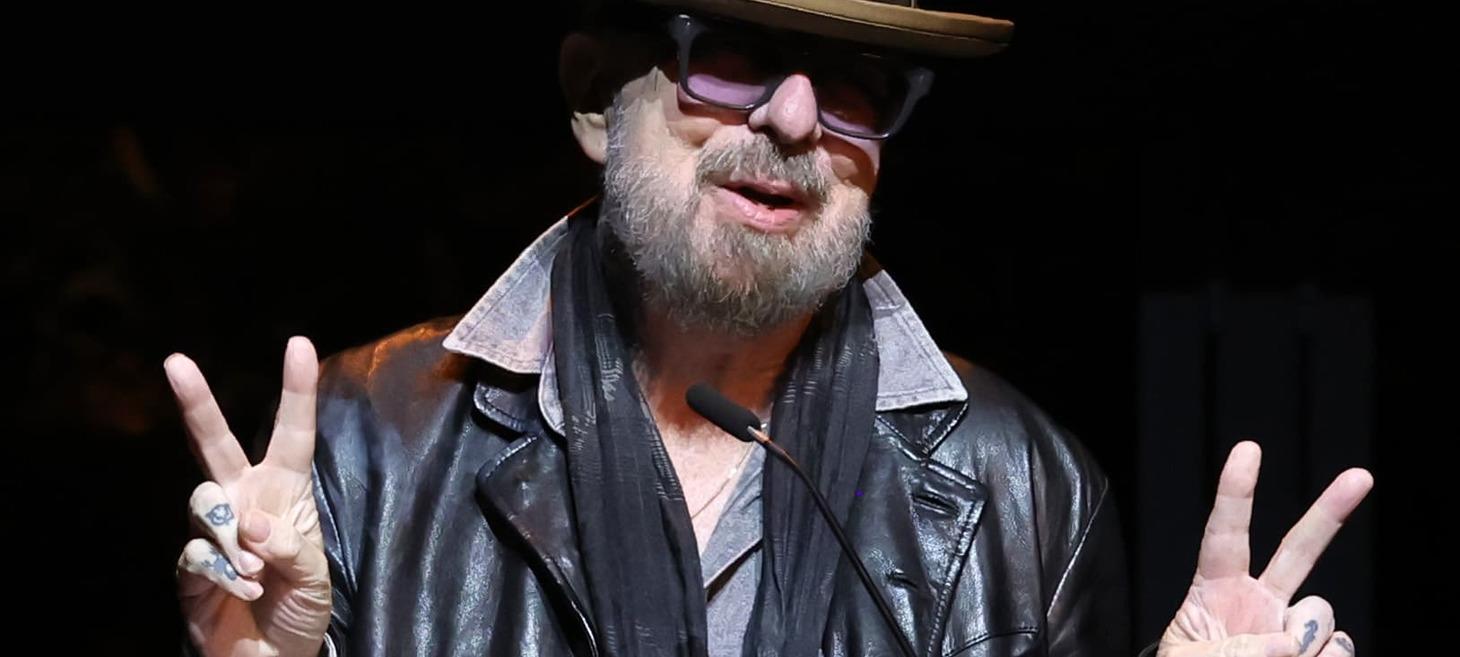
Dave Stewart Says Musicians Need to Own Their Work so They Can License IT to Generative AI Platforms
Dave Stewart, one half of Eurythmics, just launched "Rare"—a platform that promises to help musicians own and register their work so they can then license it to AI companies. Chris DeVille at Stereogum reports that Stewart calls generative AI an "unstoppable force" and argues artists should get paid before their music gets absorbed anyway. The three major labels already struck a deal with AI platform Klay, and with lawsuits like Jorja Smith's label suing over voice cloning, Stewart's fatalism might not be entirely wrong.
I'm honestly struggling to make sense of this. Stewart is building infrastructure specifically to enable musicians to hand their work over to AI scrapers? That can't be right, can it? The business speak on Rare's website about "conjuring entities" and "shifting landscapes" doesn't exactly clarify the value proposition here.
Stewart compares AI to the drum machines he used in Eurythmics—new technology that augments rather than replaces human creativity. But as DeVille points out, if AI is a tool for creative empowerment in the "right hands," why is Stewart urging artists to license directly to the "wrong hands" he's warning about?
Is this protection or just making exploitation more efficient?
stereogum.com
Societal Impact of Art and Tech
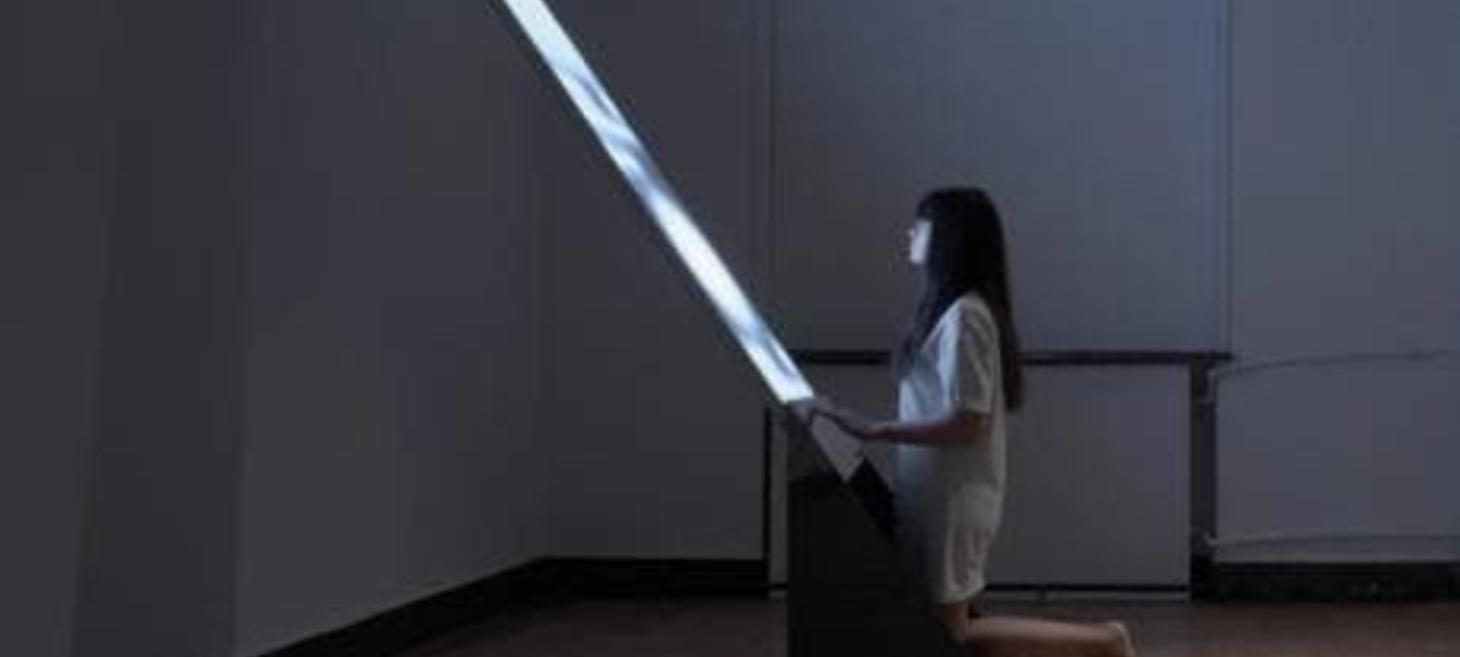
Endless Scrolling Induces Permanent Craving: Pangenerator Highlights Our Unhealthy Relationship with Technology
There's something simultaneously profound and absurd about the Polish collective panGenerator making gallery visitors kneel before a digital altar to scroll through meaningless symbols. Their installation Infinity (2020), covered by Aimee Dawson in The Art Newspaper, physicalizes what we do every day—scroll endlessly, searching for something that satisfies. By turning digital habits into physical performance, they make visible what we'd prefer to ignore: our unhealthy relationship with technology.
One of my all-time favorite records is K.D. Lang's Ingenue, which had a track called "Constant Craving" that was a hit in the early nineties. That phrase keeps echoing in my mind here—constant craving for meaning, connection, relationships has always been part of the human condition. It can never be satisfied, and especially not by endless scrolling.
What strikes me about panGenerator's work is their resistance to playing the algorithm game, even as they critique it. Member Jakub Koźniewski admits catching himself designing installations with Instagram in mind, yet they refuse to post daily reels or chase viral aesthetics. There's integrity in that struggle—creating physical art about digital phenomena while refusing to let digital platforms dictate their creative choices.
Can art that critiques social media truly succeed if it needs social media to be seen?
theartnewspaper.com
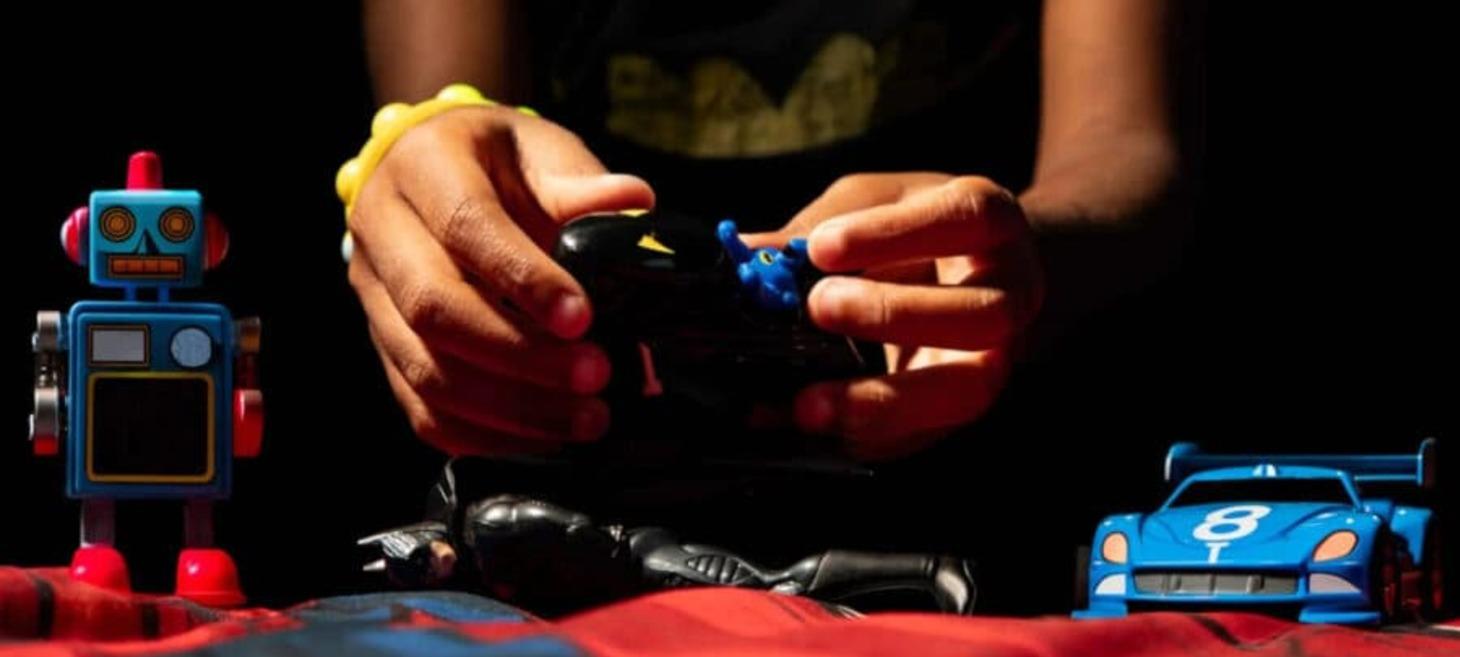
Jordan Porter-Woodruff: the Children Play Games
Jordan Porter-Woodruff's exhibition The Children Play Games at Chicago's Epiphany Center for the Arts confronts a question that feels increasingly urgent: what happens when creativity becomes something children consume rather than create? Through photographs that blur physical and digital spaces, Porter-Woodruff examines how AI and algorithmic feeds are reshaping childhood imagination—and The Visualist captures the stakes beautifully.
One line from the show's description stopped me cold: "When creativity is outsourced to algorithms, children risk becoming consumers of novelty rather than creators of it, spectators to a simulation of imagination that demands nothing of their own." It took me back to visiting my uncle's house in Germany as a kid—he later became a prolific painter. There were no TV shows or magazines to keep us occupied. Instead, he'd lay out paper, pens, and expensive art supplies, and we'd just create. It wasn't special; it was simply what we did. Creation, not consumption, was the default.
That experience taught me something I'm only now articulating: the frustration of making something from nothing isn't a bug—it's the entire point. When AI completes the story or generates the picture, it removes the struggle that actually builds the creative muscle.
How do we safeguard spaces where children can still fail, fumble, and discover on their own terms?
thevisualist.org
AI in Visual Arts
Is Illustration Dead? Creatives Weigh in on AI and the Future of Commercial Art
With AI anxiety at fever pitch, Tom May at Creative Boom asked illustrators a blunt question: is your field dying? The answers reveal something more interesting than panic—a split between those struggling and those thriving, with the difference often coming down to how they position their work.
I love what Paul Ryding said: he's having his busiest year in 25 years of freelancing. His strategy? React against AI rather than adopt it. He pushes "handcrafted," "human-made," and "organic" to clients, reminding them that even if clients don't care where illustrations come from, audiences absolutely do. That's the key insight hiding in plain sight.
What stands out to me is how AI's threat has clarified what makes illustrators valuable—not just drawing skill, but lived experience, conceptual thinking, and the ability to translate human stories into visual form. These aren't things you can prompt into existence.
Are we watching illustration evolve or just watching it separate into two markets?
creativeboom.com
Design
Design in the Age of AI: How Small Businesses Are Building Big Brands Faster
AI design tools are handing small businesses something they've never had before: the ability to create professional brand identities without waiting for funding or hiring agencies. VentureBeat reports search interest has exploded since 2022—up 700% for AI business name generators, 1,200% for logo tools, and a staggering 1,600% for website builders. Platforms like Design.com now bundle naming, logo creation, and web development into one workflow that turns rough sketches into polished brand systems in minutes.
I love the five frontiers concept they outline—naming, logos, websites, business cards, presentations. But here's what matters more: a good idea is still the foundation of everything. AI makes it easier to avoid bad brand design when you have a strong concept, but it won't manufacture the concept for you.
What we're really seeing is the removal of execution barriers, not the generation of vision itself. You still need something worth building a brand around.
Can democratized design tools actually level the playing field, or do they just raise the baseline while leaving the gap between mediocre and exceptional ideas exactly where it was?
venturebeat.com
Interactive Art
Billionaire Heads on Robot Dogs Pooping Photos Go Viral at Major Miami Art Fair
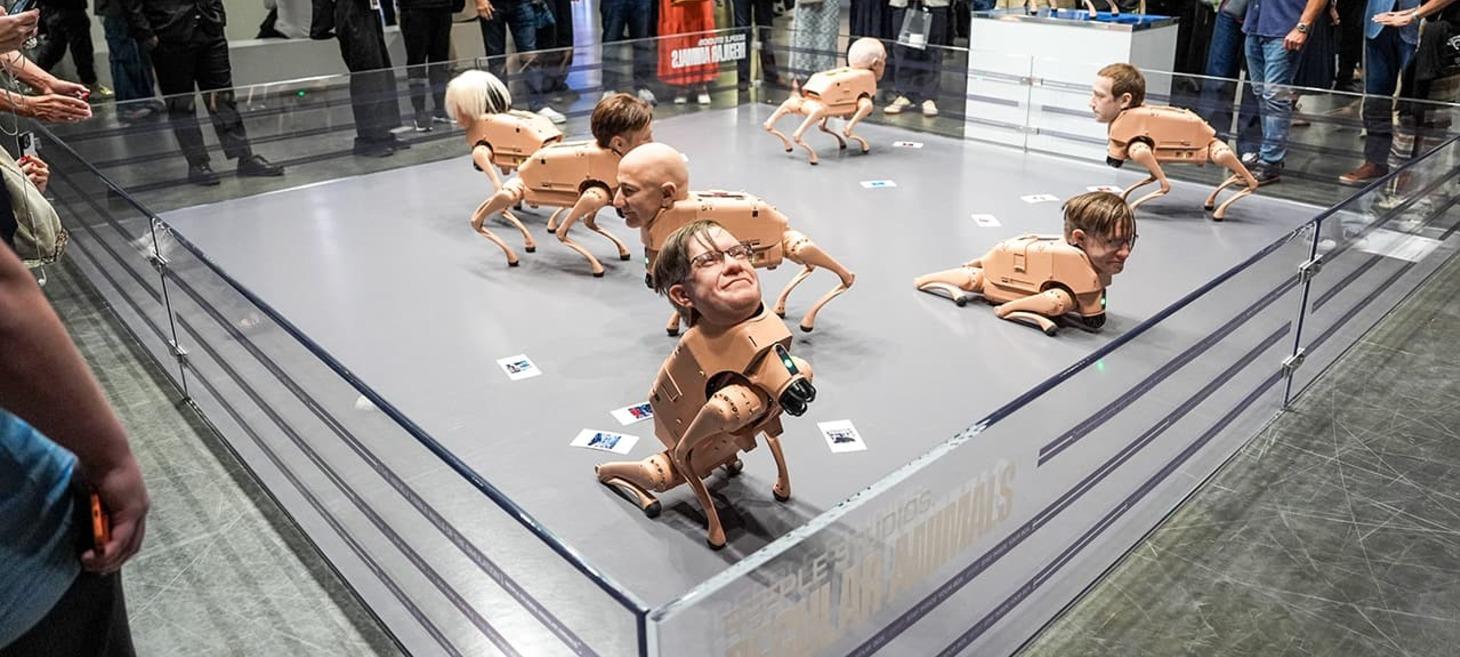
Robot dogs with hyper-realistic heads of Jeff Bezos, Elon Musk, Mark Zuckerberg, Andy Warhol, and Pablo Picasso are wandering around Art Basel Miami, occasionally pausing to enter "poop mode" and dispense photographs. Beeple's "Regular Animals" installation has gone predictably viral, with each $100,000 robot selling out at the fair's new Zero 10 exhibition space dedicated to digital-era art, Fox Business reports.
I went to Art Basel a few years back—it was the year that duct-taped banana sold for millions. Beeple's already proven he can command insane prices, having sold an NFT for $69 million back in 2021. So naturally I'm wondering: how much will these robot dogs eventually fetch on the secondary market?
The robots are programmed to cease functioning after three years, spending their operational life capturing images and storing them on the blockchain. It's a built-in obsolescence that feels both dystopian and oddly fitting for art about tech billionaires who control how we see the world.
When the installation that comments on algorithmic gatekeepers itself becomes a seven-figure blockchain artifact, are we witnessing critique or participation?
foxbusiness.com
Sustainability in Art and Tech
Patricia Urquiola Unveils 'Among-All' at Heimtextil 2026: a Fusion of AI, Materials, and Sustainable Design
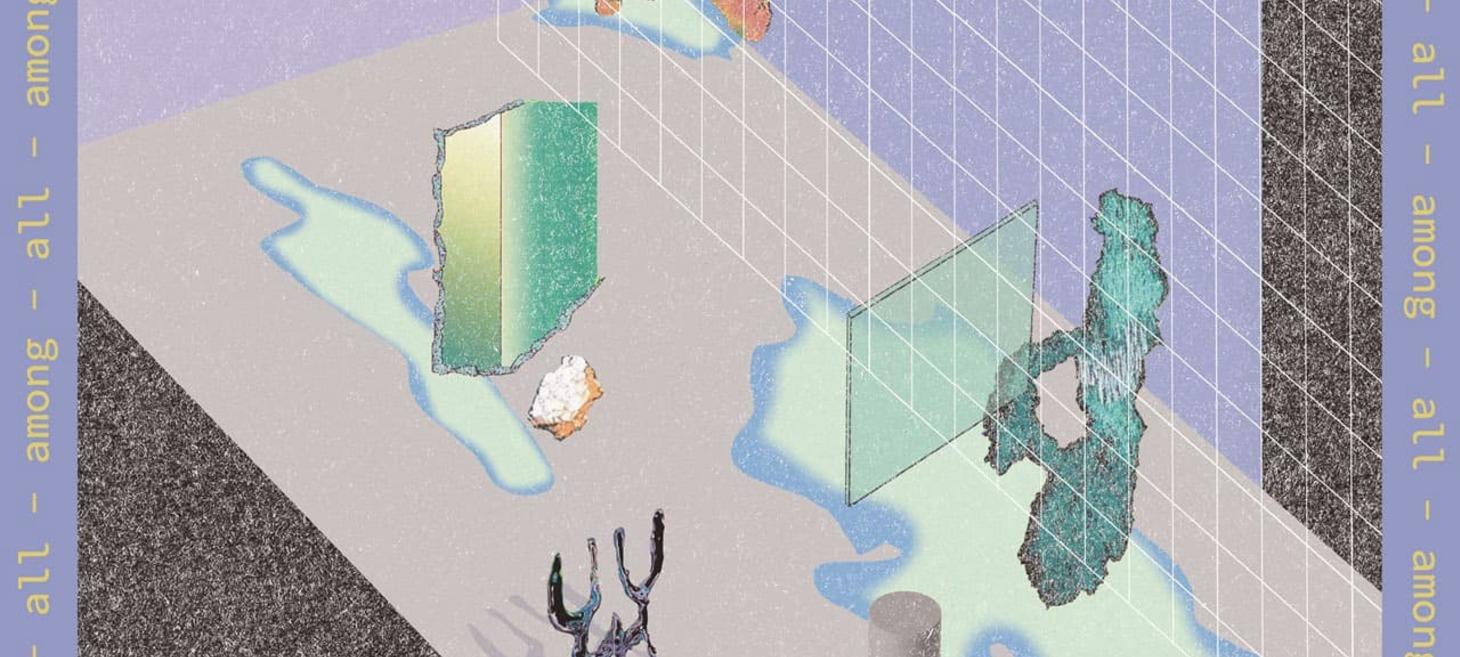
Patricia Urquiola's among-all installation at Heimtextil 2026 turns textile design into an interactive experience where AI meets sustainability. As reported by SA Decor & Design, the installation uses motion sensors and machine learning to transform visitor movements into responsive visual forms on a massive LED wall, while showcasing materials like ECONYL® recycled nylon, Ohoskin (a leather alternative made from orange by-products), and carpets woven from production remnants.
This is exactly the kind of work I'd travel to Frankfurt to see. What excites me isn't just the sustainability angle—though that matters enormously—but how AI and machine learning can push textile innovation forward. We're talking about opportunities beyond art installations, into everyday wearable fabrics that could fundamentally change how we interact with clothing.
I bought waffle towels for the first time this year, and they blew me away. These aren't fancy smart textiles—just cotton thread woven into a three-dimensional waffle pattern. But they work beautifully because they rely on machinery and design processes that simply didn't exist for weavers decades ago. That's the kind of practical innovation I want to see more of.
Imagine what becomes possible when we combine 3D printing with organic materials—could we be wearing computationally designed fabrics that adapt to our bodies in ways traditional weaving never could?
sadecor.co.za
Art and Politics
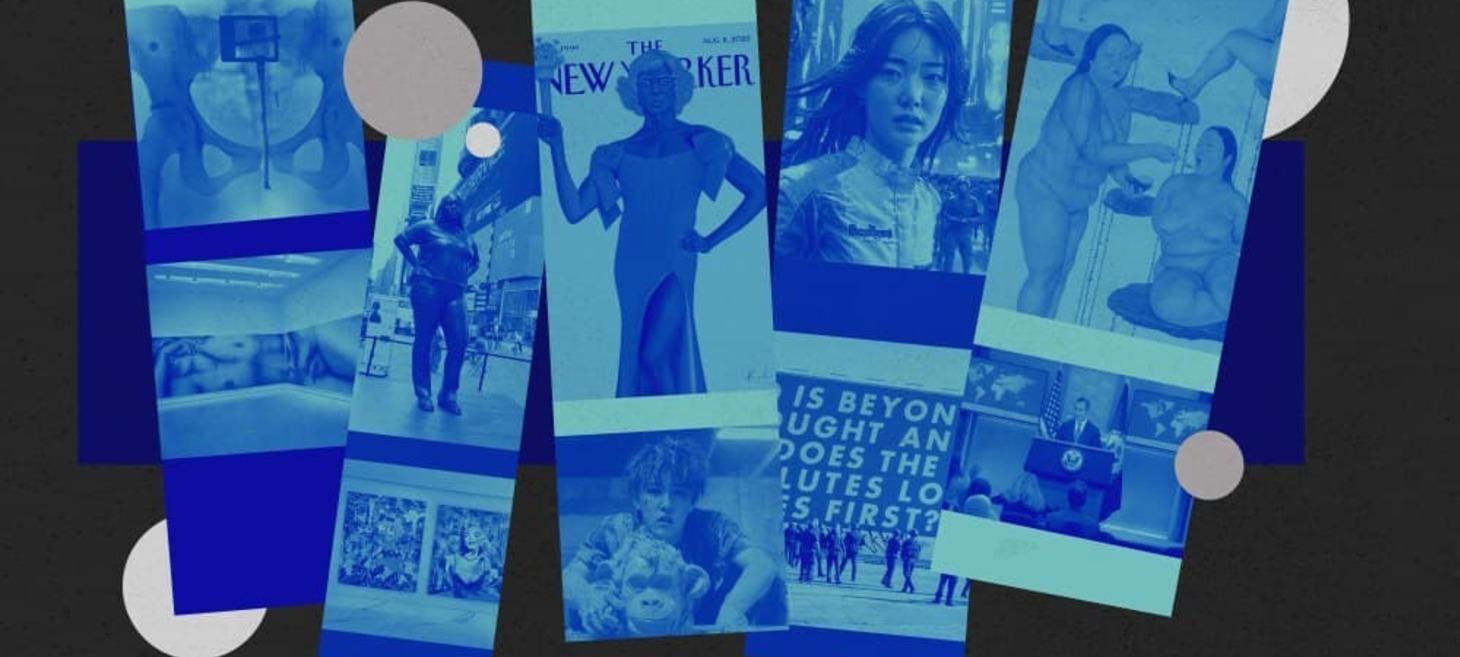
The Defining Artworks of 2025
ARTnews assembled its list of 2025's most defining artworks—25 pieces ranging from Barbara Kruger's protest backdrop to Kara Walker's dismembered Confederate monument to Cameron Rowland's censored Martinican flag. The editors make a clear case: in an era of rising censorship and declining democracy, virtually every artwork becomes political by default, whether it explicitly protests or simply explores new possibilities for abstraction.
But I find myself questioning that premise. Is it really impossible to create meaningful art in 2025 without engaging the political realm? The article certainly seems to suggest that political engagement has become the primary measure of significance. I'm torn here—while I understand the urgency of our current moment, I worry that defining "meaningful" solely through a political lens diminishes other vital aspects of artistic practice.
There's something worth considering about whether we're conflating "political" with "meaningful" because our cultural anxiety makes everything feel charged, or whether art's political dimension has genuinely become inescapable in this particular moment of history.
Maybe the real question isn't whether art must be political to matter, but whether we've become unable to see it any other way.
artnews.com
