
The Promise-Reality Gap
 Greetings from Juergen
Hi all,
This week's stories touch on a common thread that I can't stop thinking about: the persistent gap between what technology promises and what it actually delivers. The InkPoster e-ink display finally nails what a digital art frame should be—no backlight, battery-powered, genuinely paper-like—but it's still priced somewhere between $1K-$2K while HD TVs cost a few hundred dollars. Over at Zineopolis, there's a thoughtful exploration of how zines and illustration technology haven't quite democratized publishing the way early advocates hoped. And that recurring pattern of AI-generated music fooling 90% of listeners makes me wonder if we're just not trained yet to hear the difference, or if our ears simply lack the instinct our eyes have for spotting visual fakery.
What stood out for me is Noah Smith's review of David Marx's "Blank Space," which argues that cultural innovation comes from novel technology—but eventually those possibilities get "mined out." The electric guitar changed music for decades, but there's only so much new ground you can break before saturation replaces genuine innovation. It's a compelling explanation for why American pop culture feels stuck recycling superhero franchises and sequels. Meanwhile, Sabrina Dowling Giudici's glass sculptures ("Murano meets Burano," as Venetians describe them) remind us that sometimes the path to creative work requires a decades-long detour through accounting and regional development—something I relate to after my own five-year stint as a New York photographer before entering the field of programming and UX design.
The good news? Luke Jerram's bringing his Mirror Moon sculpture to the Royal Observatory Greenwich in March 2026, and it's exactly the kind of tactile, data-driven art that makes the cosmos feel immediate rather than distant. Sometimes the best intersection of art and technology isn't about new tools at all—it's about being able to physically touch every crater on the lunar surface of a sculpture.
Subscribe to 'The Intersect: Art in Tech and Tech in Art' podcast, a companion audio feature where we explore each week's topics in a conversational format.
TECHNOLOGY IN MUSIC
How to Figure Out if Your New 'Favorite Artist' Is Just Software, or an Actual Artist
Discovering your new favorite artist is actually a machine feels jarring, but how do you know for sure? The BBC offers some clues for detecting AI-generated music: slurred vocals, problematic consonants and plosives, and those strange ghost harmonies that mysteriously appear and vanish. It's a start, but hardly definitive.
I keep thinking about those recent studies showing 90% of people can't distinguish AI-generated music from human-made tracks. It makes me wonder if our auditory sense is just weaker when it comes to detecting the uncanny. We're pretty good at spotting something off in visual mediums—that weird smoothness, those impossible shadows—but with music, we seem to lack that same instinct.
What I really wish is that this article had extended its analysis to visual arts as well. Give us some practical guidelines for detecting AI-generated images and paintings with the same specificity they apply to music.
Is our inability to detect AI music a temporary learning curve, or are our ears simply less attuned to synthetic patterns than our eyes?
FILM & VIDEO

Political Aesthetics in New China's Ethno-Documentaries
T Wu's research published in the International Journal of Anthropology and Ethnology examines how post-1949 Chinese ethno-documentaries function as sophisticated tools of political aesthetics—using cinematographic techniques, visual symbolism, and narrative framing to construct a unified national identity while celebrating ethnic diversity. These state-sponsored films aren't just cultural recordings; they're carefully orchestrated visual statements that blend picturesque landscapes and folkloric traditions with socialist ideology.
The question that pops into my mind is how different is this from Americana? Perhaps the 30s and 40s construction of American national identity came more from commercial initiatives—think Coca-Cola ads, billboards, Norman Rockwell paintings depicting idyllic scenes of an entire nation (drinking Coke, of course). The Chinese approach seems more consistent and intentional in its pervasiveness.
Fast forward to today's bifurcated and divisive America, and I wonder: how do you even portray something like a national identity unless it's pitted against the other side? The visual language of unity requires shared values, shared myths—something increasingly harder to manufacture when commercial interests fragment rather than unify.
What does it mean when national identity becomes impossible to visualize without an enemy?
SOCIETAL IMPACT OF ART AND TECH
Blank Space: Why US Culture Is Stagnating
American pop culture feels stuck in a loop of sequels, remakes, and superhero franchises that recycle the same formulas year after year. Noah Smith's review of David Marx's "Blank Space: A Cultural History of the Twenty-First Century" explores why creativity seems to have stagnated in film, music, and literature—even as other mediums like short-form video and webcomics flourish. Marx argues the internet has flattened subcultures into bland uniformity, while others point to risk aversion or monopolistic entertainment companies.
Those who've followed me know my aversion to the Marvel Universe, and I can finally articulate why: it's the repetitive recycling of formulaic success designed to capture attention rather than foster innovation. It's risk-averse marketing engines promoting safe bets instead of nurturing something genuinely new. You have to look elsewhere—to other cultures—for that.
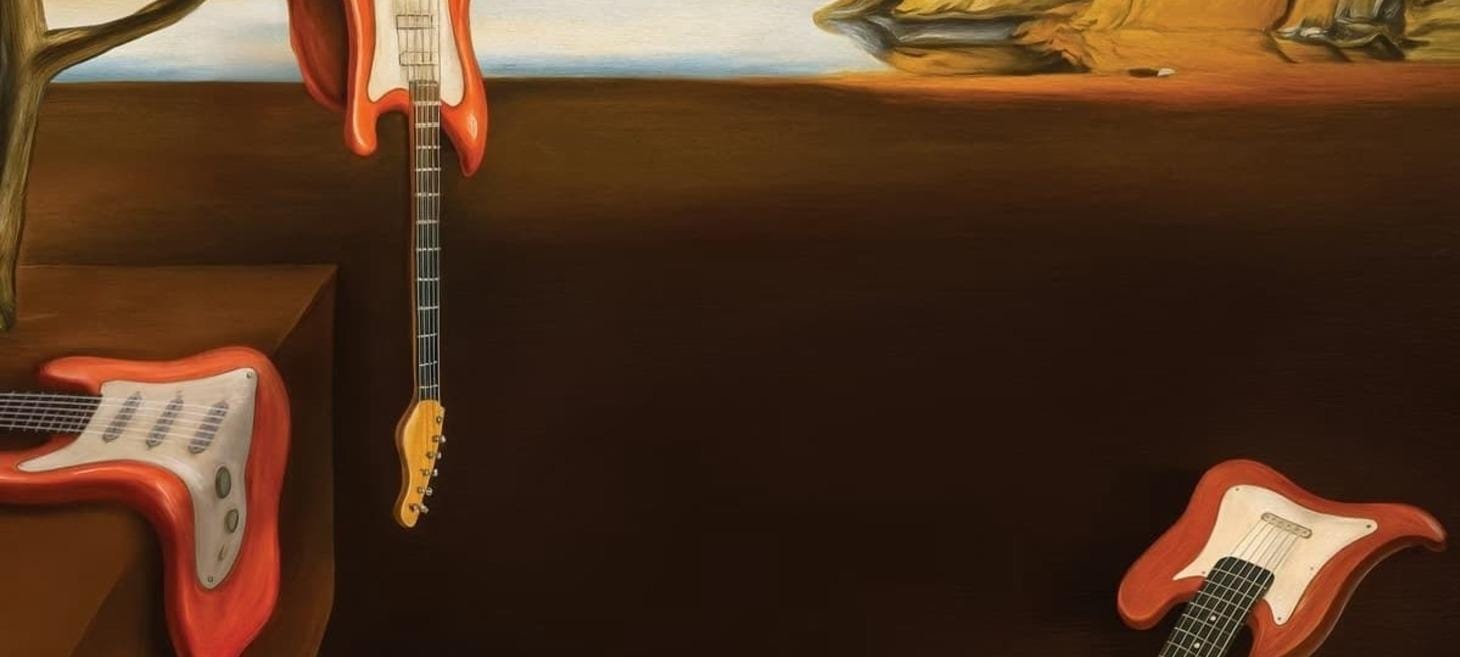
Smith offers a compelling technological explanation: novel cultural production comes from novel technology. When we invented the pickup mic, we got decades of electric guitar music as artists explored new possibilities. But eventually those possibilities get "mined out," progress stalls, and creativity becomes canonized. This helps explain why classical orchestras are essentially cover bands—the technology hasn't changed in centuries.
Are we mining out our current technologies, or have we simply lost our appetite for creative risk?
DESIGN
Apparatus: the Role of Technology in Illustration
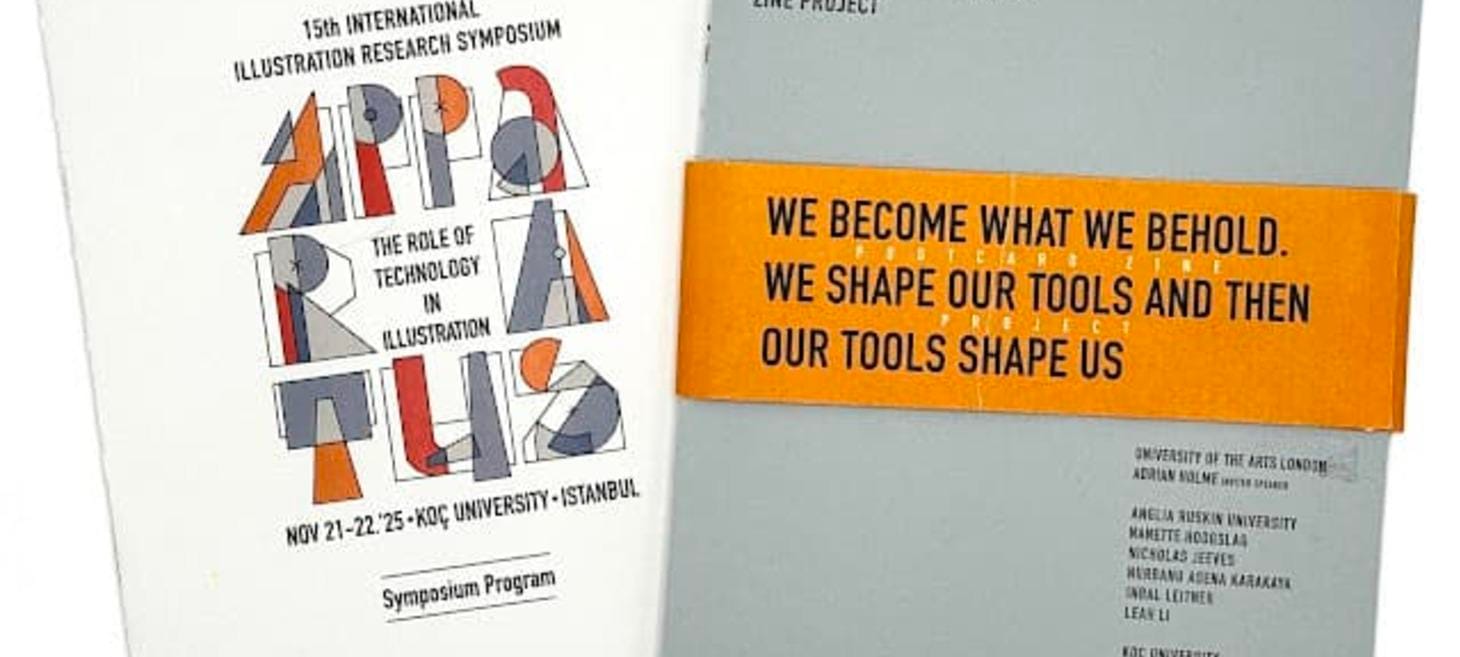
The relationship between illustration and technology has a long history, but it's never been straightforward. Over at Zineopolis, a blog post explores this evolution through the lens of zines—those curious non-commercial print artifacts that resist easy definition.
I've always struggled getting my head around what a "zine" actually is. It seems mostly non-commercial and almost like a real-world printed infographic of sorts. Having an affinity for the art of design and the intersection with technology, this exploration of the relationship between machines and technological advancements in the design space got me interested.
What really strikes me is the conclusion around the fact that the promise of technology seems to seldom live up to what people's hopes for its applications are initially.
Are we forever destined to overestimate what our tools can do for us in the short term while underestimating their long-term impact?
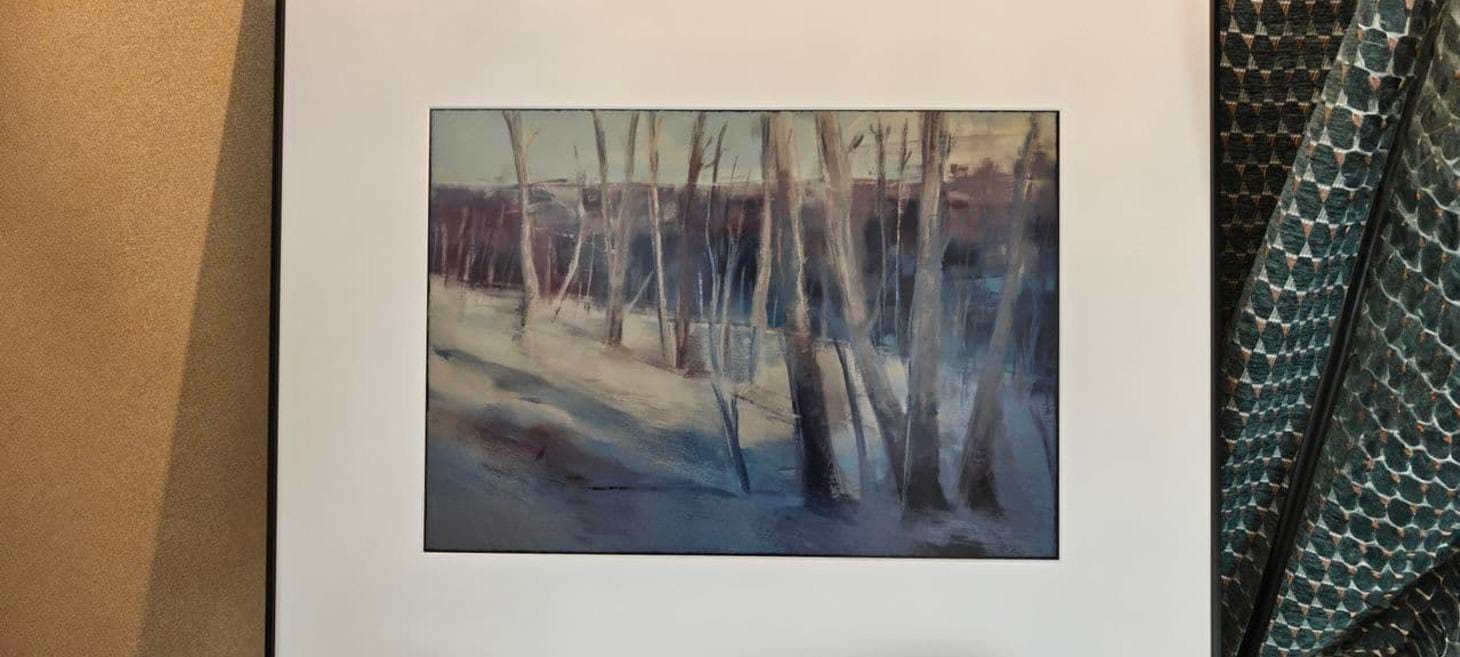
Finally, a Digital Art Frame That's Not a TV in Disguise
InkPoster promises something different in the crowded world of digital art displays—a frame that actually looks like art on paper rather than a glowing screen. As reported by Creative Bloq, this e-ink display runs on batteries that last a full year, hangs like a regular frame, and ditches the backlight entirely for a truly paper-like appearance.
I've been following these e-ink displays for a while, and they represent what digital art frames should be. I recently saw one of those Samsung TV gallery displays at a party, and while it was stunning—dimmed to match the room's lighting so it didn't glow like a screen—e-ink is the real solution. No backlight, battery-powered, genuinely frame-like.
The technology is there, but the economics aren't. You can get an HD TV for a few hundred dollars, but these e-ink art displays still hover in the $1K-$2K range. I'm curious enough to want one, but I can't justify that price-to-performance gap.
How long before the display technology we want becomes the display technology we can actually afford?
SCULPTURE
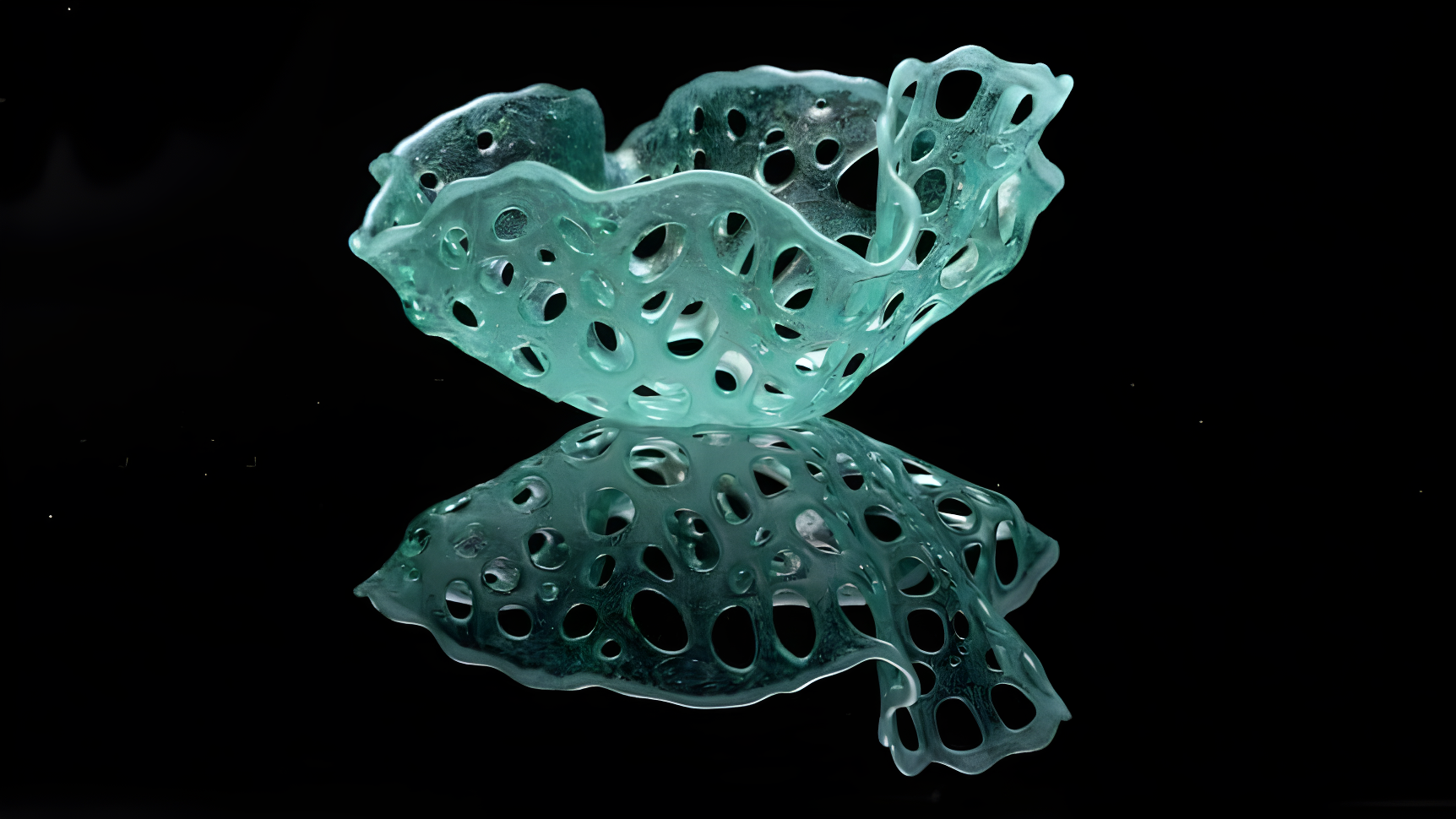
Inspired by Space Exploration, Artist Sculpts Dreams in Glass
Sabrina Dowling Giudici's father warned her that Michelangelo died with ticks on his body—his way of saying artists can't make a living. So she dutifully studied accounting and worked in regional development. Decades later, after years in "sensible" jobs, she's now exhibiting her stunning cold glass sculptures at Venice Glass Week, where Venetians describe her work as "Murano meets Burano"—glasswork that captures the lacy quality of her Italian mother's sewing. Christine Layton and Emma Wynne tell her story for ABC News.
This one hit close to home. My parents had the same conversation with me, but they let me pursue fine arts and photography anyway. I spent five years struggling as a photographer in New York before "selling out" to programming, design, and app development. What felt like abandoning art was really just a detour—I've been fortunate enough to return to my own work after nearly twenty years in the corporate world.
My German artist uncle was the one who really got me started, gifting me mechanical pencils and expensive paper, encouraging me at every visit. I now have about a dozen of his paintings hanging in my home—tangible reminders of why I started this journey in the first place.
How many artists make this same calculation early on, only to find their way back later when circumstances finally allow it?
ART & SCIENCE
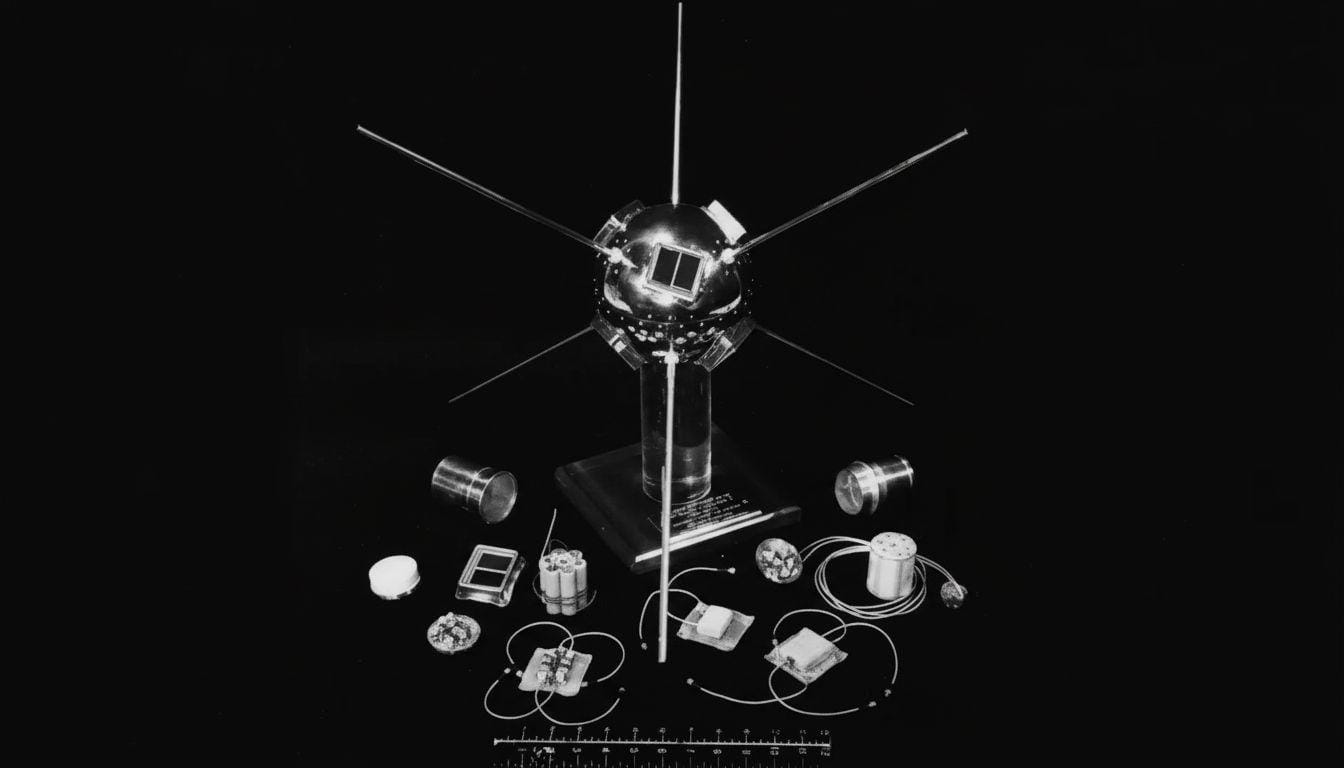
The Spacescape: Looking at Heritage Spacecraft as Part of a Cultural Landscape
Satellites orbiting Earth aren't just defunct hardware floating in the void—they're archaeological artifacts, argues Dr. Alice Gorman in this fascinating piece from her Space Age Archaeology blog. She makes the case that orbital space itself is a cultural landscape, similar to how we now understand Earth's "wilderness" areas as actually inhabited Indigenous homelands shaped by human presence over millennia.
What really struck me is how this reframes our relationship with space. We tend to think of the cosmos as empty, pristine, waiting for us to arrive. But space archaeology reveals something different: we're already there, leaving traces, creating meaning. Just as archaeology on Earth had to abandon the myth of untouched wilderness and recognize the continuous presence of Indigenous peoples, we need to see orbital space as already marked by human culture.
The cultural significance of heritage spacecraft like Vanguard 1 or Syncom 3 isn't just in their physical form—it's inseparable from their location. Bring them back to Earth for a museum, and their meaning fundamentally changes. They stop being part of the living spacescape and become souvenirs of a place we're no longer connected to.
If orbital debris is now as much part of the space environment as meteoroid swarms, what does that mean for how we think about preservation versus expansion?
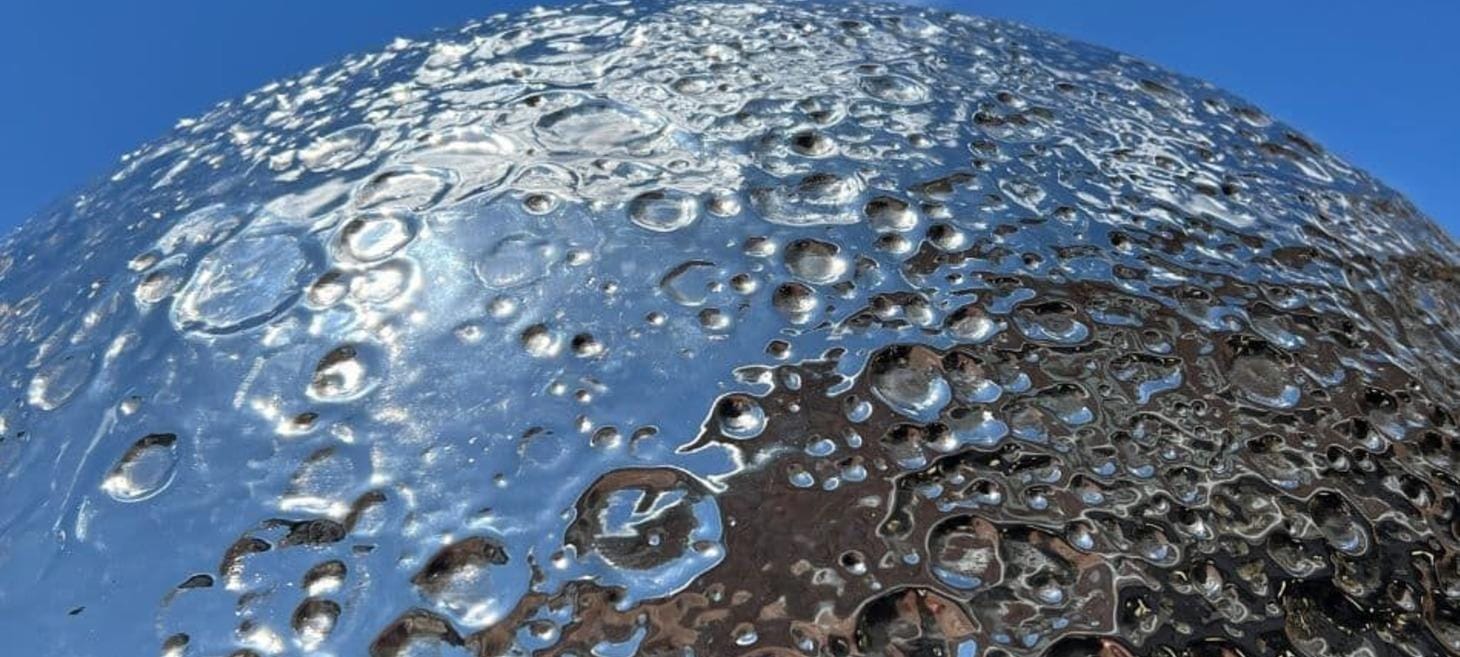
Luke Jerram Is Bringing a New Celestial Artwork to London
Luke Jerram's celestial art installations have become a phenomenon, bringing our solar system's most iconic bodies—the Moon, Mars, and Sun—into intimate proximity with audiences worldwide. Now he's returning to London with something different: Mirror Moon, a two-meter-wide stainless steel sculpture that invites you to actually touch the lunar surface. Using topographic data from NASA, according to London On The Inside, the installation features every crater, valley, and mountain range textured into its surface, including the mysterious far side we never see from Earth.
I love it when art and science blend this seamlessly. The Royal Observatory Greenwich feels like exactly the right home for this piece—I was fortunate to visit last year, and while the turn-of-the-century artifacts centering on clockworks and navigational tools are fascinating, they represent a very specific moment in our relationship with the cosmos.
Mirror Moon arriving in March 2026 offers something those historical instruments can't: a tactile, immediate connection to something we've gazed at for millennia but only recently understood.
Can a sculpture make us reconsider what it means to truly know something—to move beyond observation into physical understanding?
THE LAST WORD
Thanks for sticking with me through this exploration of some gaps between art and tech innovations, and their deliverables. I'm curious what you think—are we mining out our current technologies, or have we simply lost our appetite for creative risk? Hit reply and let me know what resonates with you this week.
Best, Juergen
Member discussion