
 Greetings from Juergen
I've been wanting to do a drone issue for a while. Kept putting it off, and it took me some time to figure out why.
Part of it is that drones stopped feeling innocent to me somewhere around 2022. The same swarms that choreograph light shows over stadiums are now coordinating strikes over Kyiv. That's not a metaphor — it's the same technology, sometimes literally the same hardware. Once you know that, you can't fully unknow it, and the aerial photograph of a fog-filled Norwegian valley carries a little more weight than it used to.
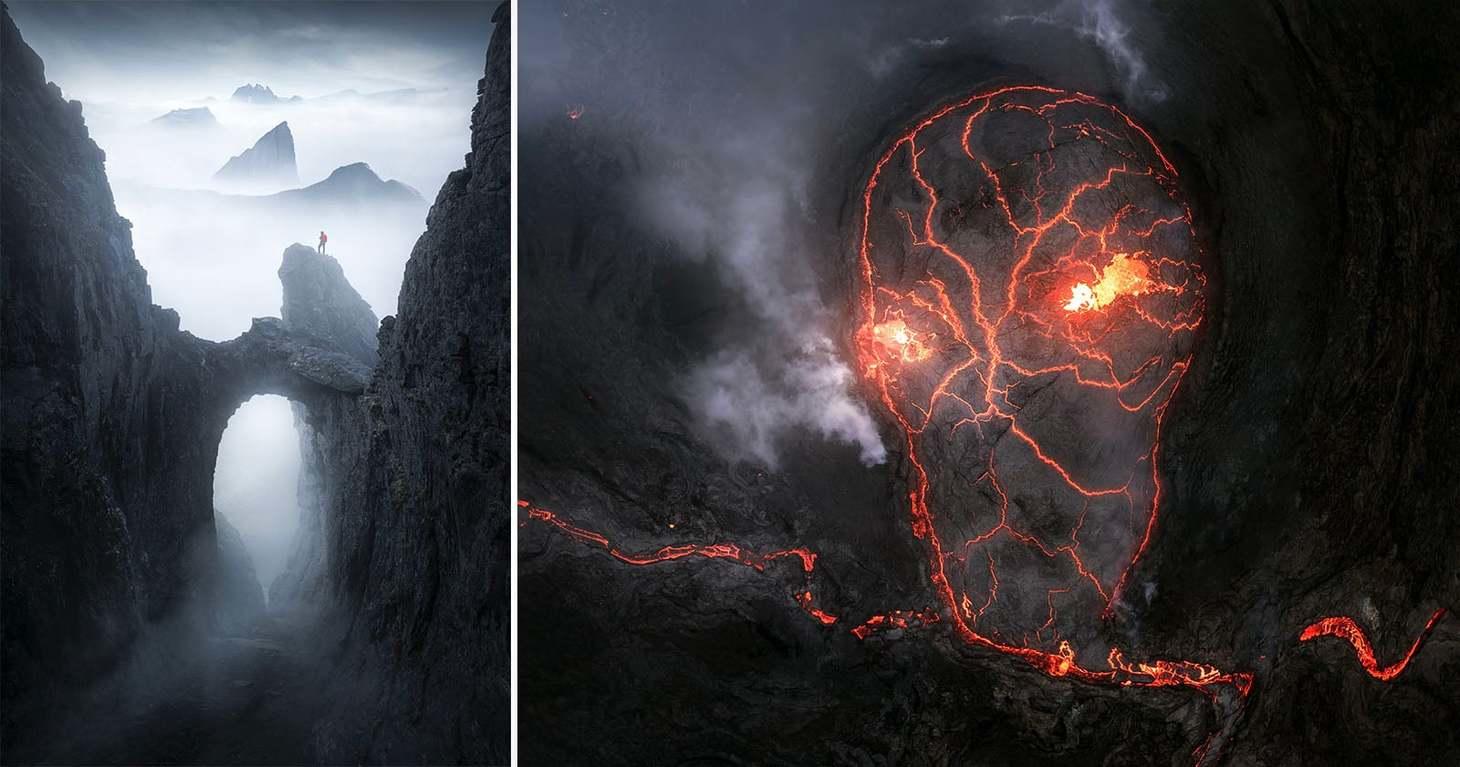
But I also didn't want to write a eulogy. The wonder was real. Filip Hrebenda's "The Gate" still stops me cold. So does DRIFT's swarm at LACMA. The delight happened, and it mattered.
What I eventually realized is that the drone story isn't really about drones. It's about a pattern — one that Cory Doctorow has a word for, and one that the stories in this issue will trace better than I can in an intro. The articles will do the talking. I just wanted to say: I felt it too, the before. That's why the after stings.
The Intersect: Art In Tech

Subscribe to 'The Intersect: Art in Tech and Tech in Art' podcast, a companion audio feature where we explore each week's topics in a conversational format.
captivate.fm
Societal Impact of Art and Tech
Drone Photography's Quiet Joy, Before the Swarms Ruined It
Jaron Schneider's roundup at PetaPixel covers the 11th annual DJI SkyPixel competition — 95,000 submissions, 96 countries, $200,000 in prizes, and some genuinely stunning aerial imagery. The standout winner, Filip Hrebenda's "The Gate," shows a lone figure perched on a natural stone arch above a fog-filled Norwegian valley at sunrise. It's the kind of image that stops you cold.
I'll admit it triggered a wave of nostalgia. Before commercial drones existed, I was deep into kite aerial photography — and I mean deep. I built self-leveling camera platforms from kits I'd found online, rigged remote controls, even broadcast live images back down to the ground. It was genuinely fun to build and genuinely maddening to fly. The images were... let's say "charming" compared to what a Mavic 3 Pro produces in ten minutes. Which is sort of the story of my creative life: darkroom photographer in 1980s New York, watching Photoshop eat special effects work whole; 8x10 view cameras superseded by digital almost overnight; kite rigs replaced by drones; and now AI that can hallucinate a fog-drenched Norwegian arch if you describe it carefully enough.
"The natural stone arch, resembling a monumental gate carved by time, stands suspended above a deep valley, surrounded by rugged cliffs and distant mountain silhouettes emerging from the sea of mist."
What I find genuinely complicated now is that "drone art" has bifurcated. There's the mass swarm spectacle — hundreds of synchronized drones replacing fireworks — and my enthusiasm for that has been thoroughly dampened by watching autonomous drone swarms operate in Ukraine. Organized, autonomous, lethal. Hard to unsee. So when an image like Hrebenda's shows up, it pulls me back to what excited me in the first place: that singular bird's-eye perspective that earthbound photographers had been denied for centuries. Is that joy still available, or does it now come with an asterisk?
petapixel.com
The Web at 30: From Cyber-Utopia to Enshittification in Real Time
Christopher Sonnleitner's piece on the Ars Electronica Blog traces the World Wide Web's arc from 1990s democratization dream to AI playground — and the throughline is depressingly consistent. The same tech corporations, the same extractive business models, the same pattern of promising utopia and delivering something considerably grimmer. Ars Electronica is marking its own 30th anniversary this year, which gives the piece a useful historical vantage point: they opened in 1996 when there were 260,000 websites worldwide. Now there are billions, and somehow we have less.
This is where Cory Doctorow's concept of enshittification keeps coming up in my own thinking — the deliberate, staged degradation of services to maximize profit once users feel locked in. Free and delightful at first, then the walls close in, then the ads multiply, then the experience quietly rots.
"Every computer we know how to make is capable of running every computer program we know how to write. […] The implications of this universality are really the story of the past 40 years." — Cory Doctorow, Enshittification (2026)
What's unsettling is that I'm watching this happen with AI tools in something close to real time. I use Claude Code for project work, and I can already feel the subtle degradations creeping in — the responses that feel slightly more hedged, the capabilities that seem quietly throttled. The lock-in is nearly complete before the enshittification even begins in earnest.
So here's what I keep turning over: if we already know the pattern, why do we keep walking into it?
electronica.art
22,580 Drones Paint the Sky — and I Can't Decide How to Feel About It
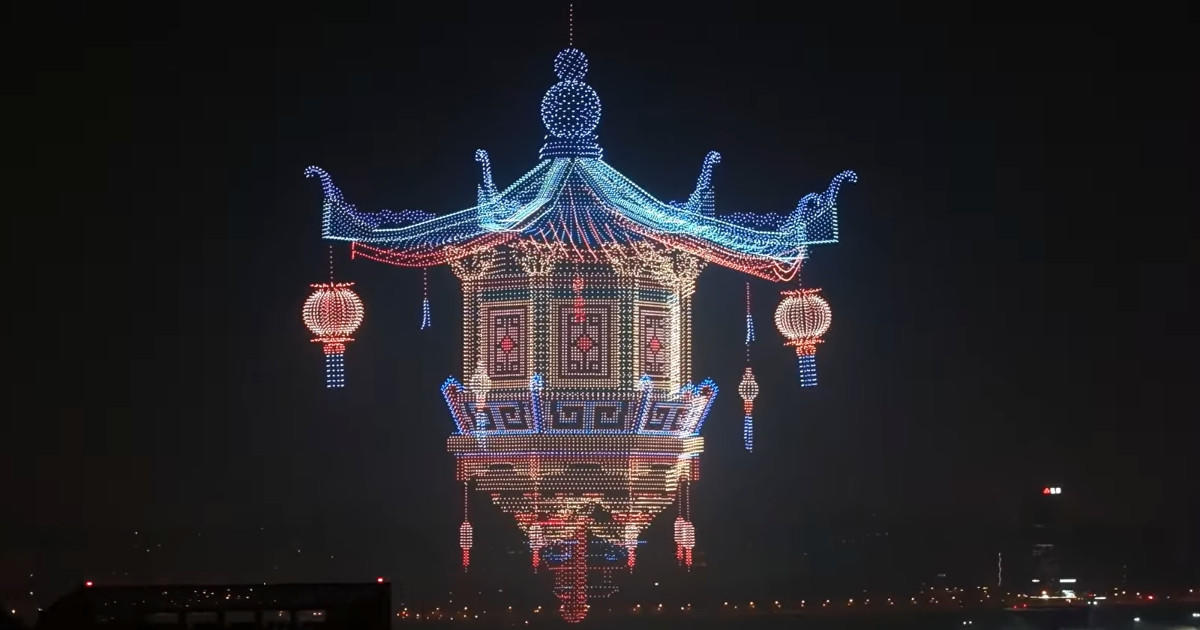
Regina Sienra's piece at My Modern Met covers a genuinely jaw-dropping achievement: Chinese company Guangdong EHang Egret Media Technology launched 22,580 drones simultaneously over the city of Hefei as part of the 2026 Spring Festival Gala, smashing the previous record of 15,847 and programming the swarm to depict Hui-style architecture and lanterns that appeared to sway in the wind. The precision involved is almost incomprehensible.
Here's the thing — I'm actually a federally licensed commercial drone operator, so this topic lands differently for me than it might for most people. My love affair with aerial perspective started long before drones existed, with kite aerial photography: a home-built rig, a self-balancing camera platform, a hacked handheld TV as a live viewfinder, and me wandering Jersey Shore beaches looking slightly unhinged. When consumer drones arrived, I was instantly converted. I'd strap my whole drone kit to my motorbike and cruise northern New Jersey hunting for interesting angles. It was pure, uncomplicated joy.
"By weaving Lunar New Year blessings into the performance, EHang Egret pioneered a new expression of integrating low-altitude technology with cultural storytelling."
That framing is lovely, and I don't doubt the artistry. But I can't watch drone swarms anymore without the image splitting in two — spectacular light show on one side, autonomous weapons over Ukraine on the other. The same technology, the same choreography logic, radically different payloads. My perspective on aerial photography hasn't just shifted; it's been permanently complicated.
Is it still possible to watch 22,580 drones glitter in unison and feel only wonder — or has that window quietly closed?
mymodernmet.com
When Drone Swarms Delight and Destroy
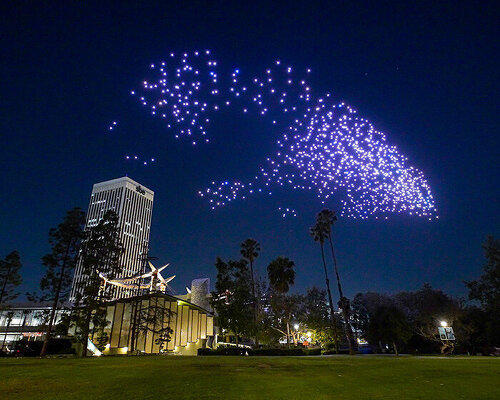
Kat Barandy's piece at Designboom covers DRIFT's Franchise Freedom — a swarm of over 1,000 illuminated drones choreographed above LACMA's newly opened David Geffen Galleries, designed by Peter Zumthor. The piece draws a tidy conceptual parallel between the drones' leaderless, murmuration-inspired logic and the gallery's own horizontal, hierarchy-free architecture. It's genuinely beautiful work, and the write-up does it justice.
But I'll be honest: my relationship with drone swarm spectacles has gotten complicated. I remember the first few times I saw one — that genuine sense of wonder at something that felt alive without being alive. That response has been quietly corroded by three-plus years of watching swarm-based autonomous weapons reshape warfare in Ukraine. It's hard to watch a thousand glowing drones pulse and wheel overhead without some part of your brain filing it under a different category now.
"No single drone directs the composition. Form emerges through proximity and response, with each unit maintaining awareness of the group."
Which made me think about fireworks — another crowd-pleasing spectacle with a thoroughly military origin that we've collectively agreed to just... not think about. We compartmentalize remarkably well when something is pretty enough. Maybe that's fine. Maybe that's how culture works. Or maybe the question of what we're actually celebrating when we watch machines swarm in perfect coordination deserves at least a moment's pause before the applause.
designboom.com
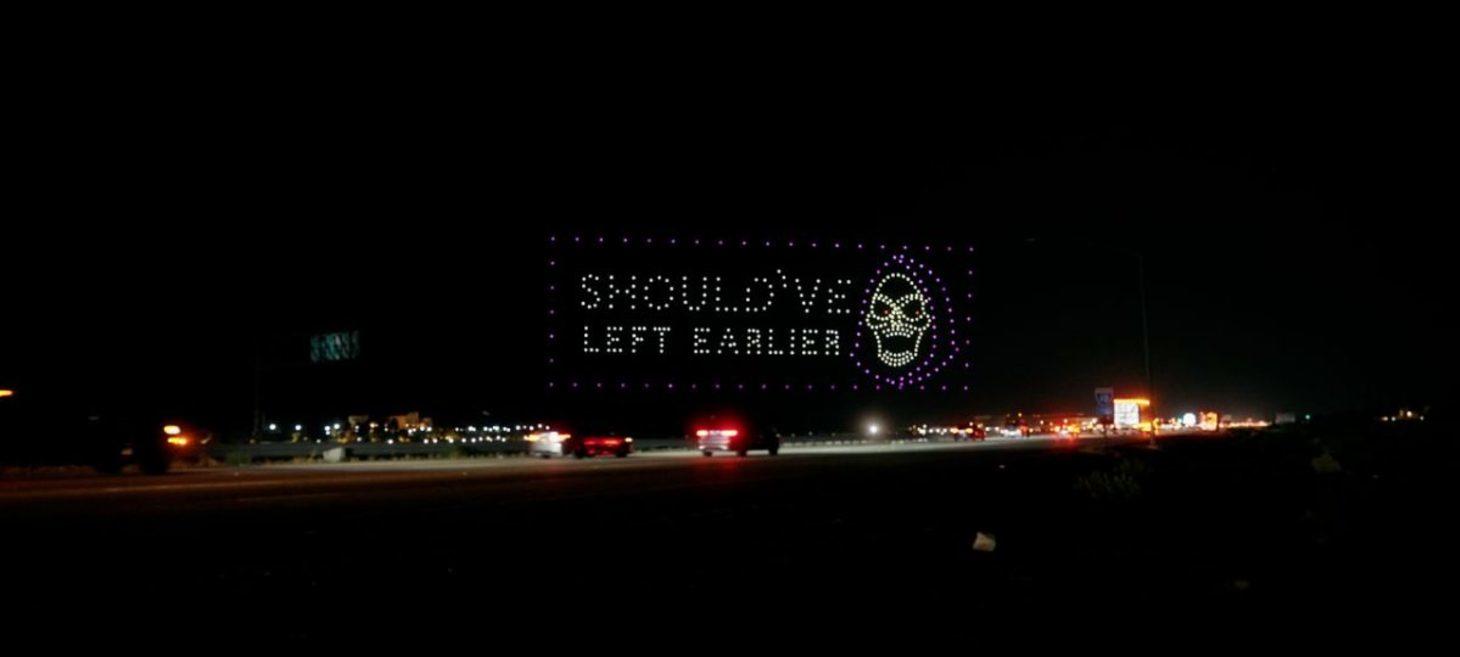
Skeletor Trolls Traffic While Drone Swarms Reshape Warfare
Nerdist's coverage of the new Masters of the Universe drone show — 400 synchronized drones trolling gridlocked Coachella-bound drivers with Skeletor's immortal burn, "SHOULD HAVE LEFT EARLIER" — is genuinely charming. I'll give it that. But as someone who holds a commercial drone operator's license and spent years as a photographer obsessing over aerial perspective, I can't look at a drone show without immediately doing the uncomfortable math.
What strikes me every time I see American drone displays is how thoroughly they expose the gap between US and Chinese swarm technology. China routinely deploys thousands of drones in formations of staggering complexity. This MOTU show, operated by Heads in the Sky, fields 400 drones and spells out He-Man puns. That's not a criticism of the creativity — it's a symptom of something bigger.
"SHOULD HAVE LEFT EARLIER" — Skeletor, drone philosopher, 2026
Because drone swarms are now permanently colored, for me, by their role in Ukraine, where autonomous swarms have quietly rewritten the future of warfare. That's the context I can't unsee. And it's why I find myself supporting Anthropic specifically because of its resistance to making its technology available for autonomous killing machines — a line OpenAI, despite its original human-benefit mission, seems to have cheerfully abandoned in its eagerness to partner with the US government on surveillance and battlefield applications. "Legal" isn't the same as "right," especially when legality is only intact because Congress can't agree on lunch.
Is it strange that a Skeletor joke sent me here? Probably. But that's what happens when the same technology writes movie ads and rewrites rules of engagement.
nerdist.com
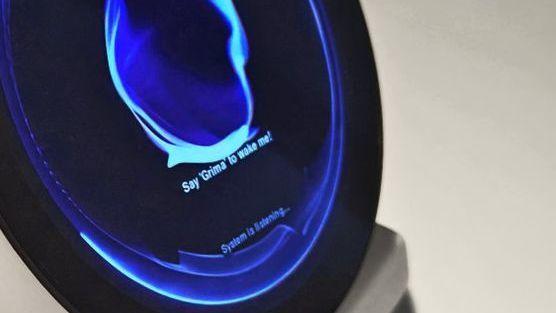
When Your Doctor's Office Listens for Palantir
Neural Magazine's piece on Wesley Goatley's The Harbinger caught my attention precisely because it sits in territory we rarely discuss: AI not as image-maker, but as ear. Goatley constructs a scenario where Palantir — yes, that Palantir — expands its NHS contract until a smart speaker occupies every GP's office, listening, analyzing, branding the whole thing "automated care." The piece is speculative art, but only barely.
There is a bearable level of surveillance and then that which is unbearable. This threshold of what is bearable has shifted significantly over time to accommodate more surveillance.
Most of our conversations about AI in creative and tech circles orbit generative imagery. What gets far less airtime is AI as surveillance infrastructure — and that asymmetry bothers me. It's worth noting that Anthropic has recently pushed back against government requests to deploy Claude for mass surveillance and autonomous military applications. I genuinely admire that stance, even as I'd obviously prefer actual regulatory frameworks over corporate goodwill standing between us and the panopticon.
That's exactly why art like Goatley's feels so necessary right now — it makes the abstract uncomfortably concrete. What does it sound like when your healthcare system is also listening?
neural.it
 The Last Word
Thanks for reading this week — and for sitting with something that doesn't resolve neatly. I keep coming back to that question of when exactly the sky started feeling different, and I genuinely don't know if it's the technology that changed or just me. If you have a moment, hit reply and tell me: is there a specific image, or a specific news story, where the shift happened for you? I'm curious whether this lands differently depending on where you live under that sky.
Best, Juergen
The Intersect: Art In Tech