
 Greetings from Juergen
I've been thinking about thresholds lately. Not metaphorically — literally. The hospital bedside. The capsule hatch before you leave Earth's orbit. The moment a body's own electrical signals become visible as color and form in space. These are places where the ordinary instruments of meaning-making — language, image, institutional authority — start to feel inadequate, and something else has to step in.
What's strange is how often technology shows up at exactly these moments, not as a replacement for human presence but as a kind of witness. A mobile printing press that gives a dying patient one last authored object. A photography curriculum that tries to prepare astronauts to document something no camera operator has ever had to frame before. A system that translates brainwaves into ink because apparently the body has things to say that the mouth can't. I'm genuinely not sure whether this is technology at its most humane or its most presumptuous — and I suspect the honest answer is both, depending on the day.
Meanwhile, the question of who gets to make meaning at all is very much in play this week. An argument about postdigital museums and the decline of the stodgy institutional gatekeeper. A case study in what happens when the tools of fabrication are applied to women whose real faces we have, whose real lives we have, whose real history we have — and someone reaches for the generate button anyway. I don't think these stories are unrelated. This issue is my attempt to find out how.
The Intersect: Art In Tech
Subscribe to 'The Intersect: Art in Tech and Tech in Art' podcast, a companion audio feature where we explore each week's topics in a conversational format.
captivate.fm
Data Driven Art
When the Body Becomes the Brush
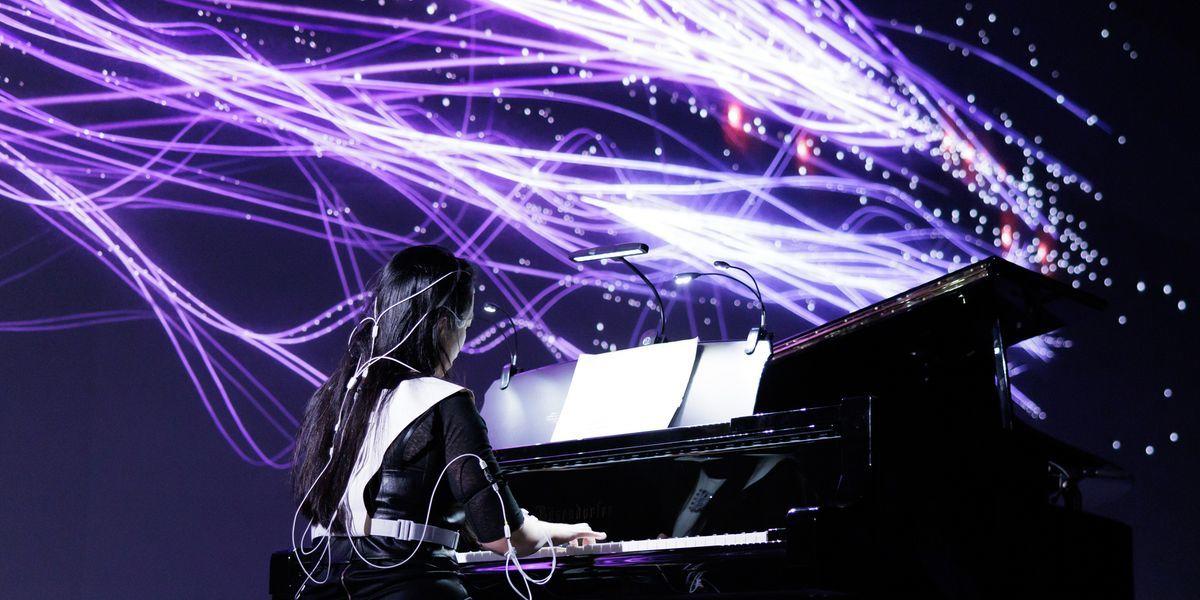
Most tech-meets-art stories follow a familiar arc: artist picks up new tool, makes interesting thing, critics argue about whether it counts as art. "Life Ink" doesn't bother with that arc. Writing for the Ars Electronica Blog, Mario Schmidhumer profiles a project from Ars Electronica Futurelab that captures brainwaves and physiological signals in real-time and renders them as three-dimensional streams of ink — color, form, and motion generated directly from the body's own biological data.
What stopped me here wasn't the technology itself, impressive as it is. It was the inversion. So much of what I cover is technology being used by artists. This is something different — technology revealing the artist, making the invisible process of creation spatially perceptible to an audience. The finished work isn't the point; the generative act is.
Creative expression thus extends beyond the finished artwork; the generative process itself becomes a shared and perceptible phenomenon.
That's the kind of story I want to keep surfacing for this newsletter. Not "here's a cool tool" but "here's a project that reframes what making something actually means." Hideaki Ogawa, Artistic Director of Futurelab, calls it a reimagining of ink itself — which sounds like hype until you watch someone's concentration states bloom into three-dimensional form in real time.
So: if the process is the artwork, what exactly is the artist signing?
electronica.art
Societal Impact of Art and Tech
From the Benito Bowl to the Postdigital Museum: Who Gets to Make Meaning Now?
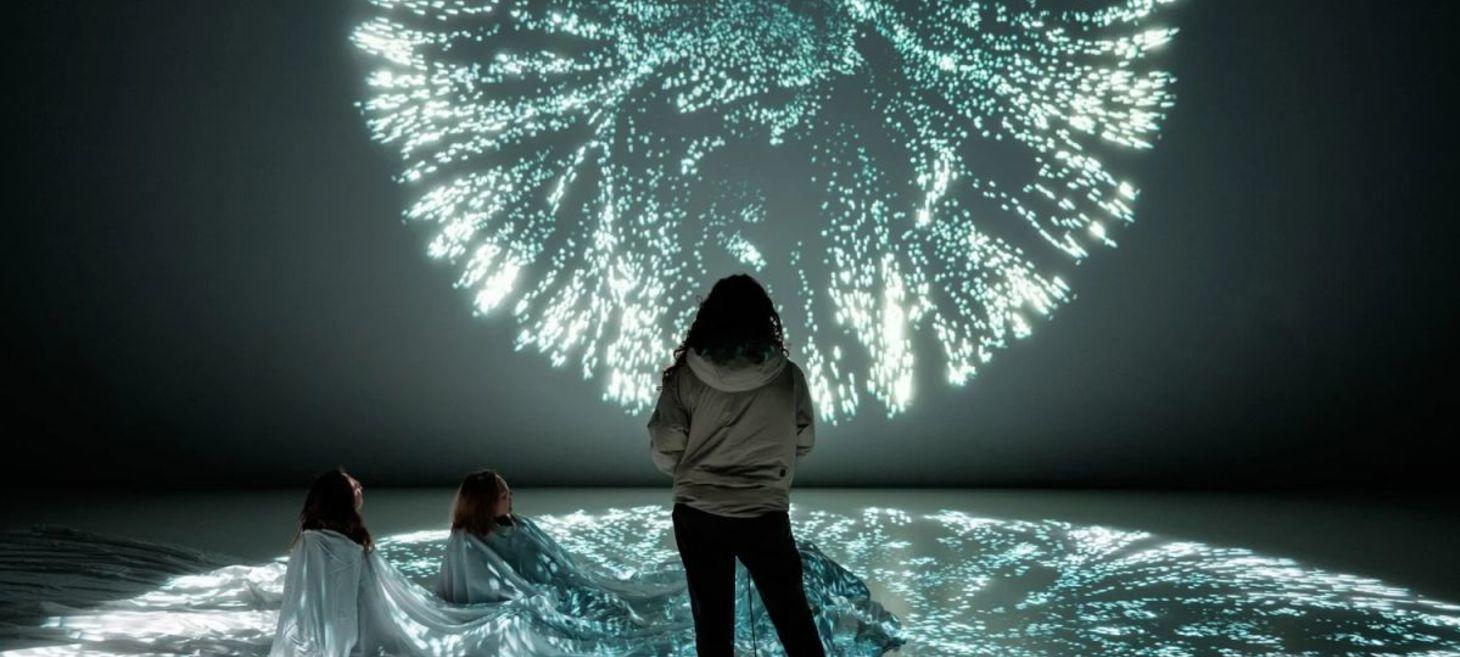
Tracy Stum's piece at AMT Lab maps a genuinely interesting arc — from street painting festivals to the Super Bowl halftime show to whatever we're calling the "postdigital" museum — and argues that cultural meaning-making has migrated away from institutional gatekeepers toward something more communal.
This resonates with me more than I expected. The stodgy curator who knows better than everyone else — that figure is genuinely fading, and I don't think we should mourn it too loudly. What strikes me is how popular culture, as gloriously weird and chaotic as it can be, now does the meaning-making work that last-century art institutions simply can't fill. The Benito Bowl wasn't just a halftime show; for a lot of people it was a genuine cultural event that gave them context, connection, and something to carry forward. That's not nothing.
"Weil envisioned a 'kaleidoscopic' future in which the institution evolves 'from being about something to being for somebody.'"
The harder question I keep circling is how you bridge that gap — between popular culture doing its sprawling, resonant, sometimes baffling thing, and the deeper historical timelines of both Eastern and Western artistic traditions, their diasporas, their contradictions. Not to subordinate one to the other, but to let them actually talk.
Is there a version of the postdigital museum that holds both without flattening either — or are we just hoping the algorithm figures it out for us?
amt-lab.org
A Mobile Printing Press That Captures the Last Things People Need to Say
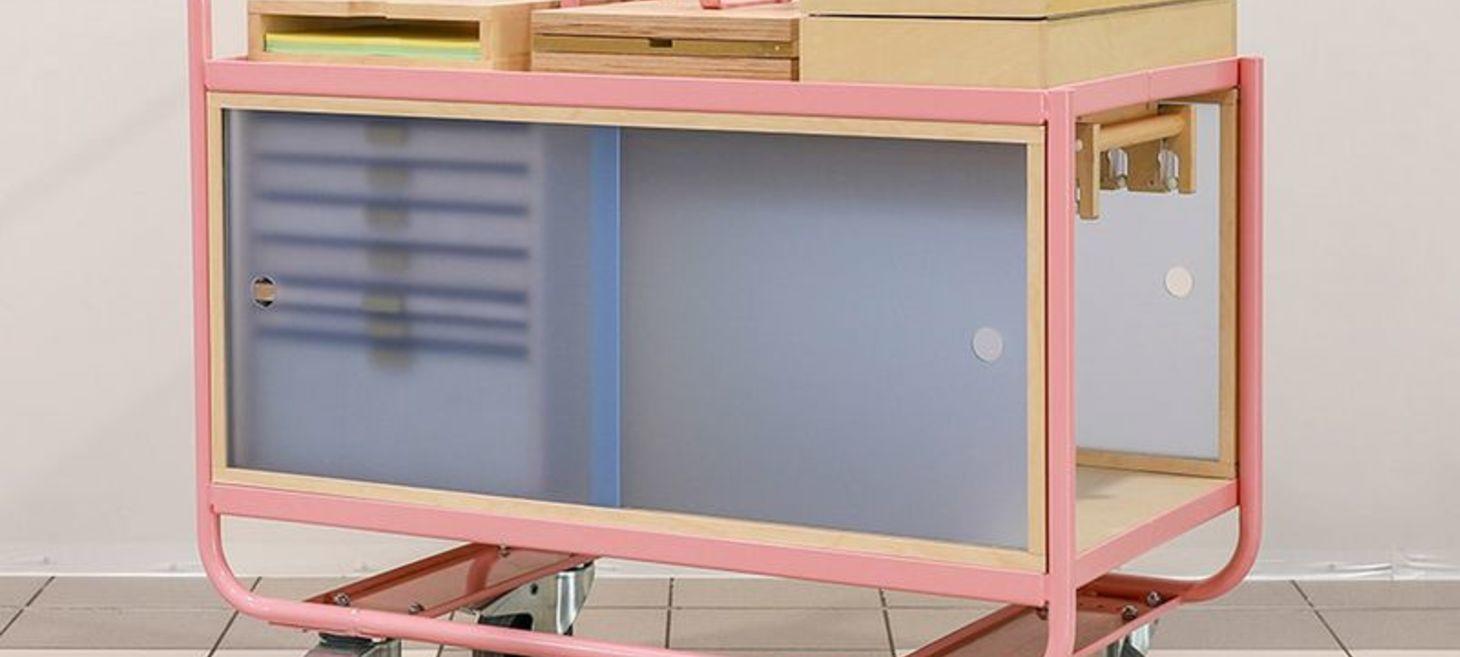
There's a particular kind of art project that stops you mid-scroll — not because it's visually arresting, but because it quietly addresses something most of us spend enormous energy not thinking about. Irish artist John Conway has built a mobile printing press, designed to be wheeled to a hospital bedside, that lets patients near the end of their lives compose and print their final thoughts. Dezeen covered the project, which grew out of a Creative Ireland residency at Naas General Hospital — and the craft of the thing is genuinely considered: wooden drawers, a curated vocabulary of roughly 200 care-related word blocks, a pull-out drying rack.
I'll be honest — this one hit me somewhere specific. I lost my mother to a sudden, severe stroke. The incapacitation was quick and total, and she ended up in hospice before any of us had really processed what was happening. There are so many conversations I never got to have with her. Conway's press wouldn't have worked for her — she was beyond that — but reading about it made me think about what I would want to leave behind. What's the last true thing you'd want to put on paper?
"In a lot of cases, the artworks might be the last thing these people put down on paper, or the ultimate statement to a loved one, so there's an urgency and importance to capturing what they have to say."
What I find quietly remarkable is Conway's design philosophy: he spent months at the hospital not making art first, just listening. That instinct — to resist the urge to produce — feels almost countercultural right now, when every tool promises to generate something immediately.
In a world drowning in frictionless output, what does it mean that one of the most meaningful creative acts might be choosing 200 words very carefully, with whatever time you have left?
dezeen.com
Photography
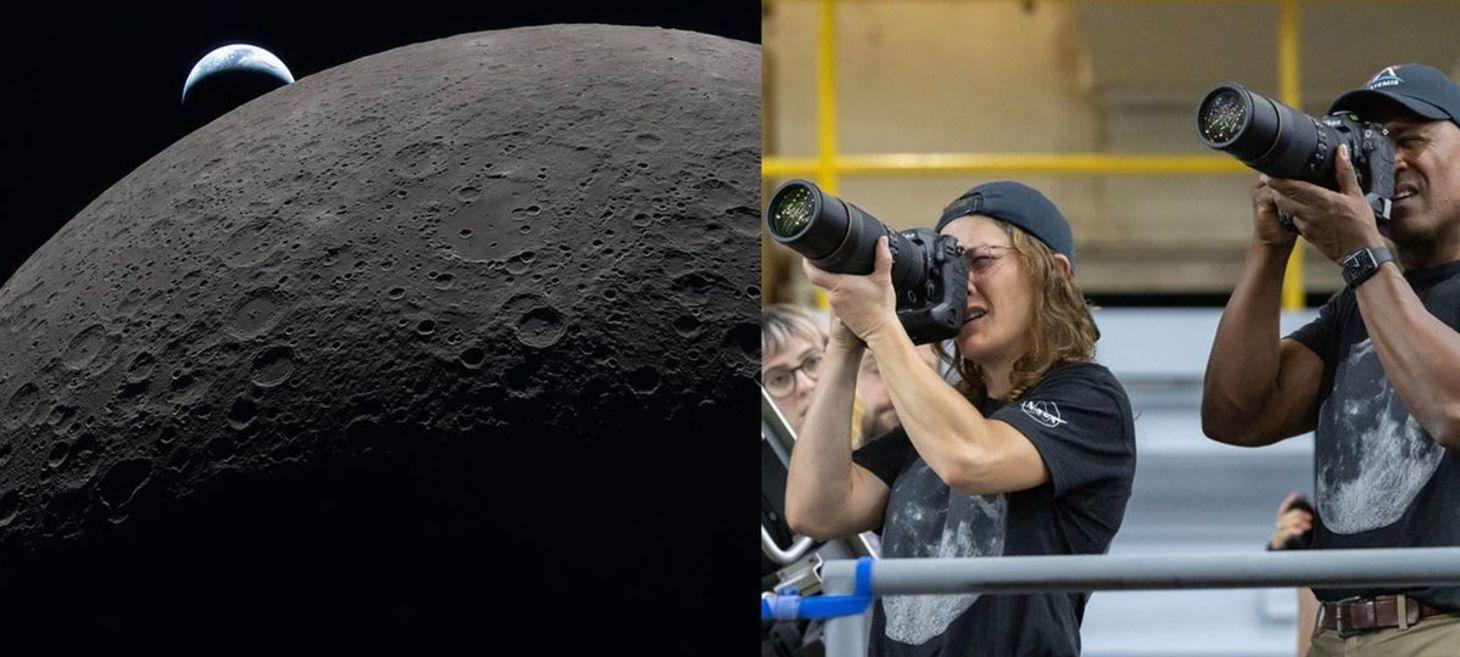
Astronauts Who Can Actually Frame a Shot? NASA's Photography Program Delivers
Matt Growcoot's piece at PetaPixel — drawing on a Reuters report and an RIT feature — digs into the surprisingly rigorous photography training NASA puts Artemis II astronauts through. We're talking 20 hours of dedicated instruction, mock Orion capsule setups, and a giant inflatable Moon hanging in the dark. Not exactly a weekend workshop at your local camera shop.
Here's where it gets personal for me. I was a professional photographer in the special effects industry in New York through the mid-80s and into the early 90s, and I taught photography classes too. So when I read this, my first instinct was: photography is almost certainly the last thing on an astronaut's training checklist. You'd assume they just grab a camera and point it at the Moon. The idea that NASA is actually teaching composition, depth of field, how to see and frame in one of the most extreme contrast environments imaginable — that genuinely stopped me.
"Most people can use a camera and get a photo that is good enough, but good enough isn't what we're after scientifically," trainer Katrina Willoughby tells RIT. "Being able to understand how to use the equipment and what the options are gives us a lot more capability."
That quote could hang on the wall of any photography class I ever taught. The pressure these astronauts must have felt — carrying all that technical and scientific responsibility while also being expected to nail the shot, first time, no retakes — is something I find both humbling and quietly thrilling.
What does it say about photography as a discipline that even rocket scientists need to be taught how to look?
petapixel.com
Art and Politics

A Shining Example of How Not to Use AI
Matt Growcoot's piece at PetaPixel covers the backlash Education Secretary Linda McMahon received for using AI-generated images in a series of Truth Social posts honoring historical women like Ida B. Wells, Susan B. Anthony, and Sojourner Truth. The kicker: real photographs of these women exist. McMahon didn't need to fabricate anything. She just did anyway, complete with a "Photo by Gemini" credit that somehow makes it both more honest and more baffling at once.
I'll be direct: this doesn't have much to do with art, and I wouldn't call what McMahon did any kind of creative practice. What it is, though, is a near-perfect case study in how not to use AI. The person running the country's educational system is generating historically inaccurate imagery — Wells depicted writing with a quill pen by candlelight, when metal pens and gas lamps were the norm in her era — and posting it without apparent concern for what that signals.
"The decision to use an AI-generated image undermines the very values she stood for: truth-telling and her lifelong campaign against false representations," says Paula Giddings, who wrote a biography on Wells, speaking to The Washington Post.
If a regular person posted fabricated "historical" imagery without disclosure, social media would come for them. When the Education Secretary does it, it just... happens. That asymmetry bothers me more than the images themselves — so what does it say about our relationship with AI when the people setting educational standards can't be bothered to model basic source integrity?
petapixel.com
 The Last Word
Thanks for spending time with these stories this week. Thresholds are uncomfortable places to linger, and I'm aware this wasn't exactly a light read. But I'm genuinely curious where you land on this — whether you think technology showing up at the unrepeatable moments of human life is a kind of grace, a kind of overreach, or something that stubbornly refuses to be either. That tension is where I live, and I suspect some of you do too. Feel free to tell me I'm wrong.
Best, Juergen
The Intersect: Art In Tech